Archive for 2025:

Is World of Warcraft RP Twitch’s next big thing?

Grand Theft Auto. Minecraft. Red Dead Redemption 2. Roblox. They’re all video games, but they are wildly different from one another. Two (GTA and RDR2) are insanely detailed, immersive sims that bring players into open-world settings with cinematic story campaigns. One (Minecraft) is also open-world, but it’s a sandbox, where players make everything from the ground up. And finally Roblox is a full-on games creation platform, where users (and brands) have made thousands of different worlds and experiences for fellow players to visit.

So, what do they all have in common?

Roleplay.

These games—and dozens of others—allow players to create their own characters and storylines. And content creators have used those capabilities to put together collaborative worlds where their stories interweave with one another’s. It’s similar to tabletop roleplay game Dungeons & Dragons, but without the math: Creators make a character, come up with a background for them, and play them in the game, reacting to things as their character would.

Dream SMP, taking place in Minecraft, is possibly the most well-known example of creator roleplay. Its members together built a story that drew thousands upon thousands of fans, inspiring artwork and fanfiction of their characters and helping keep the game popular across Twitch and YouTube.

Now, the same thing is happening in World of Warcraft.

As Rolling Stone writes, WoW has seen a resurgence on Twitch lately–and a large portion of that traffic is thanks to OnlyFangs, a streamer guild led by Sodapoppin. The guild is fully in-character, meaning that once a streamer comes in and makes their character, they’re expected to roleplay the whole time they’re logged in to the game, interacting with their fellow guildies/streamers.

OnlyFangs’ second “season” of roleplay started this past November with over 100 streamers, including PirateSoftware, Shroud, and Sykkuno. Many of the involved streamers are new to WoW—and are being thrown in to the deep end, since part of this season’s appeal is that it’s played on a Hardcore server, where dying once in game means the character is permanently dead and the player loses all their items.

As Rolling Stone points out, with so many streamers involved and broadcasting for hours each day, numerous narratives have emerged among creators’ characters. Some have become friends; others, mortal enemies. Streamers use proximity voice chat, so (again, Dungeons & Dragons-like) often put on voices for fellow participants and their viewers, embodying their characters in game and IRL.

After OnlyFangs began its second season, WoW rose to be among the top five games streamed on Twitch, and hasn’t dropped from the top five since. That’s a big deal, considering WoW is 20 years old, and splashy new entrants like Marvel Rivals have dropped in the last couple months.

We’re not too surprised, though: Twitch audiences have clearly shown an appetite for collaborative roleplay content. Grand Theft Auto V is also consistently one of Twitch’s top games, with many streamers roleplaying solo or in groups, and D&D show Critical Role is arguably one of Twitch’s biggest hits ever.

As for what OnlyFangs is doing numbers-wise, Sodapoppin currently streams around 12 hours of gameplay per day, and brings an average of ~20,000 viewers. Together, those viewers are watching between 250,000 and 370,000 hours of his content every single day, according to data from Streams Charts. In the last 30 days alone, viewers have watched over 7 million hours of WoW content from him, and he’s gained over 20,000 new followers.

So, what does all this mean? For game developers, it’s proof of just how much fervor these streamer-led narratives and events can drive. GTA and Red Dead developer Rockstar has already recognized this: In 2023, it teamed up with a popular mod developer to bring official support to roleplay servers.

WoW developer Blizzard might do something similar—but even if it doesn’t, we suspect it’s keeping an eye on OnlyFangs’ popularity and the part creators play in generating enthusiasm for older games.
YouTube is testing another tool that helps creators turn long-form content into Shorts

YouTube‘s quest to turn every creator into a multiformat star is continuing into the 2025 calendar year. One of its recent test features is a tool that aids creators who wish to turn highlights from their long-form uploads into short-form clips.

The tool is described on the Google Support page that catalogs the experimental features currently available on YouTube. The post indicates that “some users” who post English-language content currently have the ability to “Create a video highlight” by selecting an option in the video editor tool. That prompt can be found on the desktop version of YouTube Studio.

The ability to cut clips from long-form YouTube videos and live streams predates the launch on YouTube Shorts. Creators got access to an updated, Shorts-compatible clipping tool in 2022. The latest upgrade to YouTube’s highlight-making suite looks to streamline the clipping process by letting creators “easily cut out engaging segments from long-form videos on YouTube and instantly publish them as separate 16:9 videos,” according to the Google Support post.

On Twitch, where Clips have long been used to show off stream highlights, short-form snippets offer a TikTok-style browsing experience. YouTube wants its Shorts hub to keep up with TikTok, too, which is why it has carved out space on creator channels to host Clips.

Thanks to YouTube’s promotion on Clips, creators like Mark Rober have been able to reach new audiences on Shorts, often by cutting down memorable moments from longer uploads. The rise of Clips has brought in viewership for creators who typically rely on streaming content. Kai Cenat and iShowSpeed‘s YouTube highlight hubs currently rank among the platform’s 100 most-subscribed channels on a month-to-month basis.

YouTube’s advances in clipping technology will help it become a destination where creators can thrive with varied runtimes and video orientations. With so many headlines lately about big-name streamers giving up their exclusive YouTube contracts, it’s good to remember that the Google-owned hub is creating new opportunities for streaming talent, too.

Investors deliver $265 million funding round to Whatnot as live shopping gets hotter

The platform where users can sell trading cards and whatnot just added $265 million to its account. That’s how much Whatnot raised for a Series E funding round that valued the company at nearly $5 billion.

As reported by Bloomberg, Whatnot’s Series E was co-led by Greycroft Partners, DST Global, and Avra. As it approaches its sixth year of business, Whatnot has now raised $746 million of venture capital since its launch.

Whatnot has positioned itself at the epicenter of a shopping boom that is projected to become a $100 billion business this year. By offering a space where sellers can auction off sneakers, vinyl records, and other collectibles, Whatnot has cultivated its share of overnight success stories, like thrifting queen Zoreen Kabani and toy salesman J.W. Holcomb.

In its 2024 State of Livestream Selling Report, Whatnot claimed that its top 500 sellers had earned at least $1 million on the platform. Two-thirds of sellers were reported to earn at least $10,000 per month.

With its Series E round in its pocket, Whatnot will continue to ride the ecommerce wave. As major platforms do what they can to grow live shopping in the United States, Whatnot’s unique focus on collectibles — and its ability to transcend that niche — will help it scale up.

“The opportunity for what live and social commerce can do for sellers and sellers’ businesses is pretty tremendous,” Whatnot Co-Founder and CEO Grant LaFontaine told Bloomberg. “It’s going to be one of those things that changes every kind of category and part of retail.”

Among other stated plans, LaFontaine said that Whatnot would deploy its new funding in divisions like engineering and customer services. New categories, including one that caters to the rising popularity of golf on social media, are also on the way. Whatnot will also target expansion into countries like Australia. As it pursues those long-term goals, it will oversee thousands of sellers across the eight countries in which it currently operates.

David Dobrik is vlogging on YouTube again

David Dobrik has returned to the YouTube channel that bears his name. Dobrik, whose iconic status was tarnished by numerous scandals and controversies, has ended a vlogging hiatus that lasted nearly three years.

Dobrik, an innovator in YouTube’s vlogging community, rounded up some of his usual suspects for his return to his namesake channel. He traveled the world alongside pals like Ilya Fedorovich and Natalie Noel while also making a wager with the biggest star on YouTube. MrBeast challenged Dobrik to reshape his body through a year of physical training, and the mop-haired former “it boy” actually pulled it off.

Dobrik’s fans have been waiting a long time for his return to YouTube. In the second half of the 2010s, Dobrik rocketed to internet stardom with help from his ex-girlfriend Liza Koshy, his buddy Jason Nash, and other members of the so-called “Vlog Squad.” For a time, Dobrik was on cloud nine: He lived in luxury in his $9.5 million mansion, hosted specials, and made bank from creator products.

But Dobrik’s world went sour in the early 2020s. That’s when sexual assault allegations against Vlog Squad members caused Dobrik to lose his sponsorships, his ad revenue, and his position at the photo-oriented social media platform Dispo. Around the same time, Dobrik had a bitter falling out with former Vlog Squad member Jeff Wittek, who held Dobrik responsible for an eye injury he suffered during the filming of a video.

By the time 2024 rolled around, Dobrik was facing legal action from Wittek and lamenting the shelving of a Casey Neistat documentary about his life. But at the same time, the 28-year-old lightning rod demonstrated that he still has some popular appeal. His pizza parlor Doughbrik’s drew four-hour lines at its grand opening, and his Snapchat content made him one of the top draws on the app. Now, he’s testing the waters on a hub that reaches more than 17 million subscribers.

Even before Dobrik was enshrouded in controversy, he seemed to be losing interest in his vlog, so subscribers shouldn’t expect him to post with the same frequency he once did. “Sometimes it feels like it gets to the point where you’re checking things off in a vlog,” Dobrik told Nash on the VIEWS podcast.

Dobrik and his friends certainly checked off a lot in 2024. They pranked one another, visited the Seven Wonders of the Modern World, and — in Dobrik’s case — underwent a stunning body transformation. In many ways, Dobrik’s 2024 vlog resembles the content he put out in his hard-partying heyday. His style is as polished and innovative as it ever was, but the man behind the camera has changed.

Now that Dobrik has broken his vlogging hiatus, his fans are eager to see what he’ll do next. Will it take him another year to construct his next YouTube upload, or will he return to some semblance of scheduled programming on the channel that led him to fame and fortune? Dobrik has made no clear indications about the future of his vlog, but the current phase of his career is best summed up by a song he used in his return video. I’ll let Joan Jett take it from here:

I don’t give a damn ’bout my reputationLiving in the past, it’s a new generationA girl can do what she wants to do and that’s what I’m gonna do

Top 100 Most Subscribed U.S. YouTube Channels • December 2024

[Tubefilter Charts is a periodic rankings column from Tubefilter with data provided by GospelStats. It’s exactly what it sounds like: a top number ranking of YouTube channels based on statistics collected within a given time frame. We use data directly from YouTube and in terms of subscribers, YouTube rounds that data to the first three significant figures. Check out all of our Tubefilter Charts with new installments every week right here.] 

Scroll down for this week’s Tubefilter Chart.


December 2024 was a great month for individual creators in the U.S. Top 100. Of the six channels that got the most subscribers during the 31-day measurement period, five feature creators’ names (or screen names) in their titles: MrBeast, The Stokes Twins, Topper Guild, Vlad and Niki, and Mark Rober.

Each of those creators hauled in at least 1.9 million new subscribers during the final month of the year. Does that give them a rosy outlook for 2024? Based on our data, those influencers might want to start creating more games.

YouTube Shorts is a sandbox full of sandboxes

We’ve talked at length about the experimental nature of Gen Alpha content. Many of the creators who appeal to today’s kids do so with nonsensical skits that make sure to name drop as many pop culture characters as possible.

Some games get similar treatment. In this month’s U.S. Top 100, there are appearances from the worlds of Roblox (The Noob Roblox, #72), Minecraft (Beeevids, #67), and the physics engine BeamNG (BeamNG Heroes, #46). All three of those games are sandbox tools that allow players to create their own experiences with few limitations or restrictions.

The bizarre stylings of Gen Alpha creators help us understand why these sandbox titles are so popular. Those creators aren’t drawn to particular gameplay mechanics; they’re enticed by the ability to create their own worlds. That’s why videos on The Noob Roblox and BeamNG Heroes have so little to do with the properties mentioned in their respective channel names. Roblox and BeamNG are little more than means to an end, even for creators who reference Roblox’s iconic Noob avatar in their titles.

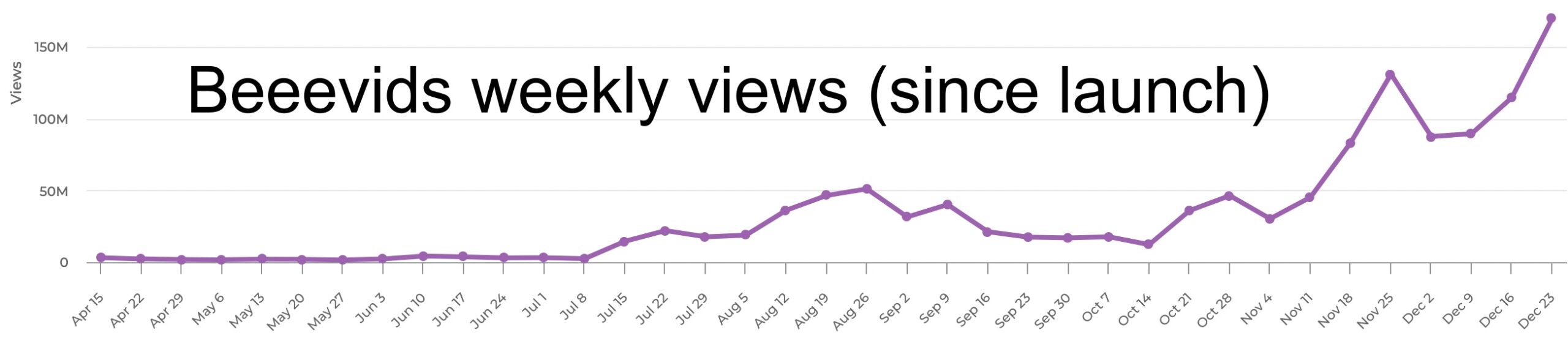
Luckily for us old-school gamers, the Minecraft community on YouTube Shorts still offers some semblance of order. Beeevids had a breakout year in 2024 with content that offers the best of both worlds. The 67th-ranked channel in the U.S. Top 100 added 690,000 new subscribers in December 2024 by uploading recognizable Minecraft gameplay full of references to the latest memes.

What’s next for the creators? Will 2025 offer any room for actual Minecraft creators, or will the meme masters run the show? One thing’s for sure: Minecraft content isn’t going anywhere. Mojang’s title has endured for 15 years and is still going strong.

Channel Distribution

This month, 73 channels in the Top 100 are primarily active on YouTube Shorts.

As always, keep up to speed with the latest Tubefilter Charts and all of our news at Tubefilter by following us on Twitter, becoming a fan on Facebook, and watching our videos on YouTube.

Top 100 Most Subscribed YouTube Channels Worldwide • December 2024

[Tubefilter Charts is a periodic rankings column from Tubefilter with data provided by GospelStats. It’s exactly what it sounds like: a top number ranking of YouTube channels based on statistics collected within a given time frame. We use data directly from YouTube and in terms of subscribers, YouTube rounds that data to the first three significant figures. Check out all of our Tubefilter Charts with new installments every week right here.] 

Scroll down for analysis and then this week’s Tubefilter Chart. 👇


For the second month in a row, MrBeast collected more new subscribers than any other YouTube channel. Jimmy Donaldson’s primary YouTube hub is the most-subscribed channel on the platform, with 340 million subscribers tuned into MrBeast’s uploads.

Since MrBeast is adding new subscribers faster than anyone else. — he got seven million of them in December alone — he figures to hold YouTube’s subscriber title for the foreseeable future. But there’s plenty to be learned from his (distant) challengers as well.

The biggest star in soccer is lifting up his sport on YouTube

Cristiano Ronaldo has positioned himself as a MrBeast challenger since he launched his UR Cristiano channel in August 2024. After a hot start, the UR Cristiano hub has cooled off considerably. It dropped from 5th place in November’s Global Top 100 to 11th in the most recent rundown.

Ronaldo is struggling to keep pace with his North Carolina-based rival, but he has already inspired a totally separate trend on YouTube Shorts: Soccer content, which was already quite popular in the land of vertical video, is reaching new heights with Ronaldo’s help.

A channel called CR7 Shorts just cracked the Global Top 100. It got 1.7 million subscribers in December to reach 34th place in our chart. Though its name would suggest that it’s a highlight hub, CR7 Shorts turns Ronaldo and rival Lionel Messi into the stars of bizarre clips that appeal to Generation Alpha.


The increasing presence of soccer stars on YouTube Shorts can be partially explained by the rise of Hispanic content on YouTube’s TikTok competitor. Countries like Mexico (7 channels), Spain (5 channels), and Colombia (2 channels) all have unusually high channel counts in the Global Top 100.

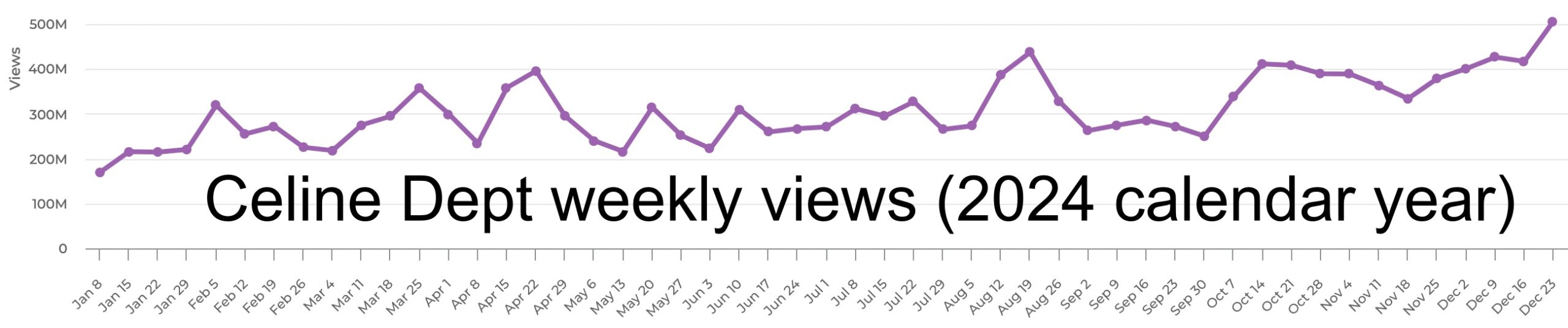
European soccer creators are enjoying the bump, too. Celine Dept, who has long been one of the most recognizable faces on the Shorts soccer community, got her highest viewership of 2024 after Ronaldo launched his official YouTube hub.

The domestic soccer season will run until May, but the presence of these channels on YouTube Shorts is a year-round fad. The biggest stars of the sport and turning attention toward themselves, and that bodes well for the creators who turn those players into wacky, Gen Alpha-approved avatars.

Channel Distribution

Here’s a breakdown of the Top 100 Most Subscribed channels this month in terms of their countries of origin:

  • India and United States: 23
  • Indonesia and Mexico: 7
  • Brazi, Hong Kong, and Spain: 5
  • Argentina, Japan, and Vietnam: 3
  • China, Colombia, and South Korea: 2
  • Belarus, Belgium, Bulgaria, Canada, El Salvador, Kazakhstan, Morocco, Pakistan, Portugal, and United Arab Emirates: 1

This month, 71 channels in the Top 100 are primarily active on YouTube Shorts.

As always, keep up to speed with the latest Tubefilter Charts and all our news by subscribing to our newsletter. You’re going to love it. 👉  Newsletter.Tubefilter.com.

Netflix’s notes for screenwriters reveal the flaws in its viewership reports

Netflix has reshaped the entertainment industry in countless ways, and one of those paradigm shifts has lessened the impact of the company’s own data. In a long-form dissection of the streamer’s business philosophy, N+1 writer Will Tavlin argues that Netflix has “created a pyramid scheme of attention” by funneling subscribers toward content that can easily exist as a second screen.

Tavlin’s piece has received widespread attention because of its references to Hollywood screenwriters, who claimed that Netflix told them to “have this character announce what they’re doing so that viewers who have this program on in the background can follow along.” To show how that note is being put into effect, Tavlin notes a particular passage from the Netflix original film Irish Wish, starring Lindsay Lohan.

“We spent a day together,” Lohan’s character says to her love interest. “I admit it was a beautiful day filled with dramatic vistas and romantic rain, but that doesn’t give you the right to question my life choices. Tomorrow I’m marrying Paul Kennedy.”

As compelling as it would be to criticize the declining quality of Netflix’s content queue, that’s not the main argument Tavlin makes. His N+1 piece uses snippets of simplistic dialogue to illustrate a greater point: That the passive nature of many Netflix originals is baked into the company’s business model in a way that makes its viewership data difficult to take at face value.

That overarching philosophy goes back to Netflix’s days as a DVD distribution service, when it eschewed late fees so that it could turn its subscribers into unwitting disc storage units. As a result of that shift from punishing consumers for forgetfulness to rewarding them for mindlessness, as Tavlin puts it, Netflix benefitted from content that could keep viewers occupied rather than entertaining them with resource-intensive thrills.

The trend toward mindlessness can also be seen on the streamer’s home page, where simplistic titles like Murder Mystery direct subscribers toward easily categorized fare that can be understood at a basic level even if it’s on in the background. For the majority of Americans who employ a second screen while watching TV, those predictable releases become popular choices.

On one hand, it’s easy to respond to Tavlin’s 8,500-word critique with a big “so what?” If viewers want to watch Murder Mystery (and Murder Mystery 2, and all the other interchangeable Adam Sandler joints currently available on Netflix), why shouldn’t streaming platforms give the people what they want?

The “so what” has to do with the What We Watched reports and other public statements Netflix uses to discuss the viewership its shows and movies receive. After spending years offering cryptic, milestone-heavy statements about the success or failure of its original content, Netflix recently started to release half-year rundowns of its global viewership data. Some programs rake in more than 100 million views over those six-month periods, according to Netflix.

Tavlin contends that those numbers paint an incomplete picture, since they don’t represent the passivity of many Netflix subscribers. After two minutes of viewership, Netflix officially registers a view, even though that watch time may have played second fiddle to a load of laundry, or a group chat, or even the closing credits of a previously-watched program.

As a result, Netflix originals like The Night Agent roll up gaudy viewership numbers even though they don’t move the needle nearly as much in terms of cultural import. Tavlin’s piece quotes a dig from Quentin Tarantino (“Those movies don’t exist in the zeitgeist”) and a thought experiment from Cannes Film Festival head Thierry Frémaux. At a press conference, Frémaux asked attendees to name a filmmaker who had gotten their start on Netflix; no one could.

Netflix certainly isn’t the only Big Tech company to fudge its numbers to make its content look better, but Tavlin’s insights provide important context for anyone who wants to evaluate the data in the What We Watched report. Even if Netflix is finally sharing its results with the public, it has also “destroyed the meaning of success,” Tavlin writes. When content is designed to be watched as an afterthought, it becomes much harder to evaluate — at least in terms of traditional metrics.

Meta axes fact-checking program, is working with Trump administration to “promote free expression”

Meta is sucking up to the incoming Trump administration.

In a video posted this morning, founder/CEO Mark Zuckerberg said his company is making major changes with the way it handles misinformation–starting with eliminating its official fact-checking program and replacing professional checkers with an X-clone Community Notes system.

It also plans to move its trust & safety content moderation teams from California to Texas because it thinks it will “help us build trust to do this work in places where there is less concern about the bias of our teams,” Zuckerberg said.

Launched in 2016, the fact-checking program was a partnership with nearly 100 authoritative organizations around the world. Its goal? To “identify and address viral misinformation, particularly clear hoaxes that have no basis in fact,” according to Meta. The legion of fact-checkers combated “provably false claims that are timely, trending and consequential” by clearly labeling misinformation and, at times, repressing the spread of it across Meta’s platforms.

But that’s all going away because, as Zuckerberg claims, “governments and legacy media have pushed to censor more and more” since Trump first took office.

“We’ve reached a point where it’s just too many mistakes and too much censorship,” Zuckerberg said. “The recent elections also feel like a cultural tipping point towards, once again, prioritizing speech. So we’re gonna get back to our roots and focus on reducing mistakes, simplifying our policies and restoring free expression on our platforms.”

He added, “Starting in the U.S. after Trump first got elected in 2016, the legacy media wrote non-stop about how misinformation was a threat to democracy. We tried, in good faith, to address those concerns without becoming the arbiters of truth, but the fact-checkers have just been too politically biased and have destroyed more trust than they’ve created, especially in the U.S.”

As part of “restoring free expression,” Meta is working directly with the incoming Trump administration, Zuckerberg said. This partnership includes bringing on UFC President and longtime vocal Trump supporter Dana White as a board member at Meta.

“We’re going to work with President Trump to push back on governments around the world that are going after American companies and pushing to censor more,” Zuckerberg said. “The only way that we can push back on this global trend is with the support of the U.S. government, and that’s why it’s been so difficult over the past four years. When even the U.S. government has pushed for censorship by going after us and other American companies, it has emboldened other governments to go even further. But now we have the opportunity to restore free expression, and I am excited to take it.”

If you’re thinking Zuck’s language around free speech sounds familiar, that’s because it mirrors what Elon Musk—who’s also involved in the Trump administration—said when he bought X. The platform has since become a haven for hate speech, but has on multiple occasions suspended and/or de-verified accounts of people Musk appears to personally dislike.

Meta didn’t say what its version of Community Notes will look like, but it did confirm that it has similarly decided to loosen content moderation rules around user discussions of topics like “immigration, gender identity and gender that are the subject of frequent political discourse and debate.”

“[I]t’s not right that things can be said on TV or the floor of Congress, but not on our platforms,” Joel Kaplan, Meta’s Chief Global Affairs Officer, wrote in a company blog post about the decision.

Meta is clearly making these changes because it wants to stay in the Trump administration’s good graces. But no matter how hard the “post-truth era” is pushed, facts are not subjective, and misinformation surged during Trump’s first term. It might do the same during his second–now with fewer watchdogs to check it.

Comcast just made a platform to “steal” ad dollars from YouTube

YouTube and TV networks have a contentious relationship when it comes to ad dollars—and Comcast is about to make things even messier.

Over the last few years, YouTube has positioned itself as a challenger for traditional TV networks. It moved its annual advertising presentation to the TV-focused Upfronts, pushed the fact that its viewers watch over a billion hours of content on living room TVs per day, and overall encouraged advertisers to ditch the old routine of buying ads on shrinking networks and instead consider spending their marketing dollars to reach its social media-savvy audience.

Its efforts have paid off. It went from earning $15 billion in ad revenue in 2019 to more than $30 billion in 2023, and almost certainly earned closer to $40 billion in 2024. For comparison, eMarketer estimates that in 2023, linear TV networks made a combined $66 billion in ad revenue. And, for more specific figures, Variety estimates that networks like NBC, ABC, CBS, Fox, and The CW brought in between $8 and $10 billion each on ad revenue for their 2021-22 primetime schedules.

With those numbers in mind, YouTube has become a behemoth.

Comcast wants that to end.

The telecom/media conglomerate has launched Universal Ads, an ad-buying platform that is explicitly intended to “steal market share” from YouTube and other social media sites.

For now, the platform will only allow marketers to buy ad space on streaming services owned by major TV networks and studios like NBCUniversal and Warner Bros. Discovery, but Comcast anticipates expanding inventory to space on traditional linear TV in the future, per CNBC.

CNBC also reports that Universal Ads’ interface was designed to mimic the ad-buying process on social media platforms, since that process is usually self-service, more simple to complete, and allows companies to deploy ads quickly. Buying ad space on TV networks and major streaming services, however, can be a lot more complicated, which Comcast thinks has deterred small businesses (some of whom are thriving thanks to ads on social media).

Universal Ads has so far signed Comcast subsidiaries NBCUniversal and Xumo, as well as Warner Bros. Discovery, Paramount, Roku, DirecTV, A+E, AMC Networks, Fox Corp, and TelevisaUnivision. Comcast expects to onboard more outlets in the coming months.

“Universal Ads is intended to create new demand from advertisers who have not traditionally worked with us,” Mark Marshall, Chairman of Global Advertising and Partnerships for NBCUniversal, told CNBC. “And while we’re starting with streaming and [small- and medium-sized businesses], in a future state this can be for linear and for agencies as well.”

James Rooke, President of Comcast Advertising, added, “The head scratcher is that there’s a sort of large number of advertisers who’ve built their businesses, or started to build their businesses, on the backs of social video. Yet when you talk to these advertisers there’s an increasing wish to diversify away from a very limited number of big technology companies.”

Comcast wants those advertisers to instead spend their money with its collection of big technology companies.

And it’s willing to offer a couple carrots to ease the switch. First, Universal Ads is free to use. Second, it does offer a functionality (placing ads on major streamers) and level of accessibility that isn’t otherwise available to small business owners. Third, Comcast is already talking about implementing the latest “it” thing, generative AI, so small/midsize businesses that are okay with using AI will eventually be able use Universal Ads to both make marketing and deploy it.

“The idea of empowering small- and medium-sized businesses to connect with audiences through premium content, especially on connected TV, aligns perfectly with the growing demand for flexibility and efficiency in ad buying,” Ryan Gould, Warner Bros. Discovery’s EVP of Sales in Streaming, Digital, and Advanced Advertising, told CNBC.

Whether these plans pan out remains to be seen, but one thing is clear: Comcast considers YouTube—and other social media platforms—a growing threat. And we think that’s interesting.

Top 50 Most Viewed U.S. YouTube Channels • Week Of 01/05/2025

[Editor’s Note: Tubefilter Charts is a weekly rankings column from Tubefilter with data provided by GospelStats. It’s exactly what it sounds like; a top number ranking of YouTube channels based on statistics collected within a given time frame. Check out all of our Tubefilter Charts with new installments every week right here.]

Scroll down for this week’s Tubefilter Chart. 👇


MrBeast made a splash among Amazon Prime Video viewers with the mid-December premiere of Beast Games, but the launch of that series didn’t take away from Jimmy Donaldson’s YouTube audience. In fact, the North Carolina-based star is looking as good as ever on YouTube, where his primary channel just raised its viewership by 25% week-over-week. That brought him up to 699.8 million weekly views and put him at the summit of the U.S. Top 50 for the second week in a row.

iShowSpeed is moving into Kai Cenat territory

The two streaming stars are good friends and Fortnite partners-in-crime, and they’re both venturing into uncharted territory on YouTube.

Late last year, we noted Kai Cenat’s growth on his YouTube channel, which features clipped highlights from his blockbuster Twitch stream. Even though YouTube is not Cenat’s primary platform, his skyrocketing popularity makes him one of the only individual creators who can keep pace with megastars like MrBeast.

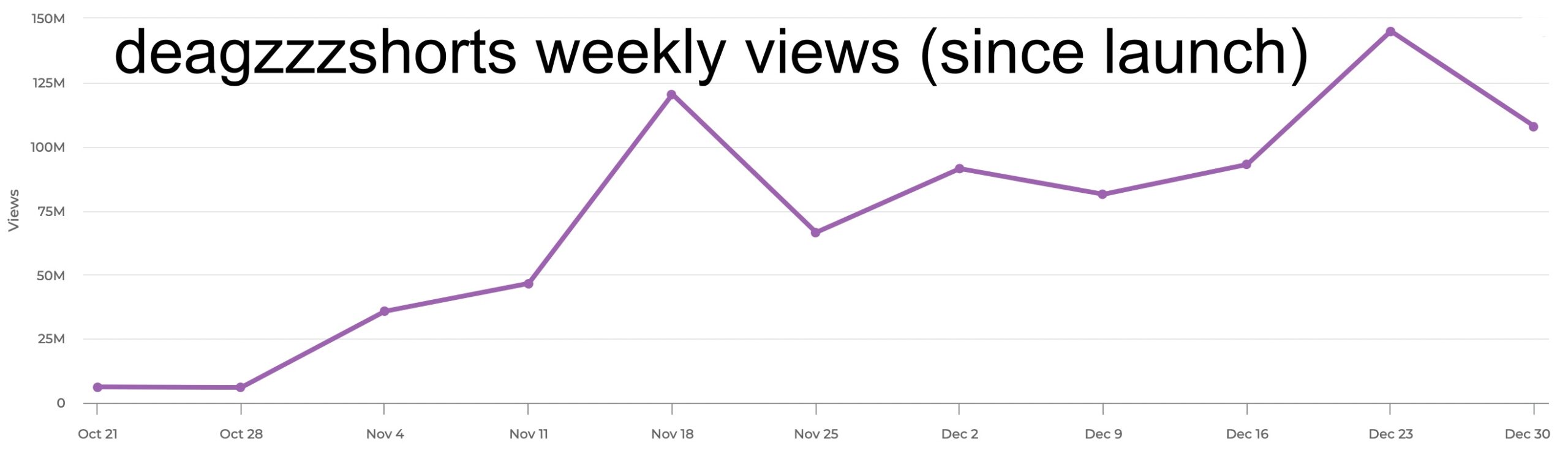
Cenat’s YouTube channel is out of the U.S. Top 50 is in, but an iShowSpeed clip hub is in. The channel dubbed deagzzzshorts is home to an enterprising creator who is getting 145 million weekly views by cutting some of the most boastful moments from Speed’s streams. Though deagzzzshorts invokes fair use to protect its reposts, its anonymous creator notes that the clips are “edited by me to add that extra flair and ensure you get the best entertainment possible.”


The “clip farm” side of YouTube Shorts may seem like a den of content thieves, but the other options for creators who wish to latch onto trends have their own quirks. As an example, check out King of Survival, which is latching onto the survival content trend by dressing actors as wild animals and staging encounters.

Yeah, I think I’ll stick with the Speed clips. The record-breaking creator had a huge year in 2024, and with his 2025 looking to be just as grand, his anonymous stream-cutters are due for a big year.

Channel Distribution

This week, there are 36 YouTube Shorts channels in the U.S. Top 50.

As always, keep up to speed with the latest Tubefilter Charts and all our news by subscribing to our newsletter. You’re going to love it. 👉  Newsletter.Tubefilter.com.

Top 50 Most Viewed YouTube Channels Worldwide • Week Of 01/05/2025

[Editor’s Note: Tubefilter Charts is a weekly rankings column from Tubefilter with data provided by GospelStats. It’s exactly what it sounds like; a top number ranking of YouTube channels based on statistics collected within a given time frame. Check out all of our Tubefilter Charts with new installments every week right here.]

Scroll down for this week’s Tubefilter Chart. 👇


KIMPRO returned to the billion-view club during the first week of 2025. It’s not the first time that KIMPRO has earned a ten-digit view count in a single week, and the Korean channel is no stranger to the top of our charts, but it still feels strange to see the three biggest YouTube channels of 2023 — T-Series (#2), MrBeast (#3), and Anaya Kandhal (#6) all trailing KIMPRO at the start of the year.

Brace yourself. Shorts are only going to get weirder in 2025.

If you thought that brainrot content like the Skibidi Toilet series represented the low point of taste on YouTube Shorts, the hot videos of January 2025 are here to shock you again. Our ranking of the 50 most-watched YouTube channels of the week is filled to the brim with bizarre channels from all over the world.

Case in point: Take a look at Skitsters Arabic. The Arabic-language offshoot of media brand Skitsters made it into the Top 50 for the first time this week. It got more than 357 million views to reach 26th place in the global ranking. If you’re the type of viewer who likes to watch adult women do weird things with their mouths while dressed in a full-body Pikachu costume, Skitsters has some content for you.

https://www.youtube.com/shorts/VMn0V5atnT4

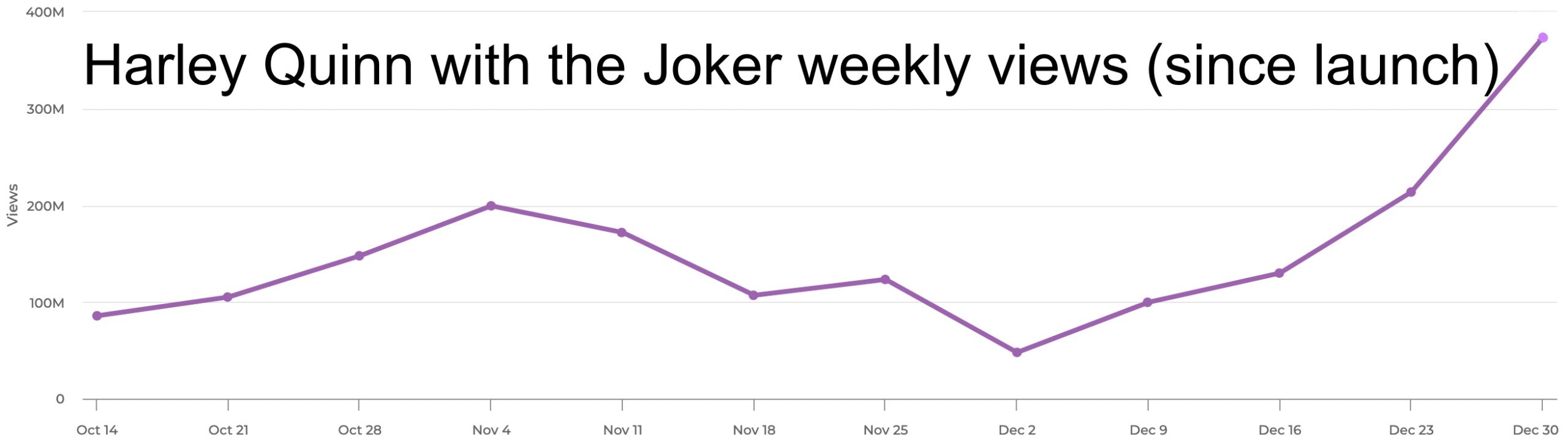
The trend of adults dressed as children’s pop culture characters has a long, troubled history on YouTube, and it seems to be roaring back at the start of 2025. Channels like Harley Quinn With The Joker (#30) continue to make gains by reimagining film and TV staples for the Shorts generation.

As alarming as these channels are, their performance in the Global Top 50 isn’t necessarily indicative of a sweeping trend that will define YouTube throughout the 2025 calendar year. After all, 2024 seemed to end right where it began: With face-painted characters racking up millions of views on Shorts.

Channel Distribution

Here’s a breakdown of the Top 50 Most Viewed channels this week in terms of their countries of origin:

  • India: 14
  • United States: 9
  • Indonesia: 4
  • Hong Kong: 3
  • Canada, Pakistan, South Korea, United Arab Emirates, and Vietnam: 2
  • Belgium, China, Czechia, El Salvador, Japan, Kazakhstan, Mexico, Norway, and Taiwan: 1

This week, 40 channels in the Top 50 are primarily active on YouTube Shorts.

As always, keep up to speed with the latest Tubefilter Charts and all our news by subscribing to our newsletter. You’re going to love it. 👉  Newsletter.Tubefilter.com.

Nick DiGiovanni is trying a new recipe for YouTube content

Nick DiGiovanni wants to be the #1 culinary content creator on YouTube. And his channel is in fact one of the biggest: It has over 22 million subscribers, brings north of 400 million views a month, and its library includes collaborations with dozens of celebrities and fellow creators, including Gordon Ramsay, Ryan Trahan, and the late Lynja.

So why did he choose to launch a new channel?

Last Friday, Nick’s Kitchen popped up on YouTube with a 10-minute video showing viewers how to make the perfect mac and cheese. This upload is different from DiGiovanni’s usual content; it’s slower-paced and softer-lit, lingering on the moment-by-moment details. It looks more like a Food Network program, with an aproned DiGiovanni moving gently around a meticulously decorated kitchen set.

The shift is similar to what we’ve seen from other longtime creators like Rhett & Link, who recently launched their high-production series Wonderhole. The show was a risk, since it was a breakaway from their usual content, but the duo figured they had enough experience in making videos and fan support for their usual content to try something different.

DiGiovanni figures that, too.

“I chose to launch Nick’s Kitchen as a separate channel because I know the possibilities are endless for this new concept,” he tells Tubefilter. “My main channel was created out of my love & passion for cooking and food and overtime it transformed into ‘food entertainment’ videos which I have so much fun making and I’m excited to continue to push boundaries there. In tandem, I want to get back to the basics and prove that anyone can cook.”

For the foreseeable future, all Nick’s Kitchen videos will follow the easygoing, recipe-focused format set by its debut upload. DiGiovanni’s goal here is to make a “hub” of dependable recipes for people who not only want to watch culinary content, but get in the kitchen themselves.

“When you search for a recipe online, you receive millions of results, which can be extremely overwhelming. With Nick’s Kitchen, I want to create a one-stop hub for high-quality, easy-to-follow recipes for any night of the week,” he says.

He adds that new videos will go up every week at noon EST. “With a Friday release, my hope is that people can watch on a Friday and gather their grocery lists and ingredients to cook a delicious meal for a weekend date night, a Saturday hang with friends or even meal prep on Sunday ahead of the week,” he says.

DiGiovanni says he expects to see some crossover with the audience for his main channel and this new channel, but also thinks that “both channels will have independent audiences and demographics.”

“Some viewers watch for the joy of the entertainment and others for the genuine desire to grow in the kitchen but my hope is to deliver high-quality, inspiring videos that reimagine culinary content,” he says.

In three days, DiGiovanni’s mac and cheese video has netted over 400,000 views, and Nick’s Kitchen has grown to more than 2.2 million subscribers.

During our conversation, DiGiovanni’s team mentions Nick’s Kitchen is planned to premiere on YouTube “and beyond.” Could that mean a partnership with a streaming service or TV network? Will he launch his own service or over-the-top channel? Does he view Nick’s Kitchen as a potential competitor for outlets like the Food Network?

No details yet—but “the sky’s the limit” DiGiovanni says.