Archive for 2025:

Welcome to Big Tech Easter: YouTube, Meta, and Amazon all get sponsor spots at the White House Egg Roll

It’s not a secret: tech’s biggest players have been cozying up to the Trump administration. Meta CEO Mark Zuckerberg, Amazon founder Jeff Bezos, and Google itself all donated $1 million to Donald Trump‘s inauguration fund earlier this year. But that wasn’t enough for the three companies. All of them just chipped in for the White House’s first significantly corporate-sponsored Easter Egg Roll.

The Easter Egg Roll has been a thing since 1878, and in those 147 years, it’s been primarily sponsored by the American Egg Board, a nonprofit collective of egg producers that now donates around 30,000 small and medium eggs to the event each year. There has been brand participation in the Egg Roll in previous years (we’ll get into that below), but 2025 marks the first year big tech corporations have made such sizable financial contributions.

Per CBS, the White House paid event company Harbinger to put together corporate sponsorship packages for the Egg Roll and find companies to fill them. YouTube, Meta, and Amazon all paid at least $75,000 and up to $200,000 to host activations at the event. YouTube sponsored the Bunny Hop Stage, Meta offered an “AI-Powered Experience and Photo Opportunity,” and Amazon paid for a “Family Photo Opportunity Celebrating Reading” as well as a reading nook, in line with its Kindle ambitions.

It’s not clear exactly what amount each company paid, but we do know sponsors that paid $200,000 received a “custom 30’x30′ branded activation” at the Egg Roll plus four tickets to the White House Easter Egg Roll brunch with Melania Trump, with choice of a meet-and-greet or a White House tour.

Other sponsors included NASA, the Toy Association, the New York Stock Association, the International Fresh Produce Association, the National Confectioners Association, PAAS, and Signature Brands.

All money they paid went to the White House Historical Association, which was founded by Jackie Kennedy in 1961 and is dedicated to preserving the White House and its history.

We mentioned before that companies have had presences at the Egg Roll before. That list includes YouTube, which tells us this is its third year hosting an activation at the Egg Roll. In 2023, it brought creator Art for Kids Hub to lead a drawing activity, and in 2024 it brought SciShow Kids host Jessi Knudsen Castañeda to help kids construct “robo paws” so they could learn about animal physiology and robotics. For 2025, it brought YouTuber Go With YoYo to hang out on the branded Bunny Hop Stage.

“YouTube’s participation in the White House Easter Egg Roll has become an annual tradition, and we do so in line with the administration’s process. Our goal is to provide an opportunity for kids to meet their favorite creators, and we look forward to having a presence once again this year,” a spokesperson tells us.

All that being said, the amount of corporate sponsorship at this year’s Egg Roll was unusual. As Business Insider points out, the White House generally sought to keep the Egg Roll non-corporate, and its brand partnership opportunities were extremely limited and “tightly controlled.” This appears to be the first year the White House has worked with an event company and put together buy-in packages.

There’s also something to be said for the fact that YouTube, Meta, and Amazon were all approved for placements, and all have ties to million-dollar, Trump-supporting donations. We’ll see if that trend continues into White House events over the next four long years.

Top 5 Branded Videos of the Week: MrBeast, Ryan Trahan, Mark Rober

Welcome to our rundown of the most-watched branded YouTube videos of the week.

We’re publishing this snippet of a larger Gospel Stats Weekly Brand Report in order to analyze sponsorship trends in the creator economy. Any video launched in tandem with an official brand partner is eligible for the ranking.

And – as the name up above would imply – all the data comes from Gospel Stats. If you’re interested in learning more about Gospel – and which brands are sponsoring what creators on YouTube – click here.


In this week’s Gospel Stats Weekly Brand Report, we have the who’s who of top YouTubers, from MrBeast to Ryan Trahan to Mark Rober. Follow up with an episode from Joe Rogan and a deep dive on terrible movie wigs, and you’ve got a nice encapsulation of what pops up on the platform’s Trending tab these days.

Check ’em all out below:

#1 Watch This Video To Feed 1 Person In Need
Channel: MrBeast
Brand: DoorDash
Views: 41,646,575

This week’s top video is just MrBeast doing MrBeast things–and, of course, getting more views than any other creator (at this point) could hope to achieve. But there’s a twist: With this latest video, MrBeast says that every single view will help feed someone in need. To prove that point, he spends this 10-minute upload taking people around communities in Africa and in the U.S. that are affected by hunger. In Africa, he shows himself donating things like desks and farm equipment, and back across the pond in Philadelphia, he works with a nonprofit that takes viable food waste and distributes it to people in need. This is the sort of work he can continue, he says, if people watch this video. And so far, nearly 42 million have.

#2 How Many Days Can I Double $1?
Channel: Ryan Trahan
Brand: Shopify
Views: 8,668,141

Ryan Trahan made a massive splash in summer 2022 with his penny series, where he started with one penny and spent a month bargaining, hustling, and resetting his way across America to deliver a giant penny to our #1 spot holder, MrBeast. He (understandably) took a bit of a break afterward, but now he’s back–and this time, he’s not just working with a penny. He’s working with a whole dollar. This whopping hour and 13 minute-long video follows Trahan as he tries to spend as many days as possible in a row doubling his daily amount of cash to see if you really can hit $1 million in just 20 days.

#3 How Do Hot Air Balloons Steer? (+6 Other Science Mysteries)
Channel: Mark Rober
Brand: CrunchLabs
Views:  7,800,219

Mark Rober has something in common with MrBeast, and we’re not talking about Team Trees or Team Seas. Both of them have launched companies that are so successful, they use those companies to sponsor their own videos. For MrBeast, that’s his candy brand Feastables. For Rober, it’s his STEM subscription box company CrunchLabs, which he launched in 2022 in tandem with opening his new headquarters. Similar to his CrunchLabs kits, this video answers top science questions–you know, the sort of stuff you might passively wonder about, like whether or not you can steer a hot air balloon.

#4 Joe Rogan Experience #2303 – Dave Smith & Douglas Murray
Channel: PowerfulJRE
Brand: ExpressVPN, DraftKings
Views: 3,911,609

Joe Rogan is once again in our top 5–a consistent place for him since the last presidential election put several Republican frontrunners on his podcast. Also once again, he has attention-grabbing guests: Dave Smith, a libertarian who runs a podcast called Legion of the Skanks, and Douglas Murray, who just wrote a book called Democracies and Death Cults: Israel and the Future of Civilization that posits Israel is “a beacon of progress in a region dominated by authoritarianism and extremism.” Rogan is sponsored by the usual podcast suspects (ExpressVPN and sports betting app DraftKings), and it’s worth mentioning that while his show is solidly on YouTube these days, he recently made an appearance on Netflix as a guest on Tony Hinchcliffe‘s right-wing comedian show Kill Tony.


BONUS #1,539 I Ranked The Worst Wigs In Cinema History
Channel: Queen Coke Francis
Brand: Private Internet Access
Views: 46,150

Hair and makeup are still underrated parts of the moviemaking industry. Sometimes a well-suited wig can make all the difference in how a character comes off onscreen. And sometimes…well…Let’s just say these are a whole new kind of cinema sin. There are few people with more expertise in wigs than drag queens, which is what makes Queen Coke Francis the perfect host of a video that runs down the worst wigs in film (and TV!) history. Her video, like many others on YouTube, is sponsored by a VPN company: Private Internet Access, which sponsored 14 videos this week. (For context, its closest competitor, NordVPN, sponsored 22.)


…and there’s a lot more data where that came from. If you’re interested in learning more about Gospel – and which brands are sponsoring what creators on YouTube – click here.

Top 50 Most Subscribed YouTube Channels • Week Of 04/20/2025

[Editor’s Note: Tubefilter Charts is a weekly rankings column from Tubefilter with data provided by GospelStats. It’s exactly what it sounds like; a top number ranking of YouTube channels based on statistics collected within a given time frame. Check out all of our Tubefilter Charts with new installments every week right here.]

Scroll down for this week’s Tubefilter Chart. 👇


During the third week of April 2025, 33 different YouTube channels added at least 500,000 new subscribers. For a channel to rank as one of the 50 most-subscribed hubs of the week, it needed to accrue at least 400,000 new subs.

The current group of Top 50 entrants represents the unpredictability and volality of YouTube. Some of those channels, like MrBeast and Jesser, belong to long-popular individual creators. In order cases, channels that didn’t exist a year ago are flying up the charts. Here’s how they’re doing it:

It’s a good time to be a content aggregator in the Islamic world

How else can we explain the sudden rise of Tricks BD, a content aggregator from India that ranked #1 in our most recent Global Top 50 subscriber chart? According to its official description, Tricks BD launched at the end of February. Less than two months later, it pulled in 2.2 million weekly subs to outrank all other channels across the globe.

Tricks BD is run by a creator named Mohammed Murad Islam, who is following in the footsteps of other prominent Muslim creators. Hassyl Joon has gotten massive viewership by sharing his experience as a Korean Muslim, while the most populous Islamic nation in the world — Indonesia — is a hotbed of short-form creator content.

But here’s the interesting part: Tricks BD is mostly aggregating videos from East Asian countries that are not majority Muslim. To proliferate those videos around the world, Tricks BD jams them full of English-language keywords that pop on Shorts. There are allusions to family members and the show Squid Game among Tricks BD’s greatest hits. The most-watched video on the channel is a keyword soup that alludes to favored genres like “comedy” and “challenge” — with a dash of sigma girl culture thrown in for good measure.

https://www.youtube.com/shorts/1JlUvObFlso

So, to recap: The best-performing channel in our Subscriber Top 50 combines East Asian culture, Islamic character, and English language. That’s the globetrotting recipe that leads to 2.2 million subscribers in a single week.

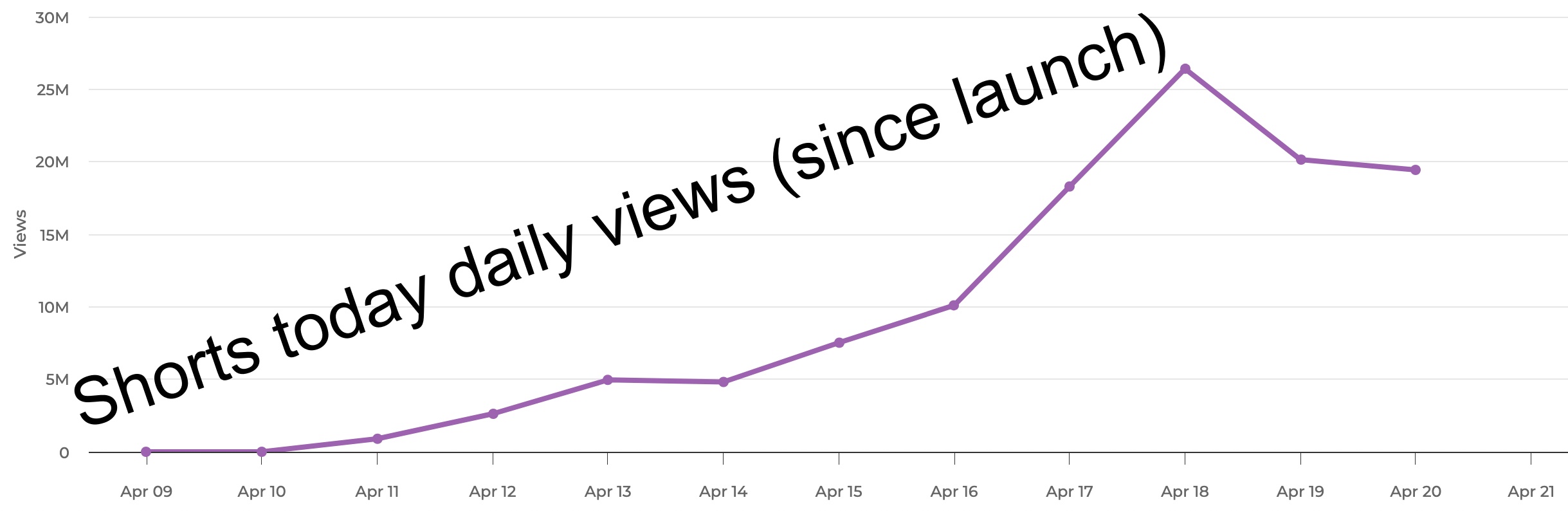
To explain the relevancy of this story’s Muslim angle, we can look at another channel that’s climbing the chart. Saudi Arabia’s representative in the Subscriber Top 50 has an Arabic-language name that translates to “Shorts Today.” Yep, you guessed it — another content aggregator.

Sure enough, Shorts Today also takes leading content from East Asia and adds in Arabic narration to increase the reach of those clips. The success of that type of channel suggests that content viewership in Islamic communities might be outpacing content production in those regions. For Shorts Today, which reached 25th place in the Subscriber Top 50 just a few days after its launch, that gap is an opportunity.

Data via Gospel Stats

It would seem that creators in Muslim-majority countries are simply well-positioned to take advantage of the trends that are thriving on YouTube Shorts. In many of those countries, there’s a strong appetite for content aggregation, and channels like BD and Shorts Today are delivering the goods.

Channel Distribution

Here’s a breakdown of the Top 50 Most Viewed channels this week in terms of their countries of origin:

  • India: 19
  • United States: 10
  • South Korea: 3
  • Hong Kong, Japan, and Spain: 2
  • Australia, Belarus, Belgium, Brazil, China, Germany, Malaysia, Nepal, Pakistan, Puerto Rico, Saudi Arabia, and Vietnam: 1

This week, 41 channels in the Top 50 are primarily active on YouTube Shorts.

As always, keep up to speed with the latest Tubefilter Charts and all our news by subscribing to our newsletter. You’re going to love it. 👉  Newsletter.Tubefilter.com.

Top 50 Most Viewed YouTube Channels Worldwide • Week Of 04/20/2025

[Editor’s Note: Tubefilter Charts is a weekly rankings column from Tubefilter with data provided by GospelStats. It’s exactly what it sounds like; a top number ranking of YouTube channels based on statistics collected within a given time frame. Check out all of our Tubefilter Charts with new installments every week right here.]

Scroll down for this week’s Tubefilter Chart. 👇


Getting one billion views in a week is so last year. Getting two billion views in a week is the new hotness.

Thanks to YouTube’s lenient policy regarding view counts on YouTube Shorts, channels that specialize in vertical videos have been able to achieve numbers that would have previously been impossible. Before the shift occurred, we occasionally saw one or two channels with at least one billion weekly views. This week, two channels cleared two billion views: Chart leader KIMPRO and runner-up Double Date.

How can brands capitalize on the Shorts view-counting update?

Once upon a time, brands and corporate-aligned media companies ruled the Tubefilter charts. Channels fitting that description regularly ranked among YouTube’s most-watched hubs.

About a decade later, everything has changed — at least as far as raw viewership is concerned. Now, individual creators are on top of the charts, and the accounts affiliated with traditional brands are few and far between.

The most obvious theory we can extrapolate from that reversal is that Shorts is a format that champions individual creators. After all, YouTube’s TikTok variant didn’t exist when networks like NBC and CBS climbed the charts (with help from their respective late-night hosts).

So what’s a brand to do in a world dominated by Shorts? ElaFrame provides one case study — and in this instance, the term “case study” is as literal as can be. Slovakia’s lone representative in the Global Top 50 manufactures flexible frames that can be used to encase objects and suspend them in midair. Some of ElaFrame’s most popular Shorts uploads show how that process works.

https://www.youtube.com/shorts/cSWxpEGc5dQ

We’ve seen ElaFrame in the Global Top 50 before, but the Shorts view counting change has boosted the Slovak brand to new heights. With 633.7 million weekly views, ElaFrame reached 36th place in the Global Top 50. That was good for a 20% week-over-week bump that moved ElaFrame up 14 places in the ranking.

With its easy-to-grasp product line and its ties to the culture of “oddly satisfying” videos, ElaFrame is perfectly suited to capitalize on Shorts. But what about brands that don’t fit as neatly into YouTube’s short-form universe? Let’s look at how T-Series has fared since YouTube dropped the Shorts viewership bomb.

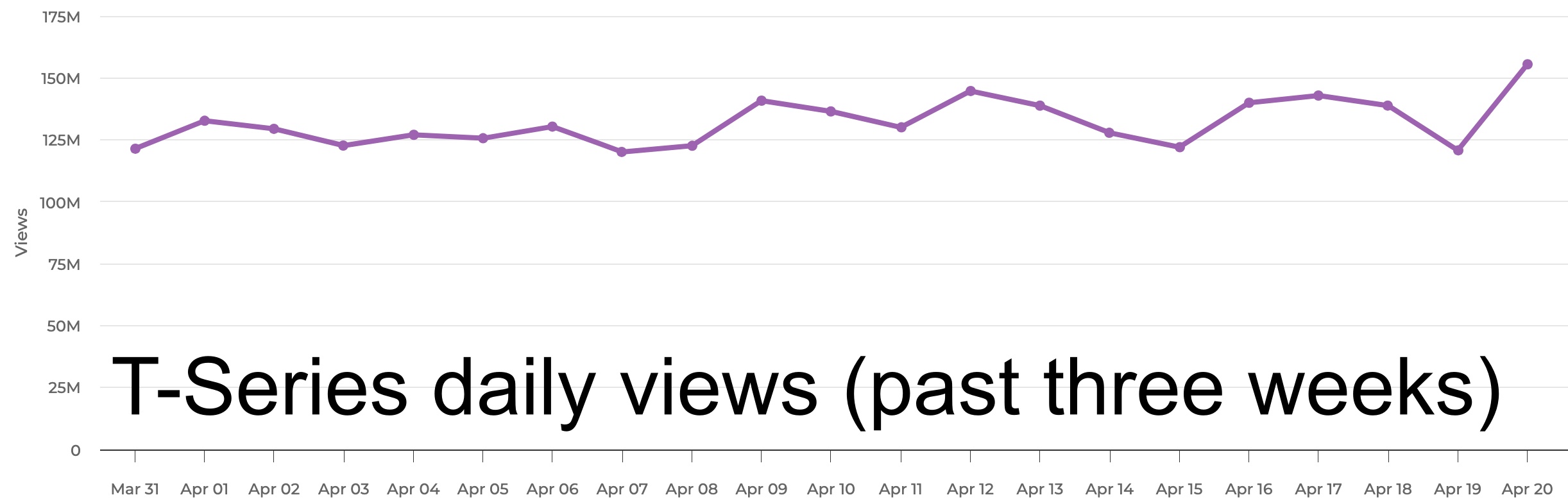
T-Series typically ranked #1 in pre-change Top 50 rankings. These days, it has fallen down to 14th, but interestingly enough, its views are still going up. Even without many Shorts to rely on, T-Series reached 947.9 million weekly views thanks to a 2% week-over-week bump.

Data via Gospel Stats

So there you have it: Short-form stars may be in the best position to benefit from YouTube’s new counting methods, but brands with savvy approaches to platform-wide trends can still thrive, even if they’re an awkward fit on a hub like Shorts. We can’t all be T-Series, but the indefatigable Indian label is showing us what’s possible on YouTube.

Channel Distribution

Here’s a breakdown of the Top 50 Most Viewed channels this week in terms of their countries of origin:

  • India: 12
  • United States: 11
  • Hong Kong: 3
  • Australia, Canada, China, Germany, Japan, South Korea, and Vietnam: 2
  • Bangladesh, Belgium, El Salvador, Indonesia, Kazakhstan, Puerto Rico, Russia, Slovakia, Spain, and Taiwan: 1

This week, 46 channels in the Top 50 are primarily active on YouTube Shorts.

As always, keep up to speed with the latest Tubefilter Charts and all our news by subscribing to our newsletter. You’re going to love it. 👉  Newsletter.Tubefilter.com.

Instagram wants to instill a sense of community with collaborative “storylines”

Instagram is reportedly working on a feature that would bring more interconnectedness and collaboration to its disappearing Stories. The Meta-owned app is cooking up Storylines, which would facilitate linked sequences of Stories uploaded by multiple creators.

Alessandro Paluzzi, a tech leaker known for uncovering upcoming features on prominent apps, posted about Storylines on his Threads account. Paluzzi — who previously spotted in-development Instagram updates like long-form Reels and multiple links-in-bio — posted a screenshot that explains how Storylines will function.

Creators will be able to append responses to Stories uploaded by accounts they follow. Their followers can then continue the chain by adding their own input. The posts that are part of a Storyline will “show up together,” per Paluzzi’s post.

Assuming that Storylines do eventually show up on the Instagram app, the feature will be part of Meta’s push to bring a greater sense of community to its photo- and video-sharing platform. Since the start of the year, Instagram has recognized the rising potential of creator-fan interactions by introducing a number of new tools. Creator-led accounts have been reshaped to facilitate two-way conversations, and the humble DM has been upgraded through 20 rapid-fire updates.

Another trend at Instagram HQ has been an increasing emphasis on formats other than Reels. Though the TikTok-style posts put up big numbers, they are potentially getting spun off onto a separate app. If that happens, Stories will become a more prominent format on Instagram. So if you want to know why Insta Stories are getting comments and Storylines, look to the intersection of creator-fan communications and non-Reels formats.

The idea of stringing together disappearing posts to create a narrative through-line is not exactly new. Snapchat experimented with that idea more than a decade ago by curating Stories collections during tentpole events like New Year’s Eve. More recently, BeReal attempted to build on its signature format by introducing RealEvents, a feature that examines large-scale happenings through multiple points of view.

If Instagram chose to draw inspiration from those platforms’ initiatives, well, it wouldn’t be the first time the Meta-owned app has played the copycat. But we have to give Instagram credit here — ultimately, Storylines is an original idea, and it could reshape the Stories format once it eventually gets a public introduction.

Have you heard? Kyedae’s retirement, a Sidemen scoop, and the end of ChatGPT Ghibli memes.

Each week, we handpick a selection of stories to give you a snapshot of trends, updates, business moves, and more from around the creator industry. This week, a creator group screams for ice cream, TikTok watches another exec walk out the door, and a director’s long-lost history resurfaces online.

Creator commotion

Kyedae is “kind of done with streaming.” The Valorant gamer, whose Twitch broadcasts shot her to stardom during the pandemic, said that the creator life has never really been her bag. “Stepping away from streaming is something I’ve been thinking about for years,” she wrote on X. “Truthfully, streaming was never my dream or end goal.”

MrBeast’s Las Vegas experience disappoints. Jimmy Donaldson’s resort experience on the Strip seemed like it would be good, immersive fun for the creator’s 385 million subscribers. Unfortunately, after multiple attendees claimed that the experience underdelivered, MrBeast’s team was compelled to issue refunds to aggrieved customers.

YouTube’s drama boys are fighting. Ian Jomha and Ethan Klein, a.k.a. iDubbbz and h3h3productions, are both known for their commentary on internet drama. When Jomha accused Klein of dishing out criticism but not being able to take it himself, the h3h3 host responded with an incendiary clapback. Kinda proving his point there, Ethan.

The biz

I scream, you scream, we all scream for Sidemen ice cream. The U.K.-based septet loves a good creator product, especially in the consumables sector. Their latest venture in that world is a new range of ice cream products that will be part of the creator group’s Sides brand.

Alpharad lists his Southern California home for $5 million. Among other perks, the gamer’s home features some “integrated technology.” As he moves out of his Sherman Oak stomping grounds, will the house’s hi-tech finishes draw interest from other creators?

A European creator economy event returns. An event called CreatorFest launched last year to gather creators from across the continent in London. It’s planning to return in 2025 with a bigger, better schedule. More details here.

Platform headlines

Michael Beckerman’s departure is a blow to TikTok’s regulatory battle. The app’s U.S. public policy chief devised a plan to keep TikTok running despite federal ban threats. Now he’s adding his name to the long list of TikTok execs who have left their positions since the start of 2025.

Twitch isn’t capping your storage (yet). In February, streamers balked when Twitch announced that it would limit them to no more than 100 hours of VOD highlights on their accounts. That update has been paused for the time being, so go ahead and spam those Rocket League clips like there’s no tomorrow.

Kick multistreaming comes with a catch. The streaming industry upstart is letting its community simulcast on platforms like Twitch and YouTube, but if they do, they might lose access to the platform’s generous revenue split. Multistreaming earnings will be “calculated differently and may be reduced by up to 50% compared to streaming exclusively on Kick,” the platform noted.

Pop culture minute

Did you catch Christopher Nolan’s first movie before it left YouTube? The Oppenheimer director’s production company, Syncopy, issued a takedown notice after an unaffiliated YouTube channel uploaded Nolan’s 1989 short film Tarantella. Some of his fans checked out the movie before the takedown notice hit — but is its removal just another one of those thrilling Christopher Nolan mysteries?

Meta’s Ray-Bans star in OK Go’s new video. The new wearables are yet another toy for the alt-rock band that loves high-concept, hi-tech music videos. “Love” is pretty fun, but if you ask me, OK Go will never be able to top their zero-gravity shenanigans.

Coachella is back on YouTube. As per usual, the platform is serving as a one-stop shop for all types of Coachella content. Musician Reggie Watts recently claimed that “influencer culture” has tarnished the soul of the Indio, California music festival, but that’s not stopping YouTube from fulfilling its duties as a distributor.

The internet is a strange place

Japanese lawmakers might put the kibosh on ChatGPT’s Studio Ghibli images. There have been discussions as to whether the use of Ghibli-style imagery within ChatGPT constitutes a form of infringement. We’re finally talking about regulating AI’s effect on copyright, and all it took was one Studio Ghibli-fied 9/11.

Popular streamers love dealing (virtual) drugs. The indie game Schedule 1, which simulates the life of a drug dealer, has gotten big thanks to activity on platforms like Twitch. To thank the streaming community, Schedule 1‘s devs added big names CaseOh and Moist Cr1TiKaL as in-game characters.

Don’t ask the internet what to name your rare medical condition. Do you want Ligma? Because this is how we get Ligma.

Gamer Supps gets a new creator investor–one who’s driven eight figures in sales for it

Each week, we here at Tubefilter track all the companies paying to sponsor videos on YouTube. Some brands partner with just one or two creators a week; others partner with dozens, or even hundreds.

Online culture energy/bev Gamer Supps is in the latter category. This past week, it sponsored 69 videos, all from well-known gaming creators. That number makes it one of the most prominent sponsoring companies on the entire platform.

But who runs it?

That’s a secret–at least for now. Gamer Supps’ ownership, investment, and executive structures are all kept under wraps. We’ve known former OTK co-owner jschlatt has at leatst part ownership, but he’s not an executive. We also know there are a number of other creators involved as owners, investors, and operators, but Gamer Supps prefers to keep their names under wraps, telling us that it “choose[s] to let our Creator Partners be the voice of our brand instead of using a company spokesperson.”

Today, however, Gamer Supps made a rare move and announced that YouTuber/Twitch streamer/all around gamer SMii7Y is joining as an investor and equity partner.

This builds on the duo’s longtime partnership. Gamer Supps has sponsored SMii7Y for years, and in return, he’s helped drive over eight figures in sales with offiical SMii7Y x Gamer Supps collab releases, the company says. Right now, Gamer Supps is selling his “Good” line of products, including his own energy supplement beverage mix, a soup, and an instant noodle.

“Gamer Supps, to me, was a fresh breath of air. Not just because the product itself works, but because the team behind it understands what it’s like to work with creators. That’s such a large part of how I do business,” SMii7Y said in a statement. “So yeah, getting more involved was of huge interest to me. I’m not just putting my name on the products we put out–I’m putting my money where my mouth is. I’m so excited to be a direct influence for the future of this company. This is just the beginning.”

The Gamer Supps team added, “Our partners are the brand. They shape the drops, the voice, the culture—everything. SMii7Y’s been a huge part of that from day one, so making him an owner was the most natural move ever.”

As part of the deal, Gamer Supps buyers can expect more SMii7Y flavors, merch, and “chaotic content drops” in the coming months, Gamer Supps said.

It also buried some bigger product news down at the bottom of its press release: It’s getting into canned energy drinks, putting it in even more direct competition with brands like Red Bull and Monster. To date, it’s always released products DTC, as powder that consumers have to mix into drinkables themselves. But going canned signals Gamer Supps is ready for more market share–and might be making a retail play?

Creators want to own their audiences. That’s why 59% of them now identify as entrepreneurs.

Recent statistical analyses of the creator economy have found that the social media industry is more fractured than ever, but within that chaotic landscape, creators are finding ways to take control. The latest update on ecommerce trends comes from Kajabi, which sketched out the rise in creator entrepreneurship in its State of Creator Commerce report.

Kajabi, which describes itself as the “leading creator commerce platform,” teamed up with Qualtrics to gather responses from 1,717 respondents, including full-time creators, part-timers, and digital entrepreneurs. Questions in the survey covered many different topics, ranging from philosophical questions to pricing inquiries, but a clear theme emerged across categories: Creators are sick of getting exploited by on-platform algorithms, and they’re doing something about it.

Case in point: 59% of the surveyed creators now identify as entrepreneurs. That’s good for a 16% year-over-year increase. Kajabi dubbed that cohort “entrepreneurial creators,” distinguishing them from the “social-first creators” who are “still playing by someone else’s rules.”

“The creator economy was built on creators, not for them. While social platforms have cashed in on the talent, time, and influence of creators, the real value has always come from the people behind the content,” reads the preamble to the report. “Now, the power dynamic is shifting. Creators are stepping into their full potential—not just as influencers, but as entrepreneurs. They’re owning their audience, their products, and most importantly, their revenue.”

The shift to an entrepreneurial creator economy has been driven by dwindling returns from other sources. Kajabi’s research found that earnings from brand deals are down 52% year-over-year, with affiliate marketing (-36%) and on-platform payouts (-33%) also declining. The revenue streams that are rising year-over-year include podcast revenue (+47%), digital download sales (+20%), and membership groups (+10%). Together, those forms of monetization paint a picture of a community driven by bootstrapping creators rather than calculating platforms.

Naturally, these findings help Kajabi promote its own business. The creator company has spent the past year convincing creators to look past the algorithms and support themselves as entrepreneurs. The latest State of Creator Commerce report provides the evidence behind those talking points. Kajabi found that its entrepreneurial creators have more creative freedom, tighter control over their workflow, and better work-life balance compared to social-first creators.

This isn’t the first time that the commercial tug-of-war between creators and platforms has come into focus. A decade ago, the question of who gets to profit from creator content led to clashes between influencers and MCNs. Incidents like the downfall of Defy Media showed creators that they risk losing out if they don’t take control of their work.

Years later, those issues are far from settled. Recent developments like the “graduation” of VTuber Gawr Gura have served as a reminder that some internet stars can lose control of their digital likenesses if they ever choose to retire. Kajabi’s report offers another path forward. Becoming an entrepreneur is no easy feat — but the potential payoffs are massive.

After Sunday Ticket success, YouTube wants exclusive NFL broadcasts of its own

YouTube has already established itself as a trusted distributor of NFL action. Now, it’s looking to expand its coverage on the gridiron.

The home of NFL Sunday Ticket is one of the media companies bidding on an NFL broadcast package centered around a September 5, 2025 matchup that will take place in São Paulo, Brazil. The Los Angeles Chargers will be the home team at the Arena Corinthians, and there are rumors that their opponent will be one of their division rivals — the reigning AFC-champion Kansas City Chiefs.

The list of reported bidders includes Warner Bros. Discovery and Amazon, but Sports Business Journal reported that YouTube is a “favorite” to land the deal. The NFL debuted its Brazilian slate last season, when the Green Bay Packers met the Philadelphia Eagles in front of more than 45,000 fans at Arena Corinthians.

Thanks to YouTube’s status as the home of NFL Sunday Ticket, it has earned the respect of football fans, who access the platform on Sundays to enjoy a full slate of gridiron action. Those games, however, are CBS and FOX broadcasts that are distributed via YouTube. Should YouTube win the rights to the 2025 Brazil matchup, it would get the opportunity to build its own NFL broadcast from the ground up.

For a platform that is eager to grow its profile in the world of sports, an exclusive broadcast would be a massive coup. YouTube could use its NFL slate to drive more subscribers to its Premium product. Amazon’s Thursday Night Football broadcasts have certainly helped its Prime numbers.

YouTube would also have the option to go in an entirely different direction with a free, ad-supported NFL broadcast that would be open to any viewer. That would be a break from traditional football broadcast strategies — and an olive branch to the frustrated fans who have to buy multiple subscriptions if they want to watch their favorite team play. That unique approach would leverage YouTube’s existing ad infrastructure, which has more in common with networks like CBS and FOX than sometimes-ad-free streamers like Peacock (where last year’s Brazil game was broadcast).

There’s also a creator-related wrinkle to consider. YouTube has been huge in Brazil for much of its history, and it could use the São Paulo game as an overture to that community. Given the increasing interconnectedness between pro athletes and creators, it wouldn’t be surprising if YouTube eschewed a typical announcing team in favor of an influencer-led broadcast. Deestroying and Haley Kalil would make for a great play-by-play/color commentary duo.

At this point, these ideas are pure speculation, but an announcement related to the Brazil game will likely come within the next month. Sports Business Journal noted that the Amazon, Warner Bros Discovery, and YouTube upfronts are all scheduled for the week of May 12, the same week in which the NFL is expected to announce its 2025 schedule. If YouTube does land the rights it reportedly covets, we could be in for a blockbuster Brandcast this year.

The breakup of Google’s ad business is looking more likely. Will other tech giants be next?

A decision in the United States District Court for the Eastern District of Virginia will likely have massive ramifications for Google‘s ad business — and for the tech industry as a whole. Judge Leonie Brinkema published a 115-page ruling in which she decreed that Google operates a monopoly in certain sectors of the digital ad industry.

Brinkema stated that Google “substantially harmed [its] publisher customers, the competitive process, and, ultimately, consumers of information on the open web” by “wilfully acquiring and maintaining monopoly power” in a manner that stripped other businesses “of the ability to compete.” The Department of Justice‘s complaint accused Google of monopolistic practices related to ad server, ad exchange, and ad network technologies, but Brinkema’s ruling argues that Google’s monopoly only extends to the server and exchange markets.

Google has vehemently denied the accusations against it since the DoJ lawsuit began in 2023. Top execs like YouTube CEO Neal Mohan — who joined Google after its 2007 acquisition of ad tech company DoubleClick — made the case that Google owes its advertising dominance to the overall growth of the industry.

After Judge Brinkema’s ruling came down, Google vowed to continue fighting and appeal the decision. “Publishers have many options and they choose Google because our ad tech tools are simple, affordable, and effective,” reads a statement from the company.

Brinkema decreed that Google and the DoJ have seven days to permit a schedule proposal for the arguments that will determine whether Google is to break up its ad business. The Information predicted that the DoJ would push for Google to sell off its ad server and exchange divisions, which would give it much less control over the placement of digital ads on other websites. In that scenario, Google would be able to keep its in-house ad business intact, retaining control of the majority of the infrastructure that accounted for $264 billion of ad revenue in 2024.

The larger ramifications of the decision could affect the tech industry as a whole. Breaking up big tech firms is a hot trend at the DoJ these days. The federal government is still trying to get ByteDance to divest TikTok, and Mark Zuckerberg recently testified in an antitrust case that could uncouple Meta’s business interests.

Google has been adamant that its practices are not monopolistic, but it has struggled to convince regulators about the validity of its opinion. In addition to the ad tech lawsuit, another federal case could result in the breakup of Google’s vaunted search business.

A TikToker is suing Roblox for stealing her Charli XCX dance

Up until four years ago, copyrighting dance moves wasn’t really a thing. But in 2021, thanks in part to TikTok and its constant stream of viral dances, that changed. That year, JaQuel Knight, the choreographer behind major hit music videos like Beyoncé’s “Single Ladies” and Cardi B and Megan Thee Stallion’s “WAP,” filed to own the rights to moves used in those songs. He set the precedent for content creators on TikTok to copyright moves they came up with, giving them control over whether other people–and, crucially, companies–could use them.

One of those creators is Kelley Heyer. Heyer, who has 313,000 followers on TikTok, invented a dance to the chorus of Charli XCX‘s track “Apple” in June 2024, and it went so viral she was invited to perform at one of the artist’s concerts.

The dance also got popular enough to catch the eye of both Fortnite and Roblox. These game creation platforms have a history of putting viral and/or meme dances into their games, and both were interested in introducing Heyer’s as player-usable emotes.

@kelley.heyer 1 month ago I made a dance on a whim and now look at everyone dancing along and having so much fun!! Thank you @Charli XCX for this amazing song and iconic album and for 💚BRAT SUMMER💚 ⭐️ ps who in nyc wants to PARTY because I want to DANCE ⭐️ Outfit details: Top-A lovely gift from @Alvaro Earrings-@Airik ✮ Glasses-@AKILA Eyewear Shoes-Feners Pants-From ebay, tag says I.N. San Francisco #apple #brat #charlixcx ♬ Apple – Charli xcx

Fortnite, which apparently learned its lesson after facing numerous lawsuits from creators who alleged it stole their dances, successfully contacted Heyer and licensed her moves. It began selling its “Apple” emote in December 2024.

But, according to a lawsuit filed by Heyer, things went awry with Roblox.

The creator says she was still in the middle of negotiations and hadn’t yet arrived at a deal when Roblox began selling her “Apple” emote on Aug. 17, 2024. The emote’s release coincided with a Charli XCX-themed update to one of its most popular games, Dress to Impress.

Heyer says that on Aug. 12, she indicated she was willing to let Roblox license her dance. But she says no terms had been agreed to when it hit the store; instead, Roblox “refused to finalize a license agreement” and also refused to pay her for usage of the dance, per the suit.

The lawsuit–which was filed April 11 in California–claims Roblox’s “Apple” emote was purchased over 60,000 times, generating at least $123,000 in revenue. Heyer was not paid.

“Roblox moved forward using Kelley’s IP without a signed agreement,” Heyer’s attorney, Miki Anzai, said in a statement to Polygon. “Kelley is an independent creator who should be compensated fairly for her work and we saw no other option than to file suit to prove that. We remain willing and open to settle and hope to come to a peaceful agreement.”

Roblox issued its own statement, saying it “looks forward to responding [to Heyer] in court.”

“As a platform powered by a community of creators, Roblox takes the protection of intellectual property very seriously and is committed to protecting intellectual property rights of independent developers and creators to brands and artists both on and off the platform. Roblox is confident in its position and the propriety of its dealings in this matter,” a spokesperson said.

The “Apple” emote is no longer available for sale on Roblox.

It’s worth noting here that Heyer filed a copyright application for her “Apple” moves Aug. 30, 2024, which was after things went downhill with Roblox. That may be the legal angle Roblox takes here: that Heyer didn’t own copyright yet, thus didn’t need to agree for Roblox to use her dance–nor be compensated.

As we said above, copyrighting dance moves is new, and so are court dealings around it. With some creative outputs, like novels, copyright is automatically granted to the creator. But dance moves aren’t autocopyrighted, so it’s possible the court could decide Heyer didn’t technically own her moves when Roblox put them in its store.

All that being said, Roblox is a company that does hundreds of millions of dollars in business with content creators every year, so it might not want to generate bad blood here.

TikTok is turning its community into fact-checkers

TikTok is testing a new feature that, according to Head of Operations and Trust and Safety Adam Presser, will “draw on the collective knowledge of the TikTok community.” A collective spirit will inform Footnotes, a crowdsourced fact-checking tool that will be powered by a voting system.

In a Newsroom post, Presser described Footnotes as a way for TikTok users to add “relevant information” to videos. TikTokers who want to apply to use the new feature must be at least 18 years old, based in the U.S., active on the platform for at least six months, and without violations of TikTok’s Community Guidelines.

“Our comments section and other tools like Stitch and Duet already empower people to share their opinions and engage in dialogue around content,” Presser wrote. “Footnotes offers a new opportunity for people to share their expertise and add an additional layer of context to the discussion using a consensus-driven approach.”

That context will moderated through a “bridge-based” voting system that will let contributors comment and vote on one another’s Footnotes. The annotations that rise above a certain voting threshold will be made visible to the general TikTok community.

In the simplest sense, Footnotes is TikTok’s take on the Community Notes feature that offers viewer-led contextualization on platforms like X and YouTube. As the Trump administration has attempted to crack down on what the President sees as overzealous social media rule enforcement, some tech companies have emphasized Community Notes as an alternative to other forms of moderation. Meta, for example, noted its community-written notes when it gutted its fact-checking program a few months ago.

Presser wrote that TikTok plans to incorporate Footnotes alongside preexisting moderation features. TikTok has taken strides to root out misinformation, but the issue has proven difficult to address. A recent report, for example, found that less than half of TikToker claims related to ADHD aligned with accepted diagnostic criteria.

A persistent problem requires a creative solution. Footnotes offers a potential middle ground, whereas more extreme approaches to moderation prove inefficient. If platforms come down hard on misinformation, they risk turning rule-abiding creators into false positives. If the YouTubes and TikToks of the world opt for a more lax approach, fact-checking organizations like Poynter come calling.

Now’s the time for TikTok to show it can deliver a balanced and effective approach to moderation. With the app’s U.S. operations under threat, TikTok must show that it can be trusted to accurately serve its impressionable audience. The launch of Footnotes is a step in the right direction.