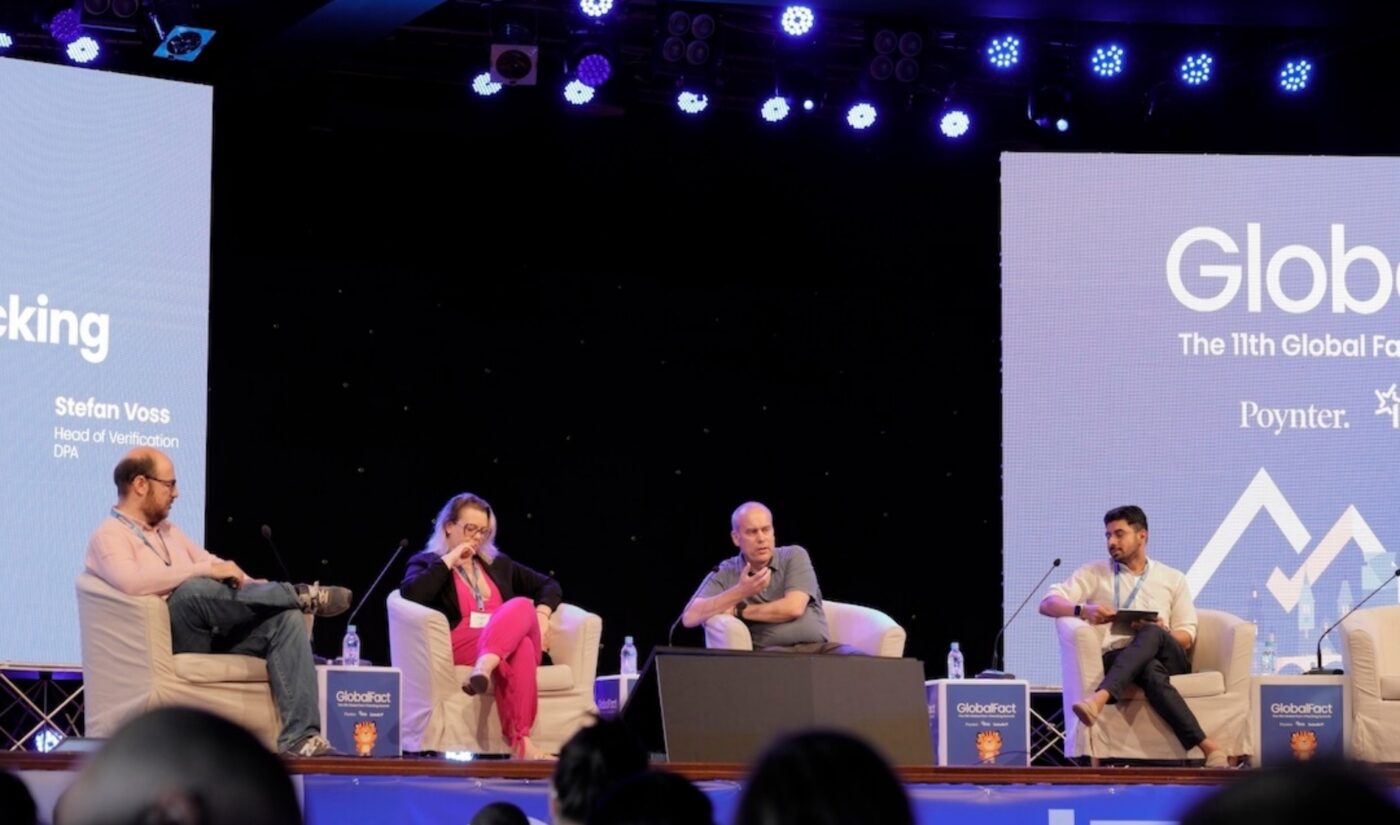
Fact-checkers are raising concerns about YouTube‘s policies on misinformation. At the GlobalFact conference in Sarajevo, members of Poynter‘s International Fact-Checking Network (IFCN) criticized YouTube for rolling out measures that “should be more effective.”
The international fact-checking community gathered in the Bosnian capital two years after penning an open letter that described YouTube as “a major conduit of online disinformation.” Since then, YouTube has launched several products to combat misleading content, but IFCN reps believe those actions have not been sufficient.
In the letter, fact-checkers asked YouTube to provide meaningful transparency, context on videos, action against repeat offenders, and translation tools for anti-misinformation efforts. The recent national election in India — which has been dubbed the “YouTube election” because of the high volume of traffic it drove to political hubs — showed the IFCN that its needs have not been fully met.

Subscribe to get the latest creator news
At GlobalFact, Newchecker founder Rajneil Kamath claimed that moderators were slow to respond to conduits of misinformation. He said that one misleading channel was allowed to operate for months after it was brought to YouTube’s attention.
Now, does it cause real-world, egregious harm?” Kamath asked about that particular incident. “No, it probably doesn’t, not at that instance. But what does it do? It reduces trust in institutions. It reduces your faith in democracy. It attacks individuals in many ways, and ultimately it’s potential physical harm. But at that instance, YouTube would do absolutely nothing. And it hasn’t changed.”
YouTube hasn’t been deaf to the IFCN’s concerns. Google has supported the organization with a $13.2 million grant program, but fact-checkers say that injection is not big enough to address the boogeyman of misinformation. “We need the tech companies’ money,” said Factchequeado co-founder and CEO Laura Zommer in an interview with Poynter. “But part of the reason why we need that so much is because they are making the problem bigger and bigger.”
AI could help YouTube address one of the IFCN’s concerns. Fact-checkers are calling for more tools that can translate anti-misinformation rhetoric, and those faculties could become widely available as YouTube rolls out its AI-powered dubbing tool. A new feature that lets users add informative notes to videos could also play a role as the IFCN looks to stem the tide of misinformation.
But even with those steps, YouTube and the IFCN face an uphill battle. Bad actors can use whatever tactics they want to spread misinformation. Good actors, however, are beholden to the truth — and that uneven playing field puts YouTube in a sticky situation.