In February 2025, YouTube turned 20. The video site has gone through a lot over the past two decades, including an acquisition, an earnings glow-up, and multiple generations of star creators. In our 20 Years of YouTube series, we’ll examine the uploads, trends, and influencers that have defined the world’s favorite video site — one year at a time. Click here for a full archive of the series.
13 years into our retrospective look at YouTube history, we’ve arrived at what is arguably the most pivotal video the platform has ever produced. It’s not “me at the zoo,” it’s not “Gangnam Style,” and if the star of the video in question had behaved himself, it wouldn’t have been anything notable at all.
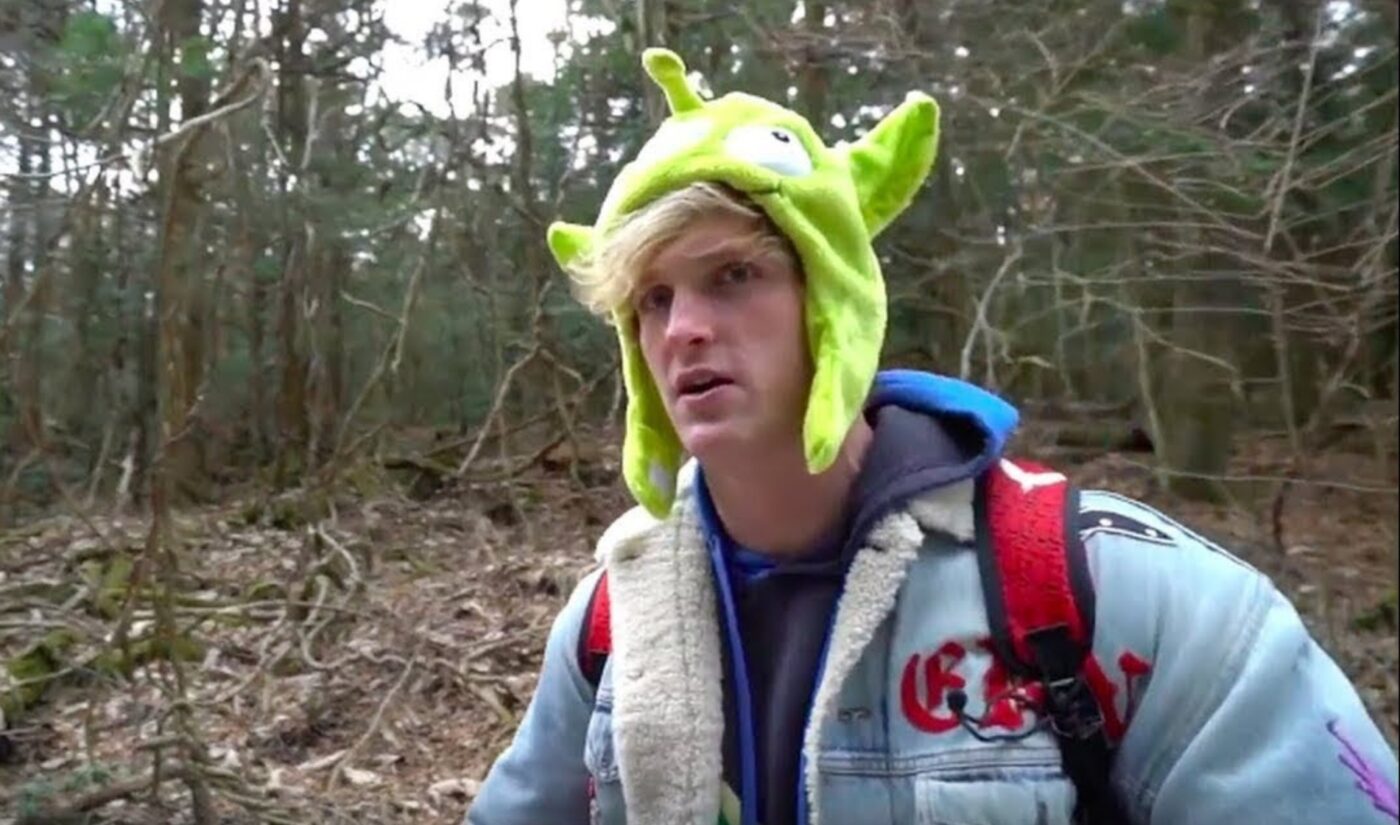
This is the story of Logan Paul‘s fateful visit to Aokigahara, the Japanese woodland colloquially known as the “suicide forest.”

Subscribe to get the latest creator news
When Paul traveled to Japan in December 2017, he was on top of the creator world. His YouTube channel had recently set a new benchmark by going from zero subscribers to ten million in record time. He was a Teen Choice Award winner, the owner of a $6.5 million mansion, and a budding actor. His collaborators ranged from Jimmy Kimmel to Gucci Mane.
Paul’s behavior during his trip to Japan showed viewers what he thought about his cultural position. As he trampled over cultural norms, he seemed to imply he was beyond reproach — and that was before he ever set foot in Aokigahara. When he encountered the body of an apparent suicide victim and repurposed the corpse as a prop for one of his vlogs, he tested the limits of his purportedly infallible status.
What happened next completely changed the relationship between creators and the platforms that host them. Paul apologized, pledged $1 million to suicide prevention organizations, and lobbied for a second chance. “I’ve made a 15-minute TV show EVERY SINGLE DAY for the past 460+ days,” he wrote on the platform then known as Twitter. “One may understand that it’s easy to get caught up in the moment without fully weighing the possible ramifications.”
Though it was clear his fans were willing to give him a pass, many of his fellow YouTubers felt differently. “The general attitude you characterize of living on the edge, I think really clouds a lot of that much more meaningful ambition of wanting to inspire,” Casey Neistat told Paul during a 2018 collab. YouTube’s eventual punishment earned praise from a significant portion of the creator community.
That punishment was a multifaceted penalty that involved the cancellation of Paul’s YouTube Premium show and his removal from the roped-off ad tier then known as Google Preferred. When Paul’s ongoing antics suggested that he might not have learned his lesson, YouTube sanctioned him again.
That could have been the end of the story, but in the year following the Aokigahara incident, the narrative surrounding Paul shifted. By the end of 2018, Paul was playing the role of the victim, and YouTube was eating the brunt of the criticism thanks to its handling of the situation. Paul eventually called his post-Aokigahara period “the hardest time of my life,” and YouTube ended up issuing an apology of its own, with Chief Business Officer Robert Kyncl admitting that “we should have done better.”
Aside from losing a reported $5 million in Google Preferred ad revenue (which doesn’t even seem like that much for a guy who had just purchased a $6.5 million home), Paul was able to move past the Aokigahara incident with few lasting consequences. He went on to introduce the influencer boxing trend, sign with the WWE, and score a slam dunk in the realm of creator products. These days, Aokigahara rarely comes up in coverage of Paul, and when it does, it’s often filtered through the lens of his latest project.
Paul’s post-Aokigahara glow-up is the incident’s true legacy. A scandal that could have ended him instead boosted him to even greater heights. With one ill-fated decision, he ushered in a new era of creator agency that is still going strong today.
For much of its existence, YouTube had kept rambunctious stars under control by grabbing hold of their purse strings. For creators who wanted to generate substantial revenue from their videos, YouTube was essentially the only game in town, and it used its prominent financial position to fend off challenges from rivals.
That’s what YouTube tried to do with Logan Paul. The actions against his AdSense account and Google Preferred status were meant to hit him where it hurts, but instead, Paul ended up proving that he was right to think of himself as unfallible.
Multiple factors can help us understand why that star-handling strategy didn’t work as well in 2017 as it had in previous years. The Adpocalypse was still fresh in everyone’s minds, and one of the main takeaways from that incident was that creators couldn’t rely on a single platform to satisfy all their revenue-related needs. They had to diversify, whether that meant going independent or reposting content across multiple platforms.
Despite YouTube’s efforts to corner the creator market, its challengers had become too big to ignore. Twitch was getting serious with its own revenue-sharing programs, Facebook was pivoting to video (for the first time), and the merger between Musical.ly and TikTok portended the rise of the next great force in the world of social media. For the first time since the dawn of YouTube, the average creator had ample options for the distribution of their work.
Intentionally or not, Paul discovered that he was bigger than YouTube. His millions of fans would follow him wherever he went, nullifying many of the consequences he faced for his inappropriate actions.
During the era of multi-channel networks, the YouTube landscape represented the studio system of Hollywood’s Golden Age, when larger organizations used questionable contracts to restrict the movement of big-name stars. As MCNs declined (more on this in a future installment of this column), creators took complete control of their careers. They became more willing to take hiatuses (again, more on this next week) or pivot toward greater ambitions.
The Aokigahara incident paved the way for influencer-led businesses and platform-agnostic optimization. In other words, Logan Paul’s indiscretions led us to the creator economy as we understand it today. That may seem like a disheartening association, but this is YouTube we’re talking about. Drama has always been part of the platform’s DNA, and who better than a WWE star to mine those shocking stories for profit?