Last month, we chatted with Gushcloud founder/CEO Althea Lim, who told us her company–the largest talent representation, content distribution, and creator monetization business in Asia–was “obsessed” with its plan to expand by making a number of acquisitions in the creator space.
Now, it’s made the first of those buys, snapping up Paris-based Wizdeo‘s multichannel network.
Wizdeo, which describes itself as a “data-powered creator agency,” was founded in 2007, and was one of the first companies in Europe officially recognized as a YouTube MCN. Gushcloud is specifically acquiring the MCN part of Wizdeo’s business, which will add 500+ creators and 700 million monthly views to its stable.
“The creator economy is evolving from influencer marketing into a structured media and licensing business,” Lim said in a statement. “This deal strengthens our ability to operate at that next level—with proprietary data, campaign tools, and cross-market licensing that benefit both creators and brand partners.”
As Lim described, Gushcloud will benefit from getting access to all these creators’ data, plus will generate revenue by sourcing and sealing sponsorships, content licensing deals, and other business ventures on the creators’ behalf. For creators, joining Gushcloud means signing with an agency that offers representation (including the aforementioned sponsorships/licensing/etc), content publishing and distribution, direct-to-consumer fan monetization, and capital injections. Gushcloud represented several hundred creators before this deal, so the Wizdeo acquisition will effectively double its roster.
Gushcloud says this deal “marks a significant milestone as the company looks to accelerate its positioning as a global ‘Creator First’ platform spanning Asia, Europe, and North America.”
Gushcloud currently has offices covering 13 territories throughout Southeast Asia, China, Australia, and its latest, Abu Dhabi. It looks to next break into the United States market, then South America. Collectively, across these regions, Gushcloud wants to “represent $1 billion of annual income for creators.”
Filed under: Gushcloud, Homepage Feature by Tubefilter Staff Comments Off on Gushcloud acquires Wizdeo’s MCN, kicking off a spate of buys to make it a $1 billion creator business
Now that school’s out, it’s time for many kids to attend summer camp. This year, however, camp is looking a little different: It’s being hosted on TikTok‘s For You Page.
The app has unveiled #TikTokSummerCamp, an initiative that spotlights crafty members of its community. Users who check out the corresponding hashtag will be able to explore hands-on activities that would not be out of place at your local summer camp.
The creators involved in #TikTokSummerCamp include miniature zen garden maker @brandontheplantguy, stargazer @athomewithshannon, and firefly lantern builder @dadlifejason. Of course, it wouldn’t be summer camp on TikTok without a little slime time, so @alexandra_lourdes is showing viewers how to make gooey creations in their own homes.
Slime-making is both a classic camp experiment and an evergreen favorite on the internet. Its presence in the #TikTokSummerCamp catalog underscores the idea behind the initiative: It is an attempt to introduce young viewers to traditional forms of summertime fun in an environment that is far more affordable than the typical camp experience.
A recent NerdWallet survey noted the rising price of summer camp enrollment. TikTok is now offering a free alternative.
“These activities aren’t just fun projects—they give families a reason to gather around the table, share some laughs, and celebrate small wins together,” reads an introductory TikTok Newsroom post. “They also create natural moments for families to discuss their online experiences and set healthy digital boundaries.”
TikTok is adding its name to the list of channels, platforms, and media companies that are chasing under-18 viewership during the months when schools are not in session. Mark Rober and Toys and Colors kicked off the summer with a series of collabs that feature camp-coded activities like foam volcanoes. Days later, Baby Shark owner Pinkfong got in on the fun by announcing a colorful, all-ages apparel partnership with Shein.
Now, as TikTok invites digital campers to the For You Page, CoComelon is making renewed overtures to school-free kids. The family-friendly titan’s latest partnership is a pact with Sanrio’s Hello Kitty brand.
The timing of these initiatives, programs, and merch lines is a reminder that social media’s youngest users have immense influence on viewership trends and cultural movements. Platforms and brands to connect with children while they enjoy a few months off, and some parents who use TikTok will be grateful for another cost-effective entertainment option.
Netflix has entered into a rivalry with YouTube by greenlighting projects that feature some of the Alphabet-owned hub’s biggest stars. According to a Wall Street analyst, the follow-up to that strategy should involve a take on YouTube’s hottest format.
Steven Cahall, a media analyst for Wells Fargo, discussed Netflix in a recent note. He argued that the streamer could “navigate generational changes” by incorporating “high-value short-form content,” like the kind found on YouTube Shorts, TikTok, or Instagram Reels. That move would allow Netflix to cater to users who only have time for a little bit of streaming, rather than focusing on consumers who are ready to sit down for an hours-long binge.
Netflix is already thinking along the lines Cahall discussed. The May 2025 launch of a vertical content feed equipped the streamer with a new vehicle for distributing and promoting content. That feature arrived on the heels of a clipping tool that invited users to upload snippets of their favorite shows and movies. And on YouTube, Netflix operates multiple channels that haul in millions of weekly views, often via promotional content.
Those efforts have diversified Netflix’s on-demand output, but at the end of the day, the streamer’s short-form offerings are almost all tied to its long-form library. Cahall is suggesting something different: A selection of premium shorts that could stand on their own.
A move like that could give Netflix the opportunity to better apply its business model within a community that is eager to move beyond ad revenue. Social media content creators are increasingly turning to upfront payments and fan support as primary revenue streams, and Netflix has more experience with traditional funding models than YouTube does. The Sidemen also cited their ability to “reach a new audience” on Netflix when they moved their YouTube hit Insideto the SVOD service.
What’s clear is that Netflix must change something if it wants to keep encroaching on YouTube’s territory. While some of the streamer’s forays into the creator world have been successful, YouTube is proving to be far more powerful than the time-killer Netflix Co-CEO Ted Sarandos makes it out to be. It is generating more watch time on TVs than Netflix, and it has a more favorable reputation among younger generations, too.
Is a short-form push the right answer to that trend, as Cahall suggests? If YouTube’s numbers are any indication, that move would at least increase Netflix’s raw viewership.
Filed under: Articles, Featured, Homepage Feature, Netflix, News by Sam Gutelle Comments Off on A Wall Street analyst wants Netflix to challenge YouTube in the realm of short-form content
Roblox is on pace to pay out more than $1 billion to its creator community in 2025, and it is looking to push that number even higher with a new revenue stream. The sandbox platform’s Creator Rewards program will deliver Robux to experience developers who keep players engaged or recruit new users.
As explained in a Roblox blog post, there are two different types of payouts involved in the Creator Rewards program. The Daily Engagement Reward will replace Roblox’s preexisting engagement-based revenue stream and will pay five Robux to creators when an “Active Spender” — defined as a user who has spent at least $9.99 in Roblox over the past 60 days — spends at least ten minutes in one of that creator’s experiences. The reward will only trigger on the first three experiences each Active Spender plays each day.
The Audience Expansion Reward is geared toward creators who bring new users to Roblox. It will evolve the Creator Affiliate program by making purchases more profitable when they come from new users or users who had previously been inactive for at least 60 days. When those users make purchases during their first two months of activity, the selling creators will pocket 35% of the resulting revenue.
Both of these reward systems will replace their predecessors on July 24, one month after the initial announcement. Why is Roblox making a change now? Here are three factors that potentially informed the decision:
Engagement-based payouts are the new hotness, and Roblox is keeping up with competitors
TikTok’s evolving payout philosophy exemplifies the shifting winds of creator monetization. The 2023 decision to nix the problematic TikTok Creator Fund paved the way for the introduction of revenue streams like the Creator Rewards Program, which incorporates factors like watch time and engagement.
The other big platform for creator-built words — Fortnite — has had engagement-based payouts baked into its monetization structure from the start. The program known as Fortnite Creative delivers revenue to creators that increases as those islands bring in more play time and new players. The similarities between that system and Roblox’s new Creator Rewards are likely not coincidental.
Paying creators in Robux could stimulate on-platform ecommerce
Roblox’s on-platform currency can be cashed out for USD, but the San Mateo-based company has devoted a lot of resources to make its environment more shoppable. The introduction of real-world merch within creator worlds established a link between the flow of Robux and the sale of tangible goods.
Other recent developments at Roblox HQ have included the introduction of regional pricing — which makes purchases more tenable for users from underdeveloped regions — and the launch of a web series that dispenses item creation tips from top members of the game’s community. The sum of all these moves is clear: Roblox wants to put a lot more Robux in circulation while making the digital currency more powerful as well.
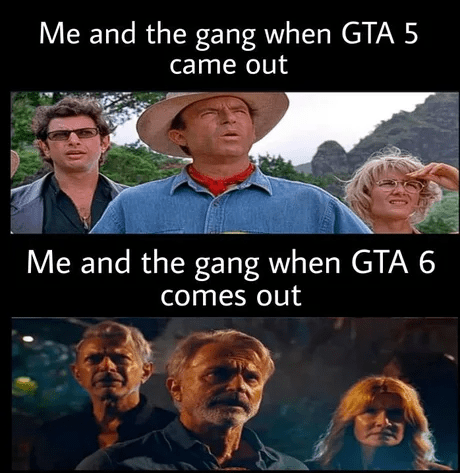
To misquote Ned Stark: “GTA VI is coming”
The latest chapter in Rockstar‘s open-world saga has been in development so long that it’s become a meme, but Grand Theft Auto VI is actually imminent now, and the rest of the gaming world is paying attention. Rockstar wants to turn GTA VI into the next big platform for creator-built worlds, and the ongoing popularity of GTA V suggests that players will be eager to check out the next installment.
The biggest advantage Roblox has over GTA VI is time. It has already built a billion-dollar creator economy, so the next step is to shore up that ecosystem to ensure creators stick around as other similar platforms come and go.
Filed under: Articles, Featured, Homepage Feature, News, Roblox by Sam Gutelle Comments Off on With ‘GTA VI’ looming, Roblox’s new Creator Rewards encourage engagement and retention
Pinkfong and Shein have teamed up for a kid-friendly collab that celebrates marine life and catchy jingles. The new Baby Shark x Shein collection is looking to cash in on summertime fun with an array of colorful designs, all-ages apparel, and references to one of the internet’s most notorious earworms.
The collection arrives in time for the tenth anniversary of the original “Baby Shark” video, which arrived in 2016 on Pinkfong’s official YouTube channel. Since then, Pinkfong’s magnum opus has smashed multiple records. It passed the “Despacito” music video to become YouTube’s most-watched upload in 2020. Two years later, it became the first YouTube video to receive ten billion views. At the time of this post, “Baby Shark” has more than 16 billion lifetime YouTube views.
South Korea-based Pinkfong and Singapore-based Shein are looking to parlay that massive viewership into ecommerce sales. The apparel line includes 98 pieces and 19 accessories, with prices ranging from $2 to $25. Though children are the obvious target demographic for the collection, there are also fits for “Mommy Shark” and “Daddy Shark” as well.
“We are thrilled to collaborate with Shein to celebrate Baby Shark’s 10 years with this fun and stylish collection,” said Pinkfong Senior Global Licensing Manager Bryan Park in a statement. “We’re always looking for new ways to connect with families and fans around the world, and this partnership brings even more styles – whether customers are singing along at home or showing off their favorite Baby Shark look out and about.”
Shein, which has been criticized as one of the faces of the fashion movement, is currently in the midst of an arms race with other East Asian ecommerce giants — namely Temu and ByteDance. In Latin America, for example, ByteDance’s TikTok Shop is looking to elbow its way into a market where Shein and Temu already have strong footholds.
For the fast fashion giants to fend off TikTok Shop’s advances, creator-focused collabs are a must. That’s why Temu has attached its name to some of YouTube’s biggest sponsored videos, and why Shein is now joining forces with the company behind YouTube’s all-time most-watched video.
The timing of the Baby Shark collection is also notable. With the summer in full swing, big names in children’s media are looking to reach school-age kids during their months off. For Pinkfong and Shein, that effort involves aquatic characters who evoke fun in the sun and are sure to get a certain ditty stuck in your head.
Filed under: Articles, Featured, Homepage Feature, News by Sam Gutelle Comments Off on Pinkfong, Shein look to make summertime splash with Baby Shark apparel
Up until 2019, YouTube and Twitch were on opposite sides of the internet train track. Sure, they both had livestreaming capabilities, but livestreaming was all Twitch did, while it was more of a side quest for (then) long-form-VOD-focused YouTube. But in 2019, Ninjamade the ill-fated decision to leave Twitch for Microsoft’s Mixer, and his exodus kicked off a frantic spate of exclusive, lock-down talent signings that put YouTube and Twitch in direct competition with one another.
Now, things are a bit calmer. YouTube, its attention shifted to Shorts, is clearly not prioritizing becoming a livestream dominator, and while there is still occasional movement with streamers going from one platform to the other, exclusive deals are less common, especially now that Twitch allows multistreaming.
All that being said, Twitch and YouTube still both account for large portions of the livestreaming market, and they’re both owned by digital advertising juggernauts (Google for YouTube, Amazon for Twitch), so it was an interesting revelation when Twitch CEO Dan Clancy said his platform makes most of its revenue from viewers buying channel subscriptions and donations rather than ad revenue.
YouTube, as you probably know, makes virtually all of its billions of dollars of income from ad revenue. There’s some other stuff in the mix, like YouTube Premium subscriptions and creator-managed Channel Memberships, but the vast majority? Ads, powered by Google’s immense infrastructure.
But Twitch doesn’t operate that way. Yes, it sells ad placements on streams, but those only account for about one-third of Twitch’s overall revenue, Clancy said at Cannes Lions. The other ~66% is coming directly out of viewers’ pockets.
“Over two-thirds of the money that we make come from subscriptions. It’s not from ads,” Clancy explained earlier this year. “The interesting thing about subscriptions is that a subscription isn’t for access to content,” he added. “A subscription is patronage to this creator.”
So why is this important? Well, for one, it shows Twitch’s ad offerings might be lagging, contributing to its overall money problems. Two, and on a brighter note, we don’t often get a glimpse of Twitch’s financial internals, but we did know that Twitch’s audience is unique, and this confirms it. Unlike with VOD content, where viewers mostly express support for creators by passively generating income for them via watching content for free, Twitch viewers are actively spending money. It’s accepted and comfortable for streamers to ask their viewers to pay for subscriptions and/or donations, and this atmosphere of community financial support is clearly driving the Twitch ecosystem.
(To be clear, though, we’re not saying that YouTube viewers aren’t willing to put up cash for creators; YouTube has released lots of case studies about the success of Channel Memberships in supporting creators financially.)
This culture of direct support for creators could be what keeps Twitch afloat among streaming competitors and VOD platforms alike…so long as it stays in creators’ and viewers’ good graces.
Filed under: Homepage Feature, Twitch by James Hale Comments Off on Twitch makes most of its revenue directly from viewers’ pockets–not from ads
[Editor’s Note: Tubefilter Charts is a weekly rankings column from Tubefilter with data provided by GospelStats. It’s exactly what it sounds like; a top number ranking of YouTube channels based on statistics collected within a given time frame. Check out all of our Tubefilter Charts with new installments every week right here.]
Scroll down for this week’s Tubefilter Chart. 👇
Six different YouTube channels added at least one million new subscribers during the third full week of June. Of that group, only one channel crossed the two million mark (and yes, it was MrBeast).
The top ten most-subscribed channels of the week are a mixed bunch. There are four members of that group with at least 100 million total subscribers, and four more with fewer than five million total subscribers. This ranking is where YouTube’s longtime titans rub shoulders with its latest up-and-comers.
YouTube Shorts is always searching for the GOAT
Once upon a time, the word “goat” only referred to a caprine creature or a target of blame. These days, a third definition has become a part of internet slang. On social media platforms, there are constant debates about the individuals and institutions that deserve to be called the Greatest Of All Time in their respective fields.
Those discussions have now spilled in our Global Sub Top 50 chart. The 44th-ranked channel in the chart is The Goat Saga, a relative newcomer on YouTube that takes a liberal approach to the term GOAT.
At its core, The Goat Saga is one of the thousands of indistinguishable clip channels that vie for attention, views, and subscribers on YouTube Shorts. Like with some channels in that category, The Goat Saga makes its content aggregation more distinctive by applying a central theme to the videos it uploads.
In this case, the unifying theme is the GOAT. (I’m not saying its the GOAT among aggregator channel themes, but it is kinda fun.) The average Goat Saga video runs through a montage of related feats before showing us how the GOAT of that feat gets it done.
The Goat Saga, which arrived on YouTube last December, added 392,000 subscribers during the week that was. So what exactly makes GOATs so…goated on YouTube?
There are a few aspects of the platform’s culture that help explain what’s going on. The Goat Saga’s typical format takes advantage of the power of the tease. We have to wait until the end of the montage to see the GOAT, so viewer retention is naturally high.
The YouTube audience also has a love of challenges. In theory, each challenge type creates room for a new GOAT to emerge, so those types of conversations emerge naturally.
The third week of July was a big time for challenge creators, as per usual. The Richey Family, for example, used its family content to reach 10th place in the Global Sub Top 50, adding 660,000 new subs. And some of the top Richey Family shorts show reverence to superlative items — e.g. this GOATed knife.
Data via Gospel Stats
GOAT-related topics are favored on YouTube Shorts, so there’s room for other channel to copy The Goat Saga’s winning approach. Of course, the thing about the GOAT is that there can only be one. For now, we’ll have to dub The Goat Saga as the GOAT of GOATs.
Channel Distribution
Here’s a breakdown of the Top 50 Most Viewed channels this week in terms of their countries of origin:
India: 15
United States: 12
Bangladesh: 4
Australia, Brazil, Hong Kong, Indonesia, and Vietnam: 2
Canada, China, Italy, Japan, South Korea, Taiwan, Ukraine, United Kingdom, and Uzbekistan: 1
This week, 40 channels in the Top 50 are primarily active on YouTube Shorts.
As always, keep up to speed with the latest Tubefilter Charts and all our news by subscribing to our newsletter. You’re going to love it. 👉 Newsletter.Tubefilter.com.
Welcome to our rundown of the most-watched branded YouTube videos of the week.
We’re publishing this snippet of a larger Gospel Stats Weekly Brand Report in order to analyze sponsorship trends in the creator economy. Any video launched in tandem with an official brand partner is eligible for the ranking.
And – as the name up above would imply – all the data comes from Gospel Stats. If you’re interested in learning more about Gospel – and which brands are sponsoring what creators on YouTube – click here.
Big-name sponsors is the name of the game in our latest Gospel Stats Weekly Brand Report , with LEGO, Disney, and Tide all pulling in the top 5. We also have something else notable: Shorts in spots #1 and #2. Does that mean we’ll start to see more Shorts sponsorships? Maybe! Does it mean brands are finally understanding/embracing the Shorts ads tools YouTube has been steadily bulking up? Also maybe! Whatever the case, it’s clear sponsors with lots of cash to splash see Shorts as a key to summer marketing. We’re curious if it pays off for them.
Check out our top 5 videos of the week right here:
Like we mentioned above, this week’s list is topped by two Shorts. (Something notable: last week’s list was also topped by a Short.) Mark Rober has made our top 5 multiple times with big tech sponsors like Google, and now he’s added one more household name to the list thanks to a LEGO deal that has him taking a STEM approach to the unimaginable pain of stepping on a brick. LEGO doesn’t sponsor many YouTube videos, but when it does, it goes for top names. Also sponsored this week is fishkeeper Aquarium Info in spot #60, and Zhong, who has 60 million subscribers and made our list in spot #236.
Earlier this month, we spotlighted a Disney-maniac channel that broadcasted a three-hour livestream of the hosts walking around Epcot, making their bag by inspiring uber Mouse House FOMO. The livestream had a bevy of sponsors, but none of them were the Disney. That doesn’t mean, however, that Disney isn’t looking at YouTube as an advertising avenue. It kicked off its summer marketing by sponsoring kids’ creator Blippi, and now it tapped James Seo for a classic “This or mystery thing”-style YouTube Short. In this case, the lucky contestant–who, of course, picks mystery adventure–is treated to the kind of Disney visit that, these days, would burn quite the hole in your wallet.
There’s a stereotype (an earned stereotype, in our East Coaster opinion) that New York City drivers are nuts. But Tommy G takes things to a whole new level in his 35-minute documentary of NYC’s supercar theft/extreme driving scene. Sure, New York drivers are…well…the way they are, but these guys–all of whom, of course, appear with their faces covered–are out here smashing windows, hotwiring hot rods, and whipping through traffic at Daytona 500 speeds to drop their freshly plucked rides off at shady chop shops, or pick up new ones from disreputable car renters. Tommy G’s inside look at this underground world is sponsored by Incogni, a security service that can protect your personal information, but probably won’t get your Hellcat back if one of these guys swipes it.
For our third household name sponsor of the week, we have Tide, which–like LEGO–doesn’t pay for many videos. And again, just like LEGO, when Tide does hook up with a YouTuber, it tends to pick a well-known name. In this case, that’s Jesser, a longtime sports YouTuber who’s surged to 30 million subscribers with content and collabs in all sorts of sports. He’s played soccer, basketball, baseball, golf, and more–and now, he’s putting some assumptions to the test. It’d be easy to think basketball players are generally in better shape than baseballers, because they’re always moving on the court when (as my mother would say) baseball players spend most of their time standing around. But is that really true? Jesser’s gonna find out–and not to be clickbaity, but the results might surprise you.
Dave Ramsey is a name that haunts every American Millennial who’s ever asked their Boomer dad if they can borrow some cash. Thanks to his long-running show, he has a reputation for being brutally honest and prescribing extremely strict methods of cost-cutting for people who are struggling financially. And his advice, though harsh, does banger views on YouTube. This week alone, his channel Ramsey Show Highlights had ~24 sponsored videos, so he’s making money from sponsorships etc on the core show, from YouTube ad revenue on the show’s episodes and highlights, and from sponsorships specifically for these short highlight clips. We’ll hand it to him, the dude does know how to make money.
…and there’s a lot more data where that came from. If you’re interested in learning more about Gospel – and which brands are sponsoring what creators on YouTube – click here.
[Editor’s Note: Tubefilter Charts is a weekly rankings column from Tubefilter with data provided by GospelStats. It’s exactly what it sounds like; a top number ranking of YouTube channels based on statistics collected within a given time frame. Check out all of our Tubefilter Charts with new installments every week right here.]
Scroll down for this week’s Tubefilter Chart. 👇
This week’s Global Top 50 has an international flavor. For the first time this year, none of the week’s top ten most-viewed YouTube channels hail from the United States. You have to go down to Zack D. Films (#13) to find the first American in the ranking.
South Korea’s KIMPRO continues to set the pace. It held onto the #1 spot thanks to a fresh crop of 1.9 billion weekly views. KIMPRO is one of two South Korean channels in the Global Top 50, but it’s a channel from India that show the potential reach of Korean culture on YouTube.
BTS is back. What does that mean for YouTube?
On June 20, K-pop idol Suga announced on social media that he has completed his time in the South Korean military. Suga is the last member of BTS to complete his compulsory service, which means the most legendary boy group in K-pop history is ready for a comeback.
Before going on hiatus, BTS was arguably the most-watched pop act on YouTube. In some weeks, the seven-piece outfit drove multiple channels in the Global Top 50. Every new BTS single brought a flurry of social media activity along with it.
BTS hasn’t put out new music since its reunion, but one of its fan channels is already back in the Top 50. Nandita Baris an India-based hub that proclaims its membership in the BTS Army at the top of its channel page.
Most of Nandita Bar’s top Shorts clips have nothing to do with BTS, but the channel has recently worked more Korean culture into its uploads. The resulting bump has been massive. Nandita Bar got 746.5 million weekly views during the third week of June. That total represented a week-over-week increase of 49%.
BTS’ affect on the viewership of fan channels is undeniable. But what about the group’s effect on South Korean viewership as a whole?
As we recently discussed in our look back at ‘Gangnam Style’, Psy’s 2012 smash represented a level-up moment for K-pop. The genre, previously limited to a majority of Korean viewers, exploded internationally on the back of Psy’s invisible horse. The trend extended beyond music, with Korean culture getting a boost thanks to one of the nation’s impresarios.
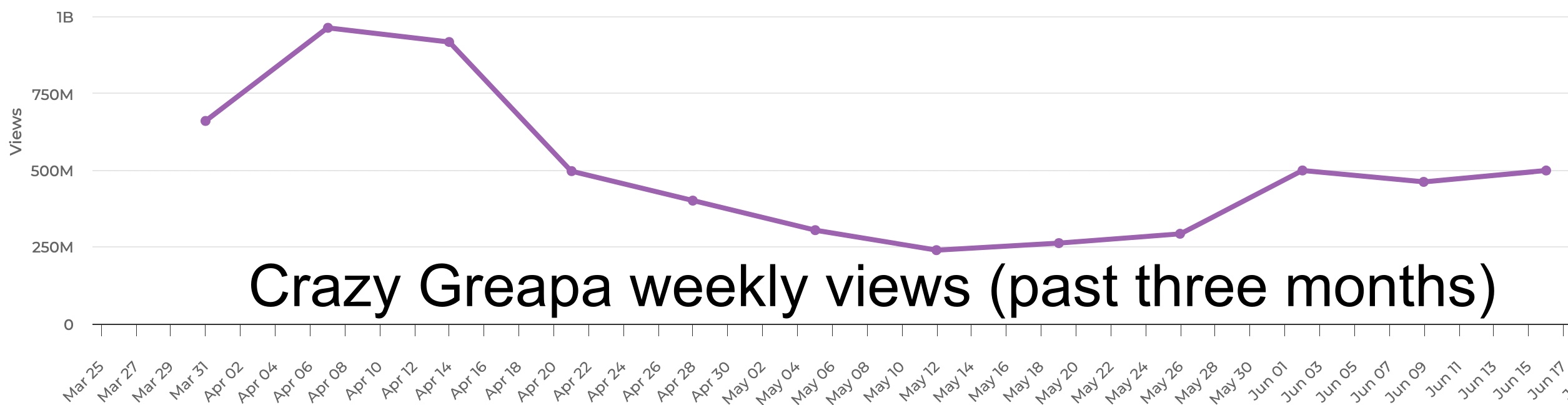
Something similar could happen once the BTS return kicks into full gear. Since the group confirmed the end of its hiatus, some Korean channels have seen viewership upticks. Top 50 stalwart CRAZY GREAPA, for example, has surged in recent days after experiencing lower viewership for much of May.
Data via Gospel Stats
There may be a bump associated with the next era of BTS, but the most obvious prediction we can make is that the group’s official channels and fan hubs will see the biggest boosts. If you’ve been thinking about enrolling yourself in the BTS Army, now would be a good time to join up.
Channel Distribution
Here’s a breakdown of the Top 50 Most Viewed channels this week in terms of their countries of origin:
India: 16
United States: 10
Vietnam: 4
Hong Kong: 3
Australia, Canada, Russia, South Korea, and Taiwan: 2
Brazil, China, Germany, Jordan, Kazakhstan, Peru, and Uzbekistan: 1
This week, 43 channels in the Top 50 are primarily active on YouTube Shorts.
As always, keep up to speed with the latest Tubefilter Charts and all our news by subscribing to our newsletter. You’re going to love it. 👉 Newsletter.Tubefilter.com.
The kids of Toys and Colors have invited a notable grown-up to their latest playdate. Mark Rober appeared alongside youngsters Kaden and Andrea to promote the CrunchLabs brand through a series of collabs with one of YouTube’s most popular kid-friendly hubs.
Videos from the collabs are showing on both the Toys and Colors channel — which is partnered with children’s media company pocket.watch — and Rober’s official CrunchLabs hub. Rober hosted a “Science Day” for his co-stars at CrunchLabs HQ. After pitting Kaden and Andrea against one another in a gauntlet of scientific challenges, Rober had them explore an “extreme laser maze” he and his team built.
The collab unites two of the biggest entertainment destinations in the world. Both Toys and Colors and Rober’s primary hub rank among the 40 most-subscribed YouTube channels; the former channel counts 76.5 million subscribers, while Rober is right behind at 69.2 million.
Toys and Colors and CrunchLabs are both areas of emphasis for their respective partners. Culver City-based pocket.watch, which has also built franchises out of kid-friendly IP like Ryan’s World and LankyBox, is looking to capitalize on Toys and Colors’ surging viewership. Throughout 2024, the upbeat children’s hub regularly ranked as the most-watched U.S.-based YouTube channel, according to our Tubefilter charts.
In October 2024 alone, Toys and Colors picked up more than 3.4 billion monthly views. Emboldened by those big numbers, pocket.watch has set up several high-profile collabs, first with Sesame Street and now with Rober.
As for CrunchLabs, Rober’s line of subscription-based “build boxes,” content-based promotion is currently the name of the game. A cameo in Roblox helped Rober introduce creative tinkerers to his scientific product line, and the Toys and Colors team-up encourages even more kids to ask their parents for CrunchLabs subscriptions. Currently, a primary focus of Rober’s YouTube output is the promotion of Camp CrunchLabs, a summertime initiative that features weekly challenges.
CrunchLabs recently telegraphed its plan to invest in more content when it hired Scott Lewers as its first Chief Content Officer. Lewers, a longtime Rober associate who worked with the creator on his Discovery series, Revengineers, will aim to make CrunchLabs’ build boxes look exciting on screen. Based on Kaden and Andrea’s excited reactions to the experiments they witnessed, the CrunchLabs channel is moving in the desired direction.
Each week, we handpick a selection of stories to give you a snapshot of trends, updates, business moves, and more from around the creator industry. This week, a streaming icon revealed her earnings (again), a popular doctor took on the federal government, and a vlogging legend offered some advice to graduates.
The biz
Amouranth claims to have made $38 million during her two-year run on Kick. The cosplaying streamer seemed to reveal her earnings via a pithy post on X. Now that her exclusive deal with Kick is up, she’s going to start streaming on Twitch again — though her earnings will keep coming from all over the place.
Preston is inking a deal with Bonkers Toys. The gamer known for his family-friendly Minecraft content is the latest creator to get his own toy line. After turning Skibidi Toilet into a retail favorite, Bonkers Toys is looking to cash in on another channel that regularly ranks among the most-watched and most-subscribed YouTube hubs in the world. The Preston toys are due out in 2026.
Fanfix’s creator payouts top $170 million. By encouraging fans to deliver direct monetary support to their favorite creators, Fanfix is upending the influencer marketing industry. Now it’s crossing yet another round-number payout milestone.
Creator commotion
Casey Neistat added “high school commencement speaker” to his extensive resumé. The former high school dropout told graduating seniors at Nantucket High School that they should “seek knowledge” wherever they can. “Appreciate that no one knows anything,” he later added. “And it’s up you. No pressure. Good luck.”
Hololive is going back to Dodger Stadium. The last time a VTuber sang ‘Take Me Out to the Ballgame’ at a Los Angeles Dodgers game, she ended up splitting from hololive months later. Now that the Japanese company is bringing “hololive night” back to California, I’m crossing my fingers that the “Curse of Gawr Gura” doesn’t become the next “Curse of the Bambino.”
Politics as usual
Doctor Mike is not an RFK Jr. fan. The TikTok-famous doctor believes the current head of Health and Human Services is “the wrong person” to lead the department. Despite his criticism of RFK Jr.’s Make American Healthy Again campaign, he said he would “without a doubt” be willing to have a sit down with Trump’s health czar.
Senate Democrats are starting to complain about the president’s TikTok reprieves. After Trump ordered another 90-day delay for the U.S. TikTok ban, one of the architects of that ban is accusing him of “flaunting the law.” Senator Mark Warner (D-VA) is still pushing for enforcement of the Biden-era law, even though Trump has repeatedly claimed that a divestiture deal with ByteDance will get done.
A Google shareholder is going to court over TikTok ban extensions. The complaints about ban delays aren’t just coming from inside the House (and the Senate). Tony Tan is suing Google parent company Alphabet as well as the U.S. Department of Justice. He is arguing that Google and Apple should have already been fined for failing to enforce the TikTok ban via their respective App Stores. Just another court case for the Trump Administration to handle.
Movers and shakers
Mark Rober’s Crunchlabs gets a Chief Content Officer. Rober’s science kit brand has used sponsored videos to reach millions of viewers on platforms like YouTube. Scott Lewers, who previously worked with Rober on the Discovery series Revengineers, is now coming to Crunchlabs to take the reins of the brand’s content operation.
Jubilee brings in MCN vet for biz dev role. After taking roles at influential digital media companies Maker Studios and Fullscreen, Nick Crooks is moving to Jubilee Media. As the video producer’s Head of Strategy and Business Development, Crooks will find ways to expand existing franchises while also steering the direction of Jubilee’s content and distribution.
Studio news
A new studio is going on Further Adventures with creators. Experienced YouTube operative Steven Beckman is teaming with Hollywood producer Ben Stillman to launch Further Adventures. One of the studio’s first clients is Andrew Rea of Binging with Babish, who is developing “a metaphysical action-thriller about an ageless, body-shifting consciousness in search of love and meaning.”
Visional Pop wants to make ‘Happy World’ even happier. If you’ve ever seen an animated earth making emoji faces at you, then you might be familiar with the whimsical tales of Happy World. Now, the team behind the toons — FriendsWithYou — is teaming up with Visional Pop, which is developing IP alongside animation creators.
Little Chonk co-founder gets into talent management. After helping build a line of adorable, corgi-sized accessories, Scott Dunn is working with Chris Gera to launch Unicorn, a 360 creator management company and content studio.
The internet is a strange place
Thousands of Nintendo Switch 2 consoles were stolen in a truck heist. I don’t think this is what Nintendo meant when they talked about the Switch 2’s on-the-go portability.
Samwell says Happy Pride! It’s been 18 years since the release of ‘What What in the Butt,’ and the chaotic music video’s auteur is reminiscing on his career-defining viral smash. “Being an openly gay artist, some people were [like], ‘What are you doing?'” Samwell told People. “But I did it anyway and I’m still queer and living my life.”
Filed under: Articles, Featured, Homepage Feature, News by Sam Gutelle Comments Off on Have you heard? Amouranth makes $38 million on Kick while Doctor Mike takes on RFK Jr.
The preponderance of romantasy titles on bookstore shelves proves that #BookTok is still a big deal in the world of publishing. Across the world, booksellers are promoting TikTok‘s favorite authors and literary genres to stave off difficult economic conditions.
#BookTok seems to be as big as it’s ever been, which makes the recent developments at TikTok’s publishing wing a bit of a surprise. According to The Bookseller, the ByteDance-owned platform is sunsetting 8th Note Press, a literary entity initially launched in 2023.
Per the Bookseller report, TikTok is currently negotiating with authors and agents to return the rights to titles that had previously been picked up by 8th Note Press. The publishing firm’s former Editorial Director, Allison Moore, departed her post in April, according to her LinkedIn profile.
TikTok hasn’t publicly commented on the fate of 8th Note Press, but there are plenty more pieces of evidence that point to the firm’s closure. Its TikTok and Instagram accounts have been deactivated, as has its official website. The landing page that detailed 8th Note Press’ partnership with publishing company Zando now throws up a 404.
8th Note Press initially arrived as an e-book publisher. ByteDance planned to use the initiative to reach the Millennial and Gen Z readers who recommend books on TikTok. That effort involved offers to both #BookTok-beloved writers and unheralded authors who work in genres that younger bookworms tend to enjoy.
The Zando partnership, announced in 2024, facilitated the publication of paper books to go along with the digital titles. But only eight months later, 8th Note Press appears to be on the way out. Why?
Sales certainly don’t seem to be the issue. Interest in the top 90 #BookTok authors increased every year between the hashtag’s 2019 inception and 2023. That upward trend continued into the current year, with TikTok-favorite series like Rebecca Yarros’ Fourth Wing driving a 41% year-over-year market share increase for related genres like science fiction and fantasy.
Those tailwinds have convinced independent companies like Bindery to get involved in the #BookTok craze. Even so, it seems like ByteDance never quite figured out how to capitalize on the literary trend it spawned. The Bookseller argued that 8th Note Press missed out on a golden opportunity to sell its tomes via TikTok Shop, and it did not do enough to organically promote the literature it picked up.
As easy as it is to chalk up this development to ByteDance’s failures, perhaps we should consider that the #BookTok may have already peaked. Some creators who use the hashtag have found monetization opportunities to be slim, with publishers preferring to send advance copies of upcoming titles rather than direct payments. We’ll update this post if TikTok comes forward with more details about the presumed demise of 8th Note Press.