Archive for May 27th, 2026:

Explicit deepfakes are a monumental problem. Paris Hilton just published a TikTok series to combat them.

Paris Hilton has taken the fight against explicit deepfakes to TikTok.

Her production company 11:11 Media partnered with award-winning longtime tech journalist Laurie Segall to make Searching for Mr. Deepfakes, a vertical docuseries created by Segall that chronicles her investigation into one of the largest deepfake pornography hovels on the internet.

As you likely know, deepfakes are more prevalent than ever now thanks to the advent of generative AI. We knew this was coming; after the earliest versions of DALL-E and ChatGPT sparked a gen AI gold rush and big tech companies began pouring money into models hoping to make big bucks, experts and watchdogs warned that rapidly evolving technology could be used to target and exploit people–especially women.

In our space specifically, we’ve seen numerous instances of female content creators harassed by people making deepfakes of them. Meanwhile, platforms like YouTube and TikTok have introduced systems to let celebrities, creators, and regular people file claims if they see deepfakes of themselves uploaded. (But at the same time, those platforms are also introducing their own homegrown tools that let people do things like insert themselves in other people’s videos.)

Segall has been reporting on the intersection of humanity and technology for 15 years, and is the CEO of Mostly Human Media, a creator-led media/entertainment network focused on that very topic. For the last three years, she’s been reporting on the impact of sexually explicit deepfakes.

In Searching for Mr. Deepfakes, which dropped today on Hilton’s TikTok account, Segall works to take down a website that, at its height, got 17 million views a month. The site was at the center of a community crawling with people who made money by generating deepfakes of everyone from celebrity women to their own family members.

@parishilton PART 1: The most dangerous man on the internet could be hiding in plain sight. I’m teaming up with journalist @Laurie Segall to expose the disturbing reality of AI-generated deepfakes and why urgent change is needed now more than ever. 👊🏻⚠️ 1 in 8 teens report knowing someone targeted by deepfake p*rn. This issue is growing fast… and it could happen to anyone. 🥹 14-part series streaming TOMORROW MAY 27th on my TikTok channel 🔍 #Deepfake #OnlineSafety #DefianceAct #AI #ParisHilton @RAINN ♬ original sound – ParisHilton

Segall worked with fellow investigators and white-hat hackers to track down the site’s owner. Her series also spotlights deepfake survivors and figures like Hilton who are advocating for stronger protections against this kind of sexual abuse.

“This series is designed to give audiences a sense of agency in understanding and confronting the future of technology and its impact on humanity. This is a deeply reported series that was built specifically for how people consume information today,” Segall said in a statement. “We believe this project is a blueprint for the future of journalism. You don’t have to sacrifice rigor, humanity, or impact to meet audiences where they are. With Paris Hilton and 11:11 Media as our partners, Mostly Human is proving that important stories can be told in innovative ways and still drive real change.”

Searching for Mr. Deepfakes dropped this morning in 16 short-form parts, with the first episode (embedded above) racking up 1.6 million views so far. Hilton, who was involved in promoting The DEFIANCE Act earlier this year, said Segall’s series is “exactly the kind of story I’m proud to elevate through 11:11 Media.”

“This series shines a light on a dangerous and deeply personal issue, and by sharing it directly with my audience on TikTok, I hope it sparks meaningful conversation and drives real change. My goal in sharing this story on my platform is to make it clear that protecting women and girls in the digital world is a responsibility we all share.”

Thanks to Segall’s investigation, the Mr. Deepfakes site was shut down in May 2025. But the threat of sexually explicit deepfakes continues, and so does Segall’s work.

“When it comes to the rise of sexually explicit deepfakes, we’ve seen a version of this story before: the one where tech moves quickly, the laws haven’t caught up, and the earliest victims are women,” she said, noting that she previously reported on nonconsensual pornography, where people’s explicit photos are posted online against their will, and often without their knowledge.

“Paris Hilton was one of the earliest victims of this type of abuse, and now, fast-forward all these years later, she’s one of the earliest victims of deepfake pornography,” Segall said. “[N]one of us are safe. In this AI-driven era, to become a victim, you don’t have to take a nude picture. You just have to exist.”

Creators sit behind YouTube’s “Brand Deal Desk” to explain the secrets of their sponsorships

The creator economy is a $37 billion annual business, but that wealth is not split evenly among all creators. As revenue increases, so does competition, and the creators who fail to keep up with evolving industry trends will struggle to maximize their piece of the pie.

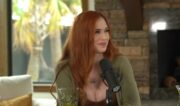
Enter YouTube. Alongside Little Dot Studios, the leading video platform has launched The Brand Deal Desk, a web series that demystifies the ins and outs of creator-brand partnerships. Across five episodes, The Brand Deal Desk‘s creator hosts will discuss their own sponsorships, interview industry experts, and guide neophytes who are just starting out on YouTube.

The trio sitting behind The Brand Deal Desk all have ample YouTube experience to draw from. Erin White is a businesswoman who shares stories from her creator journey, while Grace Andrews offers dispatches from the life of a solo entrepreneur. Max Fosh’s videos are not quite like that, but as he told The Brand Deal Desk viewers, he did once shred a yellow card in front of 90,000 people, so he has that going for him.

In the inaugural episode of their new series, White, Andrews, and Fosh define some industry terms, highlight some of YouTube’s on-platform marketing products, and speak with knowledgeable insiders like Sidemen manager Jordan Schwarzenberger.

The references to YouTube products help explain The Brand Deal Desk‘s raison d’etre. The platform’s brand deal playbook has changed a lot over the past decade, and creators now have a valuable resource that can help them keep up with the changes. So if you missed BrandConnect’s evolution into the YouTube Creator Partnerships hubThe Brand Deal Desk can get you up to speed.

“Creators today are building sophisticated media businesses, but navigating brand partnerships can still feel opaque, particularly for emerging talent trying to turn audience success into sustainable revenue,” said Little Dot Studios Director of Production Hal Arnold. “We wanted to create something that didn’t just explain the mechanics of brand deals, but reflected the realities of creator culture and the ambition of modern YouTubers.”

Five episodes of The Brand Deal Desk are planned, with weekly releases on the horizon. To stay tuned with White, Andrew, and Fosh’s updates, subscribe to the YouTube Creators channel.

After forging his own path, how far can Stephen Colbert go on YouTube and TikTok?

After hosting his final episode of CBS‘ long-running Late ShowStephen Colbert made an unsurprising move: He set up his own channels on YouTube and TikTok.

Both channels feature the simple handle @colbert, and they’ve attracted hundreds of thousands of Colbert fans a few days after they were first spotted. On YouTube, Colbert has already attracted nearly 200,000 subscribers; his TikTok follow count is hovering around 140,000.

Those subscribers and followers haven’t found many videos to watch yet. On TikTok, Colbert’s account is bare. His YouTube hub kicked off with a single, hour-long video: An appearance on public access television in Monroe, Michigan.

If Only In Monroe is an indication of what’s coming to Colbert’s social channels, his fans will be excited to see what’s next. His lo-fi program is a far cry from the splashy CBS fare that made The Late Show into a YouTube favorite more than a decade ago. Back then, late night TV was thriving online, driven by a YouTube meta that valued long-form programming over quick-hitting Shorts.

Colbert and CBS struck YouTube gold during that era, and the Late Show host even got to hang out with popular creators like PewDiePie and Sean Evans. But times have changed. These days, short-form feeds draw more viewership than long-form channels. Can Colbert switch up his tune to keep up with the times that are a-changing?

Of course he can. Comedy works better than most other categories on YouTube Shorts, and Colbert is a micro-humor pioneer. The pithiness of the Colbert Report segment “The Word” harnessed the then-new idea of meme culture. If Colbert can return to that approach, he’s all but guaranteed to become a TikTok star.

Only In Monroe portended that Colbert is eager to return to the days of the Report. His public access show had a distinct “Better Know A District” feel.

With more videos like that, Colbert will prove CBS wrong regarding their claims about declining Late Show viewership. The Daily Show alum is a beloved cultural figure, and his early subscriber surge on YouTube shows that his shtick still has legs.

YouTube is making AI labels easier to read (and applying them automatically)

At this point, AI-generated content on YouTube is a fait accompli. Like it or not, AI powers many of the top channels on the world’s most prevalent video platform, and YouTube’s commitment to new AI features will only make the so-called “slop” more pervasive.

Detractors may not be able to purge AI videos from their YouTube feeds, but a recent update will make it easier to tell manmade content from machine-generated fare. YouTube’s enhancements to its AI labeling system will increase the visibility of those tags while, in many cases, applying them automatically.

YouTube introduced its AI labels in 2023 and mandated that creators append those tags to all content that was made using the assistance of AI video generators. A year later, YouTube took its enforcement a step further by adopting the C2PA standard, which provides details about videos and maintains that metadata between platforms.

Even though YouTube has taken the topic of AI disclosures seriously, its slop problem has not been solved. A purge initiated at the start of 2026 targeted some of the most notorious purveyors of low-effort, AI-generated content, but those channels pop up faster than YouTube can deal with them.

AI videos have become so pervasive that more than 200 advocacy experts co-signed an open letter addressed to YouTube CEO Neal Mohan. The letter urged Mohan to adjust YouTube’s recommendation engine so that AI slop cannot be fed to kids.

YouTube’s latest update will help it move fast enough to stay ahead of AI slop. As described in a blog post, the “more visible, simplified labels” will appear directly below the player on long-form videos. For Shorts, the labels will appear as an overlay.

A pivot to “automatic AI detection” will make YouTube’s disclosures even more efficient. Beginning this month, YouTube will automatically apply AI labels when its systems pick up on “significant photorealistic AI use.”

Creators can override those labels via YouTube Studios, but there are a few caveats attached to that form of control. Labels cannot be removed from videos whose C2PA metadata indicates the use of AI models, and videos generated with proprietary Google AI tools like Veo will keep their labels as well.

That final restriction should feel encouraging for AI skeptics who are worried about YouTube’s active development pipeline for AI products. Yes, those products are going to keep on coming, but when they do arrive, they’ll at least (in theory) be properly labeled.