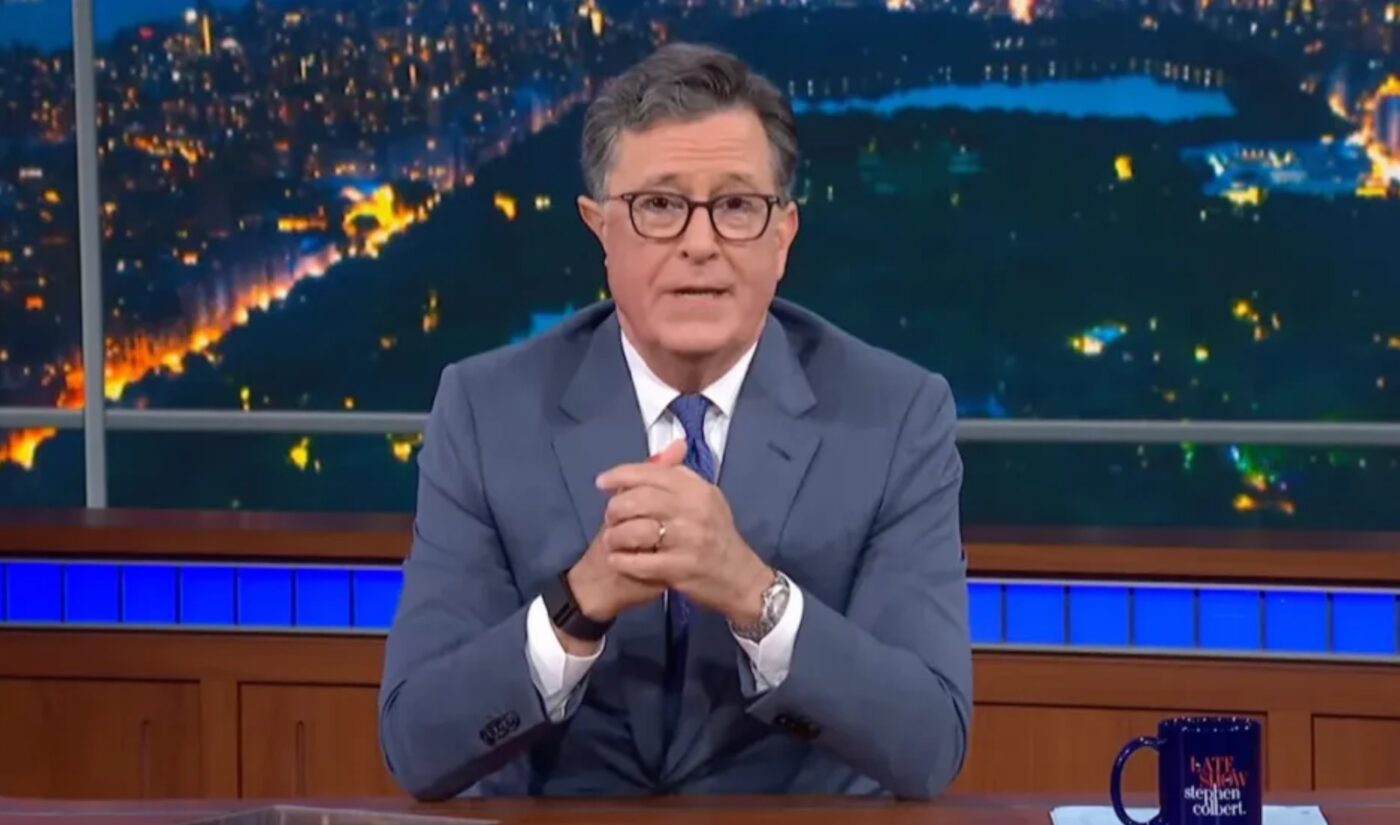
CBS‘ shocking cancellation of The Late Show with Stephen Colbert has come under intense scrutiny since the decision was announced on July 17. Many people, including some of Colbert’s colleagues in the late-night universe, have argued that the move was an act of political servitude. Colbert frequently took aim at Donald Trump on his program, and CBS parent Paramount managed to close a merger with Skydance just a few days after the controversial cancellation.
As convincing as that argument may be, CBS has insisted that axing The Late Show had nothing to do with politics and everything to do with declining revenue. The New York Times reported that CBS President George Cheeks justified the cancellation by claiming that The Late Show had no path to profitability.
It’s a difficult moment for late-night TV, but for anyone who argues that The Late Show couldn’t have been salvaged, Colbert’s YouTube traffic offers a counterargument. Even before the cancellation was announced, The Late Show was one of the most popular programs of its ilk online — and its digital viewership has only gone up in recent days.

Subscribe for daily Tubefilter Top Stories
We turned to our data partner Gospel Stats to discover late-night TV viewership trends on YouTube. Here’s what we found:
- In June 2025, The Late Show‘ official YouTube channel added 97 new long-form videos, and the hub’s long-form library averaged 586,484 views per video over a 90-day period. The channel’s total monthly view count reached 73.5 million.
- In comparison, NBC’s The Tonight Show with Jimmy Fallon uploaded a similar number of long-form videos in June — 89 of them — but had a much lower 90-day average viewership (309,832 views per video) and a lower overall total of 59.5 million monthly views. Colbert’s ability to best Fallon on YouTube is notable, since The Tonight Show once dominated the late-night scene on YouTube.
- On ABC, Jimmy Kimmel Live best its late-night rivals by pulling in an average of 848,184 views per videos across its long-form library in June. That success didn’t stop Kimmel from saying “I don’t know if there will be any late-night television shows on network TV in 10 years” during a 2024 interview.
Kimmel’s fatalistic prediction could come true in the long run, but was there really no way for CBS to profit from The Late Show‘s sizable YouTube viewership? YouTube is gobbling up watch time on TV screens, and advertisers are adjusting their budgets to account for the shifting landscape. CBS either didn’t figure out how to claim that moving spend, didn’t try, or didn’t stand up to political pressure.
Even after The Late Show‘s cancellation, YouTube viewers still love Colbert. His post-firing monologue is now over ten million views just three days after its initial upload date.
Maybe it’s too late for CBS to capitalize on Colbert’s newfound digital momentum (or maybe the network doesn’t want to). Either way, these viewership trends show that there is still a healthy appetite for late-night content. Distributions just have to figure out where to go to sell it.