The winds of change are blowing in Substack‘s direction, and one update is an attempt to cut into TikTok‘s territory. As the newsletter platform’s user base trends in an increasingly political direction, it is launching an infinitely scrolling vertical video feed that is meant to increase discoverability for its creators.
TechCrunch notes that the TikTok-style feed is a redesign of the Media Tab that arrived on Substack last year. The timing of the update is curious; Substack is launching its take on short-form video days before the deadline for a deal that would avert a U.S. TikTok ban. Like many other platforms, Substack is making a play to siphon off users who would be looking for a new content hub in the event of a TikTok ban. It has already established a $20 million fund to reward creators who port their followers over to its shores.
Though text-focused newsletters are Substack’s bread and butter, the platform has spent the past few years cribbing features from the online video world. The 2022 introduction of native video paved the way for enhanced monetization features and new products. Substack says that 82% of its top-earning authors utilize a multimedia approach.
The TikTok-style hub ties into Substack’s video monetization, and it also has potential as a tool for newsletter promotion and audience growth. Creators can condense video posts into short-form clips that tease their work, and they can reach potential subscribers as those consumers scroll through the vertical feed.
Visitors to the Substack’s TikTokified hub should prepare for a preponderance of political posts. The platform is serving as a refuge for journalists who have been displaced from the traditional media ecosystem. To support its rising class of reporters, Substack has partnered with the nonprofit Foundation for Individual Rights and Expression to defend writers targeted by the federal government. (Rival newsletter hub beehiiv offers a similar legal support system as part of its Media Collective.)
Increased support for authors has sent Substack’s paid subscriber numbers soaring past five million, but not everyone is pleased with the platform’s pivot toward political content. According to a report from Digiday, approximately 3,000 creators have moved from Substack to beehiiv over the past year. beehiiv CEO Tyler Denk told Digiday that nearly 1,000 of those creators changed over during the first three months of the second Trump term.
Sportswriter Joe Posnanski was one of those defectors. “When you search my stories online, you see Substack above my name,” Posnanski told Digiday. “Whenever something would blow up a little bit with Substack, I was somehow connected to that, and I didn’t like that at all.”
Substack may not be able to put the cat back in the bag when it comes to political fare, but it can satisfy the creators who remain loyal to it. The TikTok-style feed is part of that effort. With a critical mass of scrollers, it can become a potent discovery engine — especially if the U.S. TikTok ban ends up going through.
Filed under: Articles, Featured, Homepage Feature, News by Sam Gutelle Comments Off on Substack wants its creators to stick around. A TikTok-style feed will help them promote their newsletters.
I am Matthew Gielen, former CEO & Co-Founder of Electric Monster. Electric Monster was created to acquire and scale digital media assets (YouTube). In total, we completed seven acquisitions, the largest of which was React Media (formerly Fine Brothers Entertainment/FBE) in late 2021. In December 2024, I sold Electric to Brat TV (now ZATV).
My entire career has been spent building media companies in the digital video space, concentrating primarily on YouTube, and this is how I see the future of our industry:
The digital media industry (aka “The Creator Economy”) will not be dominated by “Creators” or “Influencers” or “Celebrities,” but instead by creators and companies that become Digital Media Studios that make long-form, YouTube-first content. These companies will be the leaders for the next twenty years, and ultimately rival traditional media studios for market share, attention, and revenue.
This is true because of the current nature of Creators, audiences, video platforms, and the mature revenue models of today.
This outcome is inevitable, despite potential threats, and there are already many companies heading down this path.
To understand why this will be, we must first understand the context of where we are.
The First Three Eras
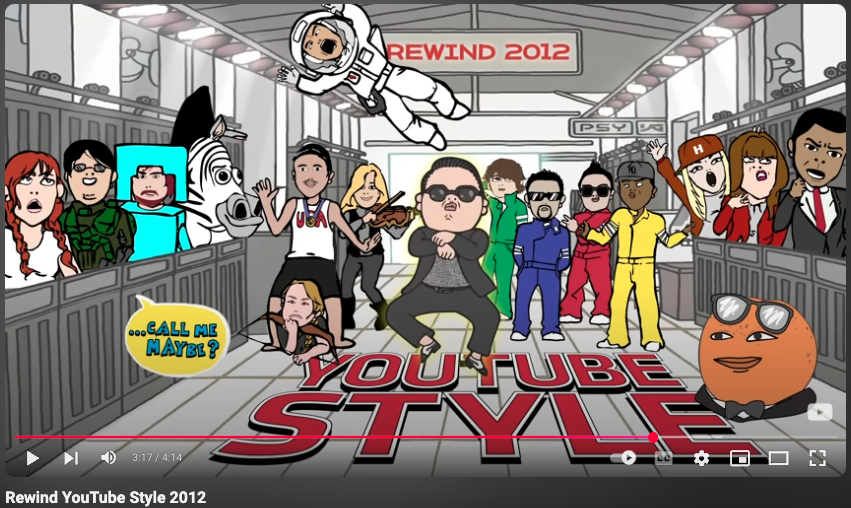
YouTube Rewind 2012
By way of a brief summary, there were 3 main eras of the “creator economy”:
1st Era: Experimentation Era where everything was new and people were kicking the tires
2nd Era: MCN Era where VC dollars flowed into fundamentally fiscally unsound companies
3rd Era: Creator Era where creators rose from the ashes of the MCNs to build sustainable small businesses.
We have not fully exited Part 3, but we’re seeing more and more creators pave the way into the Fourth Era.
The Fourth Era
The Fourth Era of the digital media industry will be dominated by Digital Media Studios, not “creators.”
As it pertains to creators, we can largely bucket them into three groups:
Influencers
Celebrities
Entrepreneurs
Influencers:
Small to medium-sized creators focused on building businesses around themselves to provide income. (i.e. Haul Video creators, How To creators, etc.)
Celebrities:
Influencers who have built a massive cross-platform following and largely generate revenue from their celebrity. (e.g. Logan Paul / Tana Mongeau)
Entrepreneurs:
These influencers have expanded beyond their celebrity to build IP-based businesses with varied revenue streams. (e.g. Mythical / Alex Cooper / MKBHD)
These definitions are simplified, there is plenty of overlap, and it’s more of a spectrum, but for now, these definitions will suffice.
There will always be influencers and celebrities, and businesses like talent management firms, agencies, marketplaces, and service providers that build and grow around creators. This path is well-worn and the line between traditional media celebrity and creator celebrity is getting blurrier every day (e.g. Ronaldo on YouTube). Many people will come and go, rise and fall, have great success, or never quite get there. They will explore their hobby, connect with others, make close friends, build small businesses, and a lucky few will get that golden ticket and retire early.
To be clear, digital media companies need to nurture, support, and build with influencers and, celebrities. They must provide them vehicles (shows) that allow their talents to flourish, and they must incentivize them to stick with the brands and the company as their popularity grows.
This is because, in the entire history of entertainment, every single major media brand has been built on the backs of characters or personalities.
However, when the talent is the entirety of the brand (ie – the ONLY reason someone is a fan) there is a ceiling. This is not a critique of these businesses or types of creators. It’s just the reality of the success of a business being tied solely to an individual. There are very few creators or influencers that can carry an audience for many years on their personality alone as the value proposition to the audience.
This is why the influencer or celebrity route is not where the Digital Media Industry grows from but alongside and in concert with.
Digital Media Companies
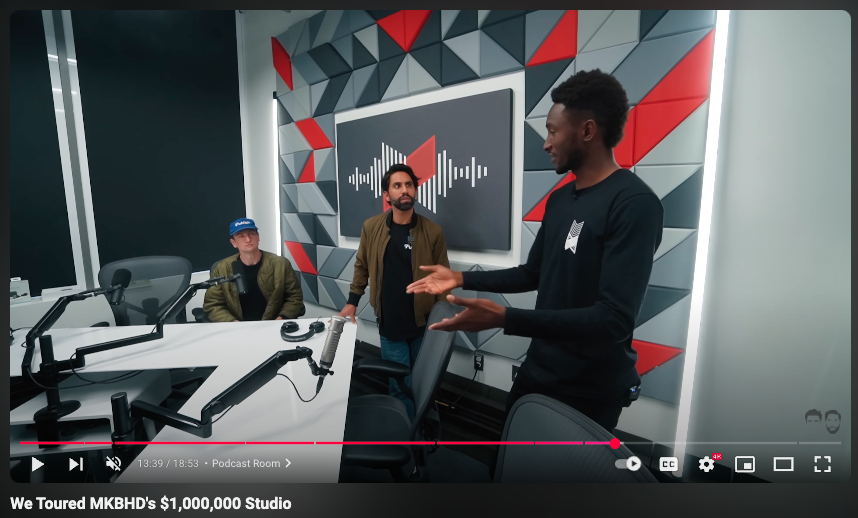
Colin & Samir, MKBHD
Entrepreneurial creators, those building digital media studios, are different from Influencers or Celebrities. This is because their value proposition to the audience goes beyond their popularity. Audiences watch them for their shows (formats), interest alignment (topics), and how their videos look (style). Their businesses can bust through the ceiling an influencer or celebrity cannot because their popularity alone does not limit their success.
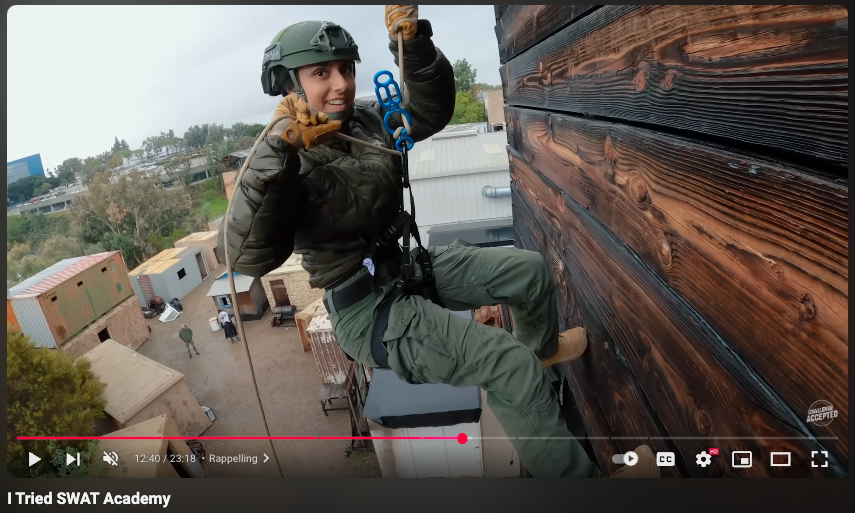
There is a growing list of examples of Entrepreneurial Creators. For example, Spy Ninjas (Chad Wild Clay & Vy Qwaint), Mythical (Rhett & Link, Good Mythical Morning), Blogilates (Casey Ho), Theorist Inc., MKBHD, Michelle Khare, Smosh, Huda Beauty, Alex Cooper/Trending, Dhar Mann, Dude Perfect, Linus, Babish Culinary Universe, Critical Role, and others. (I am deliberately leaving MrBeast off this list as he is a singular case, and the Kids space (e.g. Moonbug, Ryan Toys Review) is a different animal altogether.)
While not every creator will want to pursue becoming a digital media studio, the eye-popping numbers (again, for our industry) like Dude Perfect’s reportedly $100mm raise, will be hard to resist.
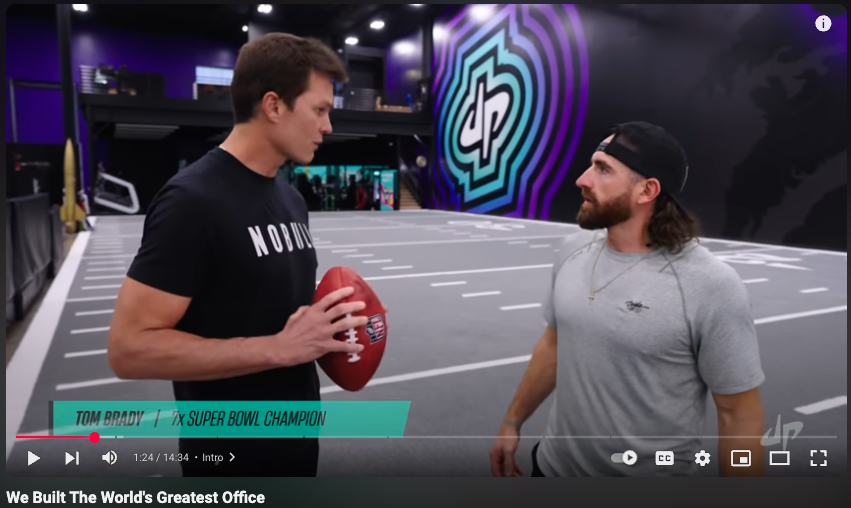
Tyler Toney from Dude Perfect and Tom Brady
The creators mentioned have professionalized their operations and some have scaled them to millions of dollars in relatively stable recurring revenue.
They all also share, for the most part, these traits:
Significantly higher quality content than your average creator.
Employees specialized in specific aspects of content creation, distribution, and monetization.
Programming.
Going deeper into each of these traits:
1. Significantly higher quality content than your average creator.
The steady march upward of advertising & marketing dollars flowing into the space, combined with the very real capabilities of generating revenue from things like subscriptions, memberships, merch, licensing, live events, etc. has allowed creators to invest more and more into their product (the videos). Many companies are leading the way here like Nick DiGiovanni, MKBHD, Jubilee, and Michelle Khare. They, and others like them, have raised the bar year after year to the point where many videos being released on YouTube rival the production value of cable TV shows. As time passes, audiences will be accustomed to this level of production value to the point where it will become a prerequisite for success on digital platforms. In turn, this rapid growth in quality will accelerate the flow of ad dollars, attention, etc.
Additionally, it’s worth noting that consumers’ definition of “quality” has changed over the last 10 years, where audiences have embraced Creators that are relatable, aspirational, immediately relevant to them, and/or unfiltered. Massive TV production spends ($1,000,000+ per hour) are not required to reach massive audiences, keep their attention, or attract advertising dollars. If we define “quality” in those three buckets, then Entrepreneur Creators have a distinct advantage over both your average creator and traditional media in the long run.
It’s no coincidence that the creators on this list have all created a repeatable format (aka a “show”) and honed their storytelling abilities. A repeatable format creates an environment suitable for predictable results, easier brand integrations, and licensing opportunities. Most importantly, this is how a brand is created.
The repeatable format is the backbone upon which a video brand is built. It gives the video portion of the brand its structure. The repeatable format establishes in the viewer an expectation as to what they are going to see in each video. When this expectation is met, and ideally exceeded, it produces feelings of satisfaction in the audience (it’s no coincidence that is exactly what YouTube optimizes for), which is how brands are built: You make an implicit or explicit promise to your audience, and then (over) deliver upon that promise.
A format or a show also has the benefit of creating the opportunity to replace the main talent if/when that is needed, like late-night talk shows or game shows (RIP Bob Barker), and even sitcoms (Two and a Half Men).
That said, rarely has there been a successful main talent swap in the digital space. This is due to the heightened importance of the parasocial relationship, the lack of time given to a new host to create that relationship, and the general lowering of the talent from the initial key talent to their successors. In traditional, swapping one legendary talent (Dave Letterman) with another (Steven Colbert) you see no real drop off in skill and craft. In the digital space, that same level of like-for-like switch has not yet been seen. If you’re an incredibly talented creator in the digital space, you’ve built your own following and platforms, and don’t need a vehicle (late-night show) to thrive. Most importantly, there are few digital shows that have a significant support staff (100+ people) that help make the show what it is. Often, it’s just a handful of folks making 1+1 = 3. These are all solvable issues, however, and we will see more and more hand-offs in the coming years.
A fourth benefit of a repeatable format is that it creates the opportunity to sell more ad inventory (both integrations and pre- & mid- rolls), sell ad inventory in advance, and have a predictable outcome by way of viewership, which in turn leads to more sales and so on. The predictability allows advertisers & brands to feel safe in what their ads will appear on, the reach that content will achieve, and is more familiar for advertisers and marketers that are shifting spend from TV. On the flip side of this coin, it also creates predictable costs. In combination, this creates stable business models.
Smosh Pit
3. Multiple channels
Almost all of these creators have multiple IPs under their banner, usually on separate channels. For example, Mythical has at least 5 different channels for their various shows:
Good Mythical Morning
Good Mythical More
Rhett & Link’s Wonderhole
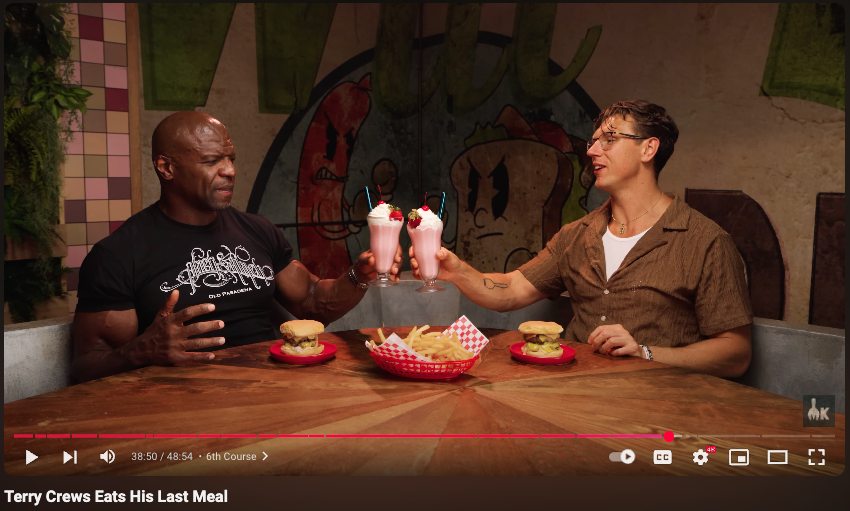
Mythical Kitchen (and it’s popular sub-format Last Meals)
Ear Biscuits
These multiple channels and multiple IPs increase revenue with the various revenue streams that go with them, but they also present additional data points, programming insights, and give downside protection.
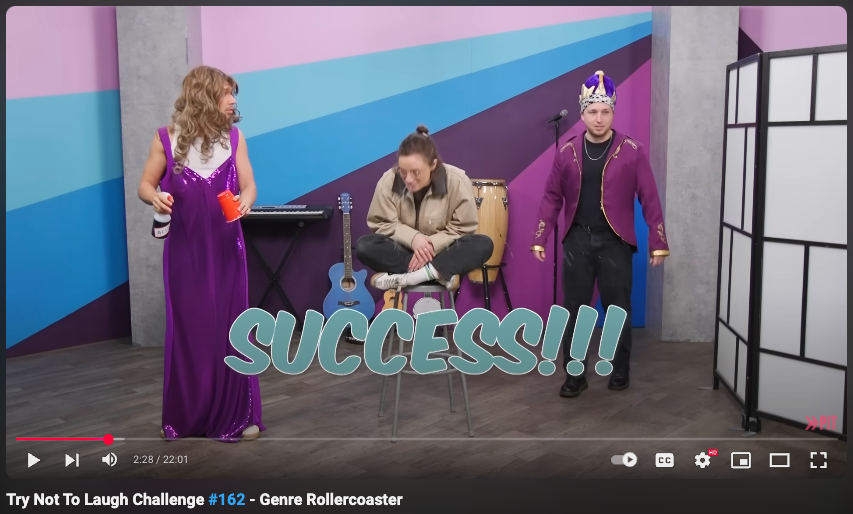
Most importantly though, to build a large-scale digital media studio, a company must be able to develop and grow new original IP. This ensures that the company can continue to evolve and grow with the audience, whose tastes will evolve and grow over time. Jubilee’s Nectar and Smosh’s Smosh Pit are also great examples of this.
Terry Crews & Josh Sherer on Mythical’s Mythical Kitchen
4. Diversified revenue streams
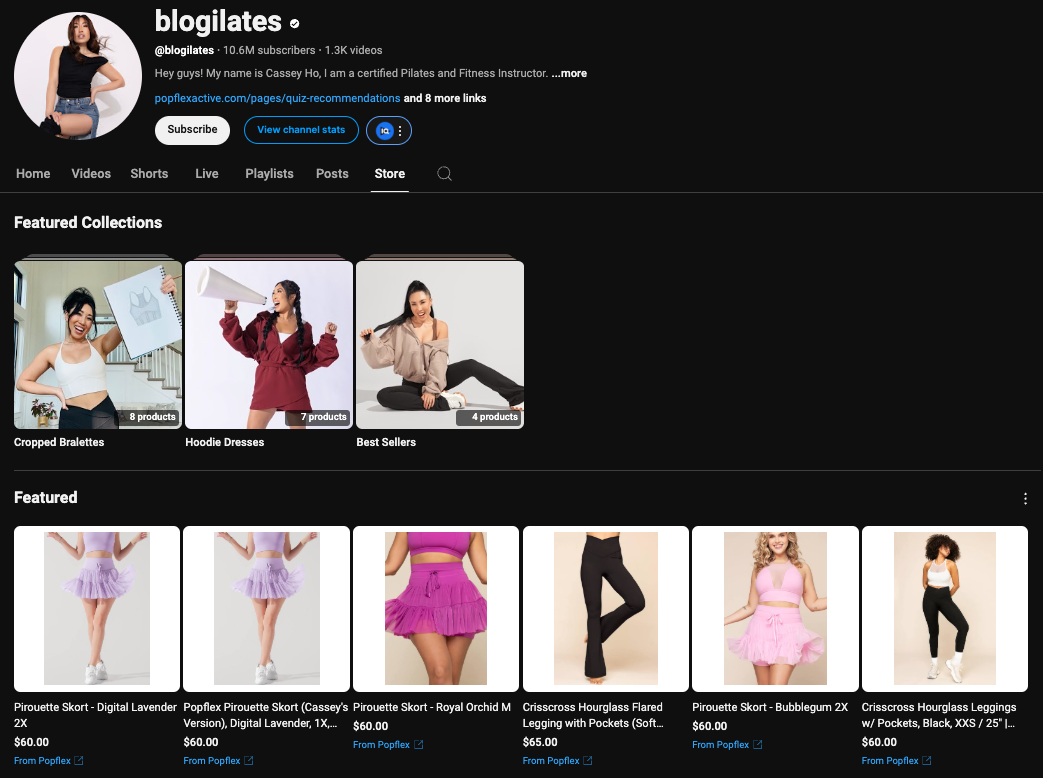
These Creators have diversified their revenue streams beyond ads and brand deals/integrations. These streams include:
Sponsorships
Merchandise
Products
FAST & OTT
Live Events
Syndication (facebook, snap, tiktok, etc.)
Localization / Format Exportation
Licensing (SVOD, Cable, Broadcast)
Memberships / Subscriptions
Other Mediums (Movie, Book, Theatre)
Few, if any, brands currently operating on YouTube have all of these, and not every revenue stream will be right for every IP.
Blogilates merch tab on YouTube
5. Specialized Employees
All of these entrepreneurs have teams of people around them with specialized skill sets. Some of the first hires a creator makes are mid-level roles like a producer, editor, thumbnail designer, etc. As their organization grows they begin to hire for roles like production executives, sales, and administrative support. However, the most important hire they tend to make is a COO or CEO.
Not all Creators are entrepreneurs or even want to be entrepreneurs. Similarly, not all Entrepreneurs (creator or not) make great COOs or CEOs and/or have the experience or know-how to scale a company from 1 employee to 5, 5 to 15, or 15 to 100+. This is not meant to besmirch creators, entrepreneurs, or Entrepreneur Creators. It’s simply a statement of fact that it takes a different skill set and set of experiences at different times to scale any company, let alone a media company. Many Digital Media Companies have made this important hire, for example, Andrew Yaffe at Dude Perfect, Alessandra Catanese at Smosh, and Dhar Mann’s hiring of Sean Atkins.
6. Programming
When we first acquired the React family of properties (formerly FBE) at Electric Monster I showed the team a slide that had a picture of a graveyard. On the headstones were the logos of the countless digital media studios (and MCNs that tried to become studios) that had come and gone over the years. My thesis was (and still is) that many of the programming decisions were being made by producers and/or creatives, not creators and/or programmers and this is why those companies failed.
One of the most important aspects of the Entrepeneur Creators who are building digital media studios is that they are run by creators. Creators who have succeeded to this level have the ability, either through intuition or an intentionally developed skill, to know what their audience wants to watch.
Creators -> Digital Media Studios
Does this all sound familiar? It should. It’s the exact model Hollywood and traditional media use. This is why I would classify Entrepreneurial Creators as Digital Media Studios (or at least aspiring).
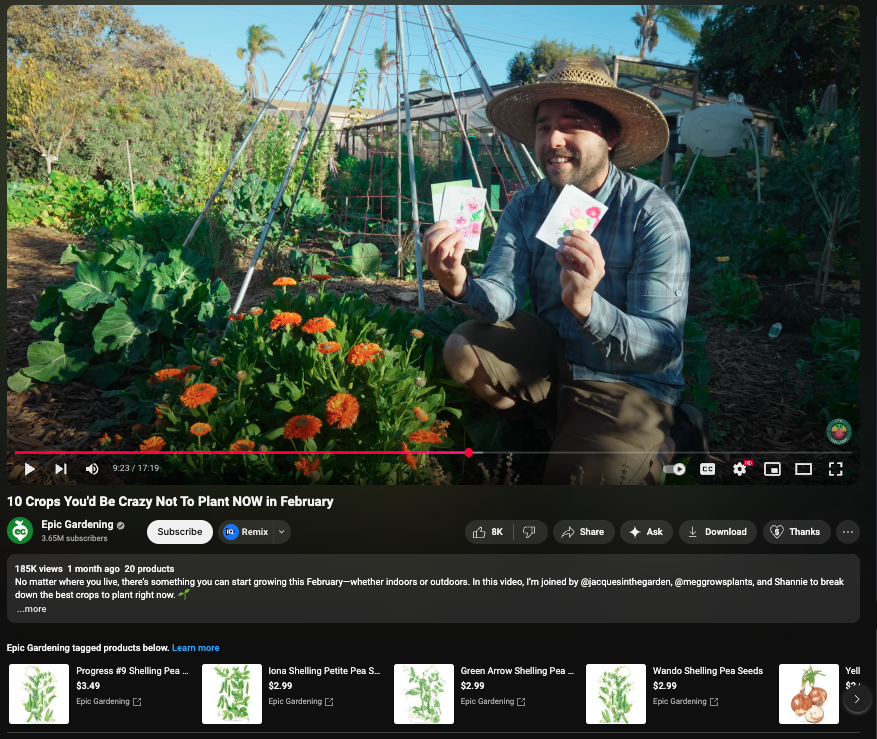
It can look a bit different than traditional at times though. The greatest example of this is Epic Gardening. According to Kevin Espirito, the founder and main talent of Epic Gardening, over 50% of Epic Gardening’s revenue in 2019 came from selling a single product on its website. In 2021 he secured $17.5mm in financing from The Chernin Group and in 2023 they acquired a seed manufacturer and distributor. Essentially, Epic Gardening grew a reality entertainment show and then built out products to sell alongside. As a father of two boys who own about 20 toy lightsabers, this feels incredibly familiar.
Epic Gardening on YouTube
Some companies are attempting to build Digital Media Studios that are not organically grown out of a Creator / Influencer business. There are a few flavors of this type of Digital Media Studio currently:
Home Grown (Jubilee, CUT, Watchmojo)
Investors (Electrify, Mythical)
Roll Ups (Lunar, Moonbug/Candle)
Operators (Electric Monster (now ZATV))
There are pros and cons to each form of Studio, and all of them can be (or already are) successful. The biggest difference between these four different studio models is in acquiring assets and building them from scratch, which is the Home Grown model.
For a new home-grown digital media company to arise they will have to get over the Cold Start Problem. That is, it is ridiculously hard and expensive to rapidly build and scale a new media brand on any platform, and most platforms do not provide the revenue models needed to support such an endeavor. Even if the content is great, it can still take a platform a very long time to begin surfacing that content to an audience large enough even to be at a place where just breaking even is possible. I don’t see this being a model where there is a lot of investment in the near future, though there may be some small-scale bets made that pay off well.
The other three models (Investors, Roll-Ups, and Operators) are all different flavors of the same thing: They acquire (or invest in) digital video companies and attempt to scale their revenue, reach, etc. However, in the NON-Kids space, there is limited investment in Digital Media Studios through VC, family offices, or private equity.
That is not to say there has not been investment in this space. There have been many deals recently for talent management companies like Night acquiring Bottle Rocket, and shopping / affiliate platforms like Later buying Mavely for $250 million. I would also be remiss if I didn’t mention Softbank’s huge investments in Spotter & Jellysmack. These investments are not content or IP plays, however.
For Digital Media Companies, there have also been some significant one-off deals such as Donut’s sale to Recurrent Ventures, Trusted Media Brands’ acquisition of Jukin, Dude Perfect’s investment from Highmount, and most recently First We Feast’s buyout from Buzzfeed, which included Soro’s Fund, Mythical, and others.
However, in each case, the main thesis for the acquisition or investment appears to be more strategic, and there does not appear to be significant interest in or appetite for acquiring additional Digital Media Companies.
This means there is a gap in the market for a company that can acquire multiple Digital Media Assets at scale.
There are currently three companies, that I am aware of, that are pursuing a roll-up strategy in the general entertainment space: Electric Monster (now ZATV), Electrify, and LunarX. I have connections to all of these companies in one way or another, so I won’t go into detail about them. What is clear, though, is that none of these companies have registered headlines or scale like Moonbug.
Moonbug started in 2018 when it acquired Little Baby Bum. By late 2020 they had acquired Cocomelon and Blippi as well. They would exit to Candle by the end of 2021 for a staggering $3 billion.
Comparing general entertainment roll-ups to Moonbug is not an apples-to-apples comparison. However, the lack of significant acquisitions in general entertainment has less to do with the target audience. Relative to kids’ content, general entertainment properties have historically had:
An over-reliance on a single talent to drive viewership
A lack of format (show) driven properties
A poor track record of developing new IP
Immature revenue models
More and more these 4 limitations are being addressed by Digital Media Companies as cited in the section above. Therefore, the main limiting factor here is time and it appears as though the right time to enter is now.
The first successful Digital Media Studio, NOT in the kids’ space, will combine the roll-up and homegrown models. This is EXACTLY how traditional studios operate and have stayed in business for decades. Additionally, this is in part how Moonbug was able to rapidly scale. They bought incredible IP and characters, layered in sophisticated and profitable business lines on top, and developed new IP & characters. A successful Digital Media Studio will take this playbook, which has worked time and time again, and run with it in general entertainment.
Why digital media studios will dominate
Creators, influencers, celebrities, and companies that become Digital Media Studios will dominate the next 20 years.
To dominate means to be the premier brands and shows that celebrities make appearances on, that get invited on late-night shows, and the New York Times covers. They will be the brands that vacuum up the most ad spend, sell out Wembley for live shows, build entertainment complexes, and most importantly, command the most attention from audiences.
Within this context, I’m also defining “success” or “significance” as brands and companies that have or could have an exit valuation north of $100 million. Fair or not, at this moment in time, this is where we are.
As I see it, there are six primary reasons why Digital Media Studios will dominate:
1. Impossible to scale an individual’s time
This is well-worn territory and there’s no reason to relitigate it here. I would simply add that there are only a handful of celebrities who have successfully built a media company on the back of their celebrity that have stood for significant (20+ years) lengths of time. For example, Oprah, Ellen, Ryan Seacrest, and Martha Stewart.
2. Resources
A Digital Media Studio with multiple IPs and revenue streams can take bigger swings, have more resources to put towards “better” content, and can take risks on innovation that a single individual can not. If you’re a creator on the rise, and starting to scale, you are likely not going to risk stepping outside of your lane and jeopardizing your business. I mean this in the context of losing audience because that’s the bet you make when you try something new as a creator.
A Digital Media Studio can also hire the best in class at narrower and narrower job definitions. Whereas a smaller Creator company or an Influencer can not afford to staff for each individual task at that same level. Additionally, higher caliber people with more experience are not likely to want to step into roles with fewer resources and a higher risk profile.
3. Amortization & reduction of costs
Digital Media Studios will also have a competitive advantage with reduced costs. This will most likely come in the form of overhead, real estate, and production. Again, this well-trodden territory that requires no further explanation.
4. Centralized knowledge base
Another significant advantage Digital Media Studios will have is a centralized knowledgebase of how each platform works, what audiences are gravitating towards, and what is simmering under the surface. Your average creator or influencer just does not have the time or the bandwidth to stay on top of every little thing happening on the internet, whereas there is a greater probability that a well-staffed Studio, with many different sources of data in different verticals, will.
5. Varied skillsets to provide rapid exploration of revenue models on a given IP
While not every brand is right for every potential revenue stream, having the skillsets and experience to exploit a brand in any potential revenue stream is vital. Ad-supported content alone is incredibly difficult if not impossible to build a Digital Media Studio on. Having multiple brands with varied business lines allows for revenue streams to be added rapidly into newly developed or acquired IP.
6. Professionalization, standardization, stability, and sustainability
The best things that Digital Media Studios sprouting up will bring with them are professionalization, standardization, stability, and sustainability to the “Creator Economy”. As it stands, our industry is incredibly fragmented with limited regulations and standards, which leads to a lack of professionalization and instability. In turn, this makes the current state of our industry less sustainable. Furthermore, it cedes so much power and influence to the platforms and advertisers. Digital Media Studios will help equalize this imbalance.
Additionally, advertisers face a dearth of opportunities to work with professionally run organizations. Digital Media Studios will help accelerate the transition of ad dollars from traditional forms of advertising to digital video by offering a safe set of brands for their advertisements.
These are the main reasons that creators and influencers that grow into Digital Media Stuidos will dominate.
Digital vs traditional studios
However, Digital Media Studios will outgrow traditional studios (unless they are acquired by them) over the next 10 – 20 years and will compete with traditional Hollywood for the same scale of dollars, mindshare, screen time, and valuations. I believe this because I am an eternal dreamer and optimist, but also because:
1. Limited Innovator’s Dilemma
Traditional studios are always butting into the Innovator’s Dilemma in the form of protecting their current business models. The DNA of a Digital Media Company is one of constant innovation. The Creator DNA is forged in the always-on, always-changing ecosystem of the internet. Yes, a Digital Media Studio will have business lines to protect, however, the cost to try something new is minimal relative to a traditional media company that will have to spend millions.
2. Gatekeepers
Similarly to the innovator’s dilemma, Gatekeepers in traditional media will allow for Digital Media Companies to flourish. For a traditional media company to make something the buy-in has to go through countless layers of red tape including executives, 3rd party agreements, regulations, internal opportunity costs, agents, lawyers, and prohibitive costs. Digital Media does not have these same problems, or at least nowhere near the same scale if they do.
Additionally, anyone can create an account on the main platforms, make a video, and post it. This allows for massive amounts of innovation and experimentation from individuals. In turn, Digital Media Studios can take these learnings and apply them to their properties rapidly. This can not happen in movies & TV at anywhere near the same pace and the risk is much greater on the downside.
Another area where gatekeepers restrict Traditional is in the discovery of new talent. In traditional, there are agents, managers, casting directors, directors, networks, studios, and a limited amount of IP. However, social platforms enable and facilitate the discovery of new talent and personalities rapidly.
3. Digital stigma
Until the last few years, there was a definite stigma associated with “working in digital.” Regardless of the reasons, and there are many, this stigma is wearing off. This means more and more talented storytellers will enter the digital space, whether from the get-go or after a career in traditional media. Digital Media Companies will have a larger pool of top talent to pull from, which means better content, more views, more revenue, and so on.
4. Cost Per Hour
Digital Media Studios have a competitive advantage over traditional when it comes to costs. Whether creators and talent are owners in the IP (or at least equitably involved) or not, talent costs tend to be much lower. Add to this the (generally) much lower production and overhead costs, and it’s clear that Digital Media Studios have a significant competitive advantage over traditional on a cost-per-hour basis.
Why long-form will dominate on YouTube
The main thrust (and yes, it is incredibly self-serving) hypothesis I have though is that it will be those who make long-form YouTube content specifically.
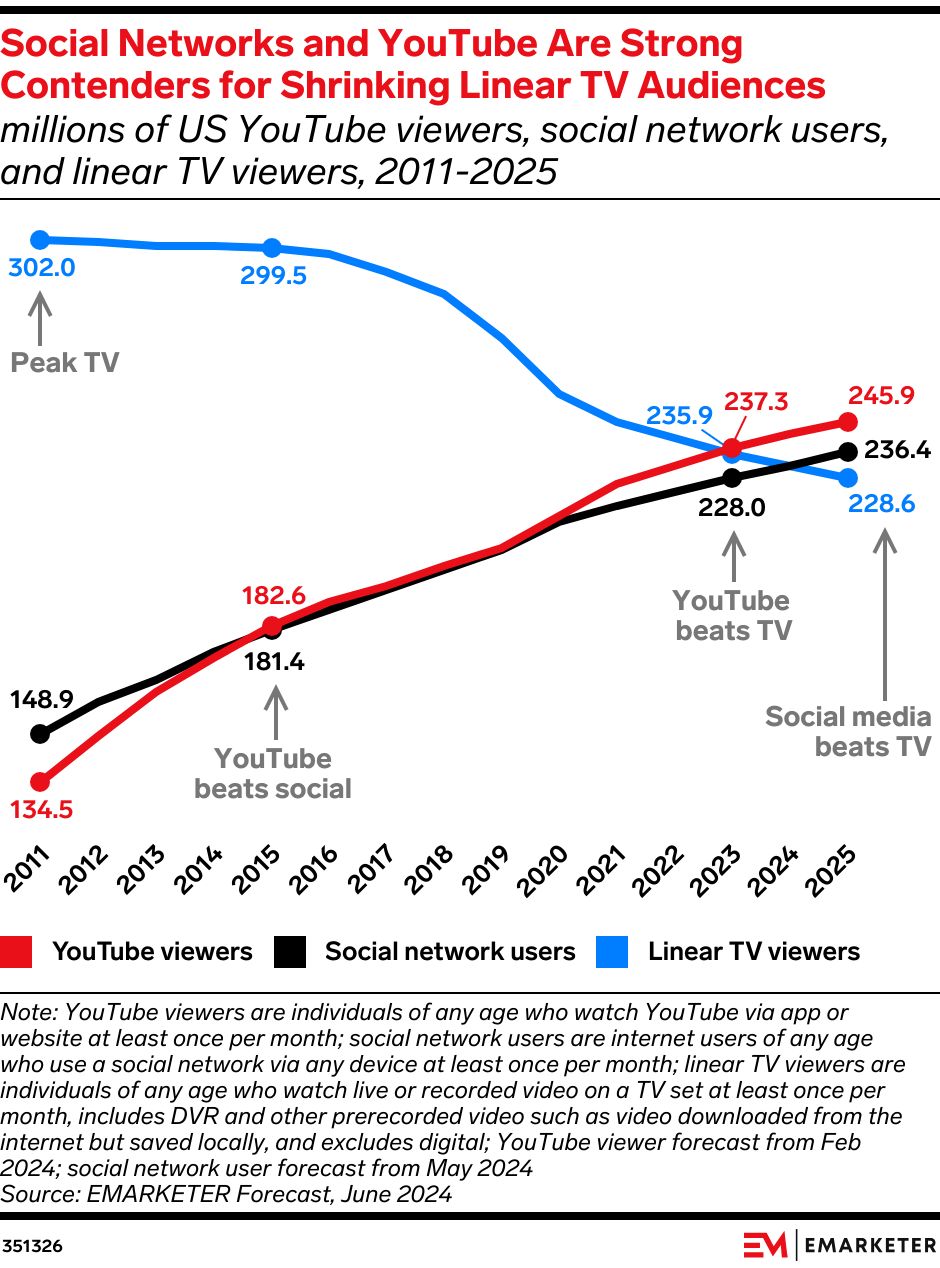
Media Brands are built when people choose to spend their time and attention with them. This time and attention leads to love and identity, which ultimately leads to generating revenue for the brand. Nowadays, the #1 place where people spend time with media brands is YouTube.
eMarketer Graph Showing YouTube & Social vs. Television
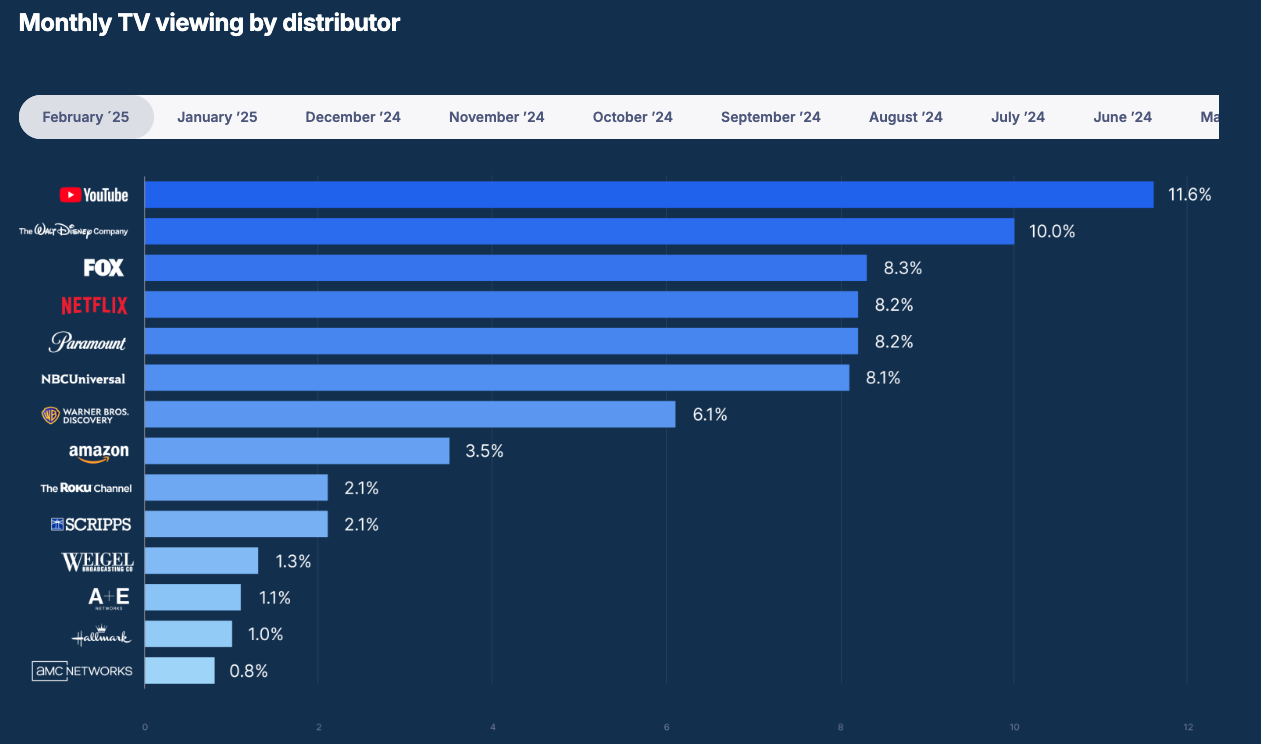
More specifically, they spend it watching YouTube on television.
Nielsen Streaming Stats Feb ’25
To be fair, this is streaming only. But this also looks a lot like 15 years ago, when YouTube was competing with sites like Blip.TV and Dailymotion. We all know how that turned out. Furthermore, anyone below the age of 20 or 25 does not watch “TV”. They stream. What do they stream? YouTube.
Large swaths of demographics do still consume other content on TV screens, however. Do you know what is relatively easy to repackage into 22-minute blocks and syndicate onto other platforms like Facebook, Amazon, Netflix, FAST, OTT, and regular TV channels? Long-form YouTube.
YouTube is TV
Additionally, YouTube is by far the most mature and stable platform, which also exclusively focuses on video. I mean this primarily from a content-serving perspective in the sense that while the recommendation system is constantly being tested and tweaked, there are few if any wholesale changes to how YouTube serves out content. This means that viewership and revenue are largely predictable over time, which is as firm of a foundation as a company can get on the internet.
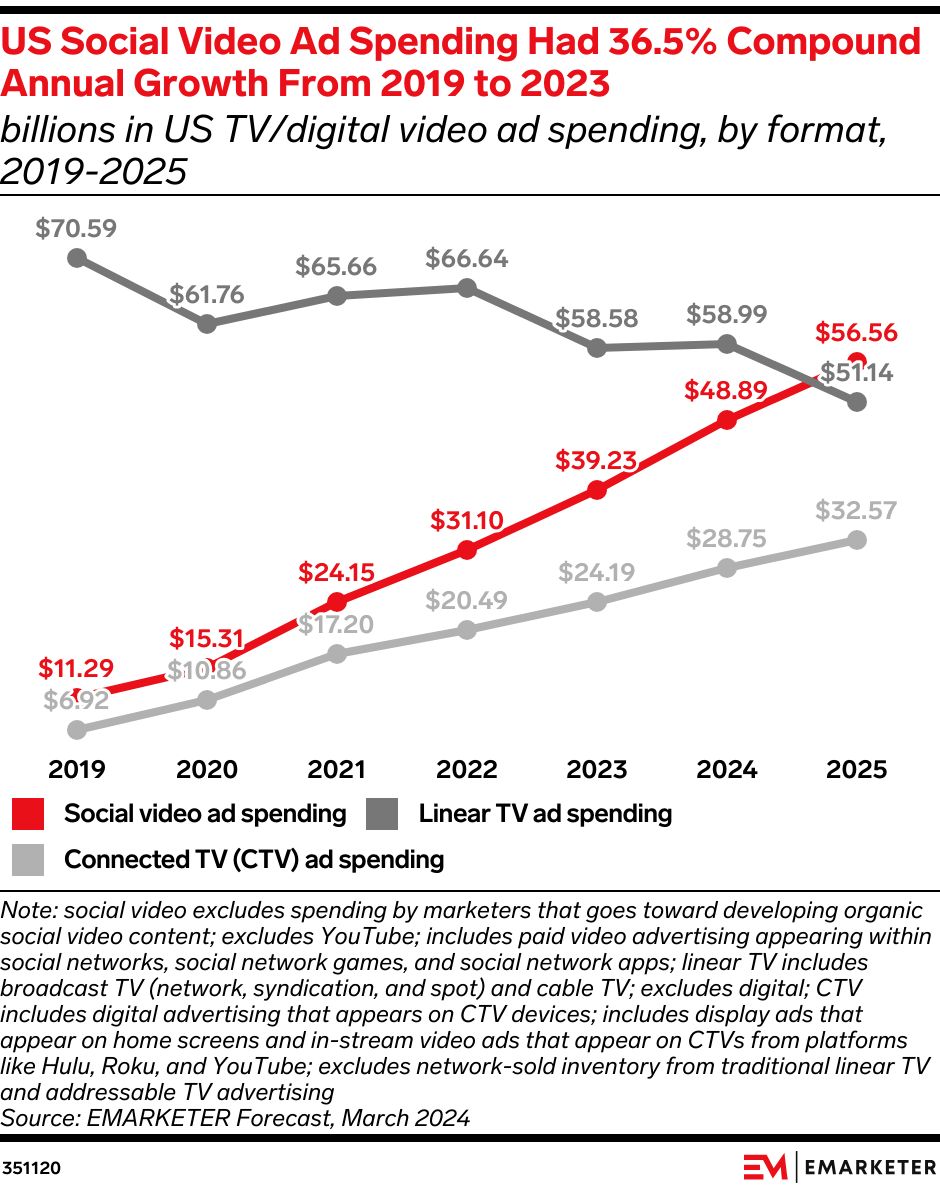
By way of revenue models, YouTube is just now getting to a place where real revenues can be made in long-form content. The YouTube partner program launched EIGHTEEN YEARS AGO. Regardless, at the upper end of the RPM spectrum, we’re still only seeing $20 per 1k views. That’s basically the equivalent of one TV commercial. Not one commercial break, literally a single television commercial. As YouTube’s presence grows on TV, so should the volume of commercials, further increasing YouTube’s ability to support creators and content.
eMarketer Graph Showing Social Video Ad Spending Overtaking Television
In contrast, the RPMs for short-form content continue to hover around $.10. That is a 99.5% gap. Short-form monetization has been around for 3 – 4 years and it has made zero progress. None.
Don’t get me wrong, short-form is great for a lot of things like discovery, awareness, and experimentation, but building a significant media business is not one of them… unless you’re the “platform” (and whatever you do, don’t call them media companies).
===
Threats
There are 5 main threats to this coming true. These threats include, but are not limited to:
1. YouTube’s competitors and revenue model
Competitors
YouTube has plenty of competitors at this point, though they all threaten different parts of YouTube’s business. For example, Tubi, FAST providers, Netflix, and every other streaming service are all vying for dominance over the TV screen. On mobile, they face competition from TikTok, Meta, and Snap. In regards to audio, Spotify just put a big effort into courting video podcasts and regular video. For the share of digital video ad dollars, YouTube lags behind Meta according to eMarketer, and now faces more and more competition every day from the likes of Disney, Netflix, Amazon, and more.
The reverse also happens to be true though, as YouTube seems determined to become the everything platform. Shorts was a response to TikTok eating their mobile viewership for lunch. YouTube’s recent changes to the community tab make it a weird combination of Discord and Instagram. They built and sunsetted a Stories feature in about 3 years. Their efforts in affiliate and shopping lag behind TikTok by about 2 years at this point.
Will these distractions and defensive moves erode their ability to dominate the TV screen or be enough to maintain their share of people’s time so that YouTube will be able to stay on its most valuable trajectory? A mentor of mine frequently said, “If you’re everything to everybody, you’re nothing to nobody”. I guess no one told Walmart or Amazon.
The main differentiator, by way of value proposition to the audience, is that YouTube is not a walled garden. Literally, anyone can upload videos to YouTube. There’s only one other place on the internet where this is possible and the platform’s main purpose is for people to watch video content and that’s TikTok. TikTok, in my view, is the only real competitor and no one wants to watch TikTok on TV… for now.
Revenue model
There’s always the threat of YouTube changing its revenue model in some way that harms creators, that YouTube / Google will not sell enough ads, or that ad agencies will limit their spend on YouTube in favor of other platforms. This is a low probability as it gives them a big competitive advantage in courting creators over TikTok and Meta. The latter of which is known for tanking much of the digital journalism industry in the fabled “pivot to video”, and also changing its revenue-sharing model in ‘24 to a much more Meta-friendly share.
2. Regulatory hurdles/government interference
There is a very real threat in the form of government interference and/or hurdles to not just YouTube, but all of social media and digital video in general. This could come in many forms including censorship, favoritism, anti-monopoly policy, etc.
3. Traditional media
Acquiring and/or killing Digital Media Studios
Many of us applauded Disney when it acquired Maker Studios in 2014. Within 3 years there had been substantial downsizing, and by the 4th year Maker was essentially done. In the same way, traditional studios could see Digital Media Studios as a threat, acquire them, and either fold them into existing operations or shut them down altogether.
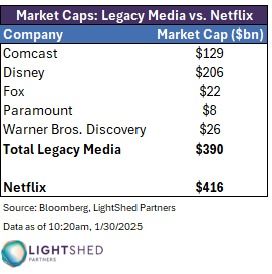
By way of scale, this isn’t far-fetched. The market caps of the big traditional studios is massive relative to even the largest Digital Media Studios:
Lightshield Infographic Showing Market Caps of Traditional Studios
Traditional evolving and/or overpowering
This seems unlikely given Traditional’s need to protect its current business lines and the lack of scale in digital video relative to the king’s ransom they make in film, TV, and their streaming platforms, but it’s still a threat.
Box Office
Digital video properties and creators have not cracked the creation and distribution of films and movies. There has not been a successful movie born out of the digital space to date, though there have been numerous attempts and models tried out. While not imperative to the success of a Digital Media Studio, unlocking this aspect of the entertainment business will be key to our industry’s growth in the long run.
4. AI content & Content saturation
It’s not impossible, but the argument that AI content is going to lead to content saturation is silly. We are already saturated with content. 30,000 hours (that is 1,250 DAYS) of content is uploaded to YouTube EVERY DAY. This is just one platform. Somehow AI is going to make this worse? That’s laughable.
The other AI argument is that it’s going to improve content so much that everything will become far more competitive. First, have you ever tried to watch AI content for more than 60 seconds? It’s awful. Can AI even make content longer than 60 seconds? No, it can’t and it won’t be able to for a very, very long time, and it’ll be expensive as hell. Further, AI as it stands is largely a reversion to the mean. This means content won’t improve, but be “mid” (at best). Audiences want “the same but different”, AI is just “the same”.
Another argument I see is that creators won’t be able to compete with virtual influencers. This is an idea propped up and laundered by people who have never spent a single day in the media business. For the last decade, every other year or so there’s been some story about some “virtual” influencer, and without fail there’s never any follow-up and we never hear about it again. Audiences at scale do not want to “connect” with a computer.
With that said, there will be more opportunities to use machine learning and “AI” as tools. I believe its utility will be most valuable in things like programming (including ideation), storyboarding, graphic design, data analysis, post-production work, etc. Yes, there will be some specific jobs or tasks that are fazed out or replaced in time, but by and large, this will be slow. People and companies that use these tools, will theoretically be able to make better content. That’s true of every tool used in the creation of anything. It’s not the tool that makes the product, it’s the craftsman wielding it.
5. Bifurcation of audience
The fifth and final threat here is in the bifurcation of audiences, or more specifically, the customization and curation of experiences to the individual. While theoretically possible, this won’t become a serious issue. Humans and their tastes are far more similar than we like to let on. Additionally, we share things we like with people we think will like it, which is exactly how a recommendation engine works. There will always be popular things, rising and falling, and such is the nature of entertainment.
===
So, to conclude…
Entrepreneurial Creators focusing on long-form YouTube first content are currently creating and building companies that greatly surpass their creator and influencer counterparts. These companies will ultimately rival traditional studios in the next 10 – 20 years. Seeing this, early movers in the space have begun a wave of acquisitions, but have not made much of a dent in the available asset class of digital media companies, and nothing at scale. This means that more capital should flow into the creator economy from private equity, family offices, strategics, VCs, and advertisers creating a much larger market for M&A activity in the coming 3 to 5 years.
I am Matthew Gielen, former CEO & Co-Founder of Electric Monster, and former CEO & Founder of Little Monster Media Co. In 2016 I founded Little Monster, a YouTube strategy agency that worked with media companies like Viacom, NBCU, Amazon, and Netflix. In 2021 I sold that agency to Electric Monster.
Electric Monster was created to acquire and scale digital media assets (YouTube). In total, we completed seven acquisitions, the largest of which was React Media (formerly Fine Brothers Entertainment (FBE)) in late 2021. In December 2024, I sold Electric to Brat TV (now ZATV).
Before creating these companies, I was the VP of Programming at Frederator Networks for 3.5 years, and before Frederator the same at Driver Digital (now Driver Studios) for 3 years. Throughout the years, I have published numerous research papers on websites like Tubefilter and presented them at conferences such as Vidcon and VidSummit.
Filed under: Homepage Feature by Matt Gielen Comments Off on Creators won’t dominate the next phase of the creator economy
If you’re a Millennial who attended college in the late 2000s, there’s a good chance you can tell a story involving Four Loko. In its original formulation, the canned drink’s mix of alcohol and stimulants produced wild nights and widespread health concerns.
A more docile version of Four Loko hit shelves in 2010, and the brand has stayed relevant over the past decade. These days, however, Four Loko parent company Phusion Projects is confronting a generational question: How do you sell a brand built on Millennial nostalgia when Millennials are growing up and not drinking as many flavored malt beverages as they did in their younger years?
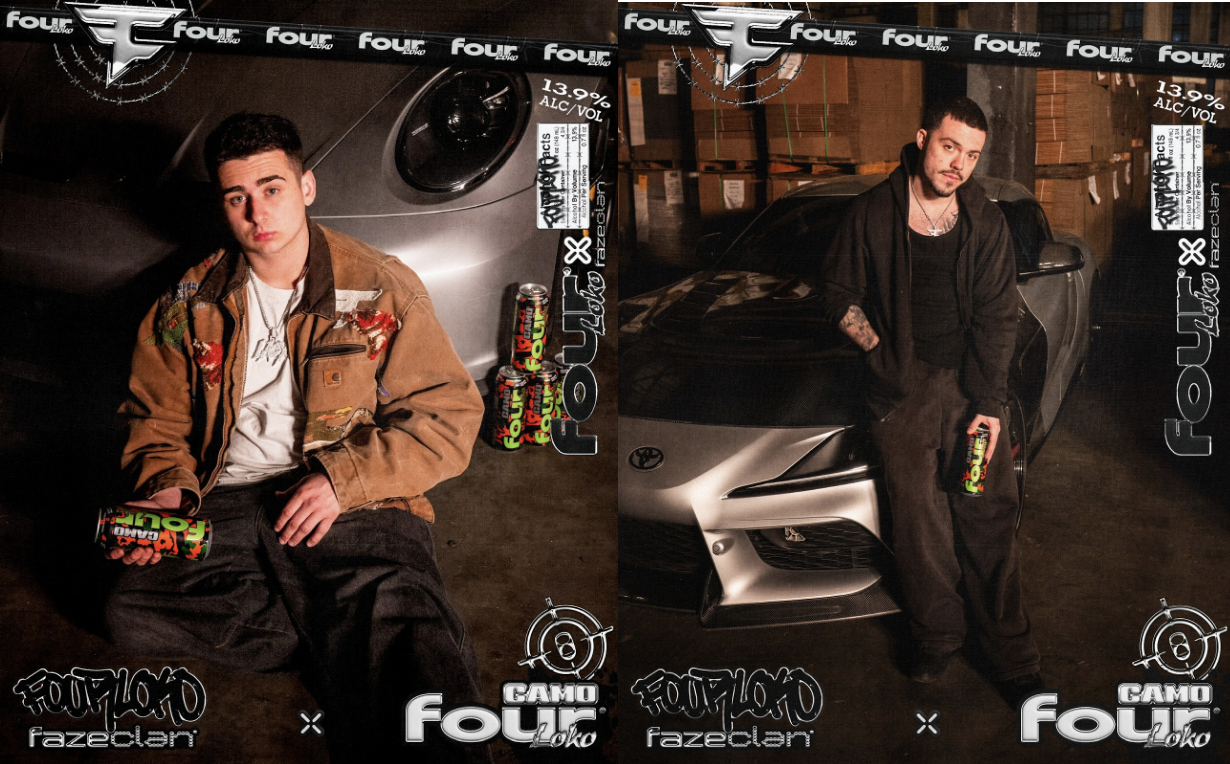
The solution, as you might expect, involves marketing aimed at Gen Z. Four Loko’s legacy was built on brashness and defiant behavior, so Phusion Projects is teaming up with influencers who embody those characteristics. It inked a partnership with FaZe Clan as part of its rollout for a new Four Loko flavor called CAMO.
With CAMO, Phusion Projects is looking to build on the momentum its best-known product has generated in recent years. A press release notes that Four Loko has launched the top-selling new flavored malt beverage single-serve items in the U.S. for three consecutive years.
The plan to continue that winning streak involves a direct reference to the design that has remained constant on Four Loko cans since the brand’s caffeinated days. Camouflage prints also show up in many of the games that FaZe Clan streamers play — and group members like Stable Ronaldo, FaZe Banks, Adept, and Lacy celebrated the partnership with a stylized photoshoot.
FaZe Lacy (left) and FaZe Adapt showing off Four Loko’s new flavor. Photo credit: FaZe Clan.
The partnership between Four Loko and FaZe Clan is not just about a specific color scheme. Even after the changes to Four Loko’s formula, its drinks have been marketed to consumers who want to push their limits. The brand’s entry into the hard seltzer market, for example, was advertised as a high-ABV option compared to industry leaders like White Claw. FaZe Clan leaders like FaZe Banks (who has led the company since its acquisition by GameSquare) display their own brands of edgy behavior.
“FaZe Clan is internet culture. We create unfiltered, boundary-pushing content that truly connects with our community and Four Loko gets that,” said FaZe Clan SVP of Content and Business Development Spencer Sherman in a statement. “They’re not trying to play it safe or asking us to play it safe, they embrace out-of-the-box ideas which makes this such a great fit for both brands and our audiences.”
The FaZe Clan collab is part of a broader push that is leading Phusion Projects to spend “more than we ever hand on the [Four Loko] brand,” as its Global CMO Samantha Catalina told Modern Retail. “We love to push buttons by doing things that are culturally relevant while having fun,” she said.
There’s only one question left about this co-op venture: Will it translate to sales? A press release from FaZe Clan notes that the company’s roster has collectively added 20 million followers across all social channels in the past year. That’s a lot of potential customers for Four Loko — so long as FaZe’s fans are eager to embrace a risk-taking attitude.
How much return on investment has Google earned from its 2006 acquisition of YouTube? According to a recent estimate, the video site’s value may have increased 500 times over since then. Prominent Wall Street firm MoffettNathanson has published research that suggests YouTube could be worth as much as $550 billion.
In a report shared on its website, MoffettNathanson dubbed YouTube “the king of all media.” Alphabet‘s video-focused subsidiary hauled in $54.2 billion of revenue in 2024, per MoffettNathanson’s estimate. That number is expected to increase in 2025 and push YouTube’s revenue ahead of Disney, giving it the highest revenue total among media companies. (It’s worth noting that Disney’s parks and product divisions are excluded from that accounting.)
YouTube’s valuation has been steadily rising since Google scooped up the video site in a $1.65 billion all-stock deal that closed nearly two decades ago. By 2018, YouTube was worth $160 billion, according to a report published by Morgan Stanley. Five years later, investment bank Needham put YouTube’s value in the $350-400 billion range.
Flash forward to the current day, and YouTube has become a recurring bright spot in Alphabet’s quarterly earnings reports. MoffettNathanson claimed that YouTube’s worth accounts for about 30% of Alphabet’s valuation — so I guess it’s not the risky bet it was made out to be back in the 2000s.
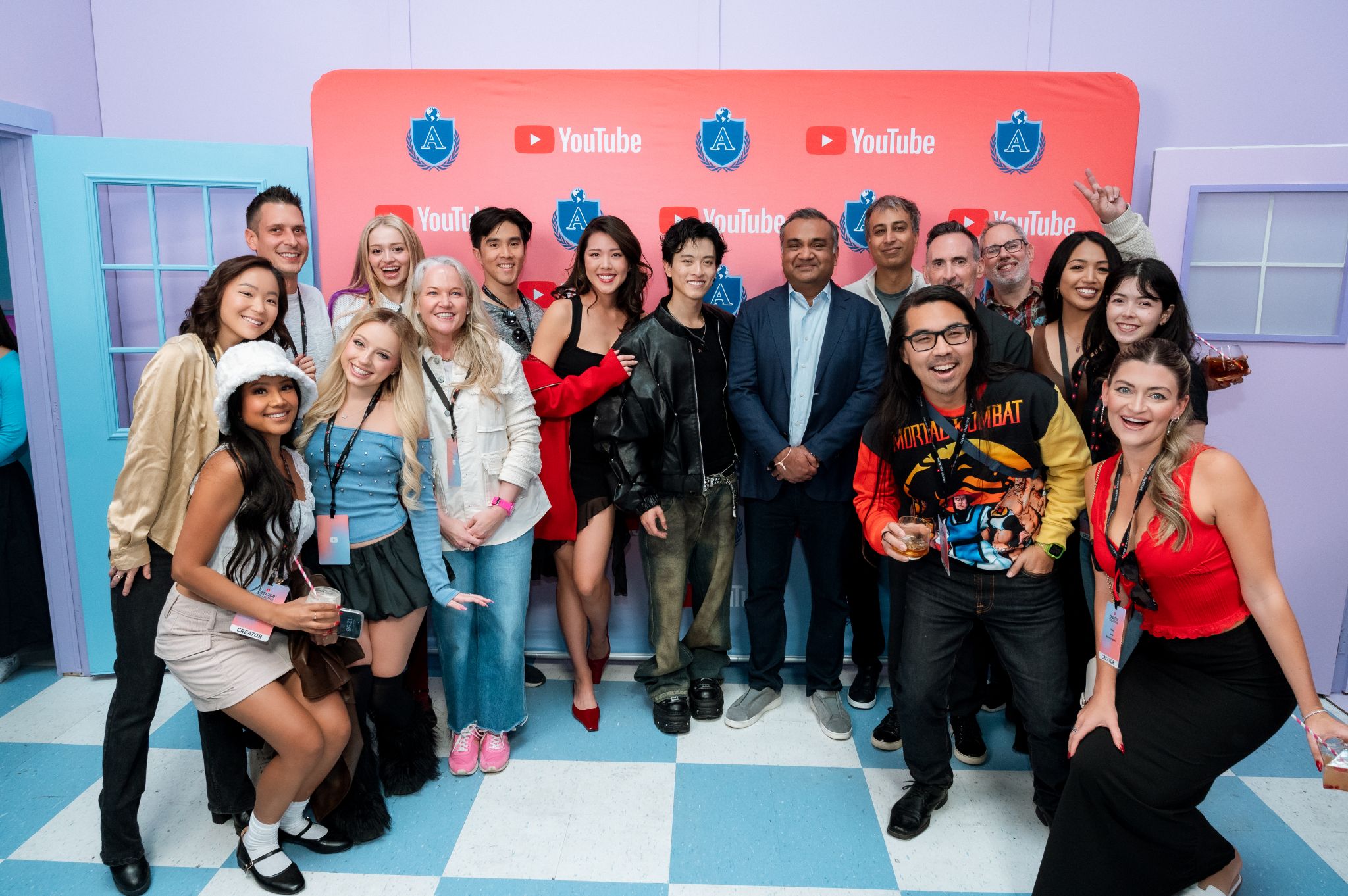
There’s no question YouTube has been a killer app for Google since 2006 — but is MoffettNathanson correct to claim that the platform led by Neal Mohan (pictured above) is the king of all media? YouTube and Disney are currently engaged in a battle for attention that is playing out across multiple fronts, including children’s entertainment and TV screen viewership.
MoffettNathanson’s report argued that YouTube is still undervalued on TVs, and that it can put some distance between itself and Disney by continuing to bring new forms of monetization to its leaned-back experience. “YouTube has substantial runway for further growth — not just in monetization but also in expanding into new business segments, such as becoming the premier streaming aggregator,” reads the research note. “If executed effectively, this could further widen the gap between YouTube and the other media players.”
If bets like Primetime Channels pay off for YouTube, how high can its valuation potentially rise? After 20 years, the platform has achieved eye-popping revenue numbers that were once thought to be beyond its capabilities. But as long as creators continue to broadcast themselves, the sky’s the limit for this tech industry darling.
Filed under: Articles, Featured, Homepage Feature, News, YouTube by Sam Gutelle Comments Off on A fresh estimate suggests that YouTube could be worth as much as $550 billion
[Editor’s Note: Tubefilter Charts is a weekly rankings column from Tubefilter with data provided by GospelStats. It’s exactly what it sounds like; a top number ranking of YouTube channels based on statistics collected within a given time frame. Check out all of our Tubefilter Charts with new installments every week right here.]
Scroll down for this week’s Tubefilter Chart. 👇
The U.S. Top 50 can be divided into two groups: There’s MrBeast, and everyone else.
The second most-watched U.S.-based YouTube channel over the final week of March was FuFu Squishy, which hauled in 468.1 million weekly views. MrBeast nearly doubled that amount by bringing his seven-day sum up to 906.5 million weekly views. And that’s just on his main channel!
No other U.S.-based creator has figured out a way to keep up with MrBeast, but other individuals are figuring out ways to post nine-digit view counts week after week. The most important thing has always been a big deal on YouTube: Consistency is key.
Hold up, let him be held up
You may have seen the trend that tests the tensile strength of various household objects. Creators have tried the Saran wrap challenge and have seen how many layers of duct tape are required to hold up a human.
There are entire channels devoted to that type of content, but it’s also an easy solution for creators who need to fill space on their channels. For those who prefer to satisfy YouTube’s short-form algorithm by uploading every day, a fresh upload requires nothing more than a trip to Lowe’s and a willingness to slam one’s body into an unusual barrier (over and over again).
Nick Wilkinsis one creator who has made use of that hack. His YouTube channel is a real mixed bag; sometimes he makes silly jokes involving powdered donuts, and sometimes he does a Chick-fil-a mukbang in a tunnel. Lately, he’s hopped onto the tensile strength trend. A 2023 upload testing the power of Twizzlers now ranks as the second-most watched Short on his channel.
Wilkins is back in the U.S. Top 50 thanks to videos like these. He reached 46th place in our all-American ranking by collecting 114.3 million weekly views. That was 24% more traffic than his total from the previous week.
He’s not the only creator whose ability to take a fall (due to a snapped Twizzler cable or something similar) is powering his push up the U.S. Top 50. Nasty Naz is climbing the charts with an eclectic array of Shorts, some of which look a lot like Wilkins’ videos. I’m a fan of his most recent upload (at the time of this post), in which he jumps on tape until he adds enough layers to give him a bounce.
https://www.youtube.com/shorts/MJ-Ia5M-0Cs
The only real drawback with these videos is the amount of waste they create. It would be nice if an aspiring artist could do something with all those broken tape pieces and snapped Twizzlers. If that sounds like a good idea for your next project, you should hit up Nick Wilkins and Nasty Naz.
Channel Distribution
This week, there are 44 YouTube Shorts channels in the U.S. Top 50.
As always, keep up to speed with the latest Tubefilter Charts and all our news by subscribing to our newsletter. You’re going to love it. 👉 Newsletter.Tubefilter.com.
Welcome to our rundown of the most-watched branded YouTube videos of the week.
We’re publishing this snippet of a larger Gospel Stats Weekly Brand Report in order to analyze sponsorship trends in the creator economy. Any video launched in tandem with an official brand partner is eligible for the ranking.
And – as the name up above would imply – all the data comes from Gospel Stats. If you’re interested in learning more about Gospel – and which brands are sponsoring what creators on YouTube – click here.
Welcome back to our Gospel Stats Weekly Brand Report, where MrBeast is getting himself into situations, internet privacy company Incogni gets a double-header, science is back on the menu, and reverse-aging evangelist Bryan Johnson gets scamvestigated.
Usually when MrBeast posts a video, it’s him putting people into situations. But this week, he (along with his usual crew) is the one getting into situations. Ice climbing, swimming uncaged with sharks, driving a road that’s known for deadly accidents–that’s all on the menu in this 13-minute upload. Like usual when he pops up on our Weekly BrandReports, he’s far outpaced every other creator, bringing in over 70 million views compared to the 4 and 5 million other creators rake in at the top of their game. And, again like usual, he’s sponsored by his own company, Feastables, which just shipped out its latest nosh: peanut butter cups.
Auto customization is a huge niche on YouTube–but most of the folks who do it are experts. FrenchieFries? He’s not an expert. He does build a lot. His entire channel is full of DIY creations, from custom gaming desks to dream bedrooms and more. This is the first time, though, that he’s attempted a four-wheel build. He bought a big golden Ford and decided to turn it into a tricked-out, neon-lit, mobile hang spot. The whole shebang is sponsored by internet privacy company Incogni, which also paid for nearly 40 other videos this week.
As far as we can tell, science content will never stop dominating on YouTube. And with clickbaity video titles like Why Your Brain Blinds You For 2 Hours Every Day, it’s obvious why Kurzgesagt so frequently pops up on our top 5s. Just because it’s clickbait doesn’t mean it’s BS, though. We’ll spoil a little: basically, your eyes make hyperfast motions to track everything going on around you, but to keep you from getting disoriented and dizzy, your brain shuts down your vision for a fraction of a second so there’s no motion blur. All these pockets of brief blindness add up around two hours a day. Kurzgesagt can tell you the rest, thanks to regular partner Brilliant.
140 million miles from Earth, there is a tiny helicopter that will never fly again. NASA‘s Ingenuity, which was built from off-the-shelf smartphone components and weighs just a pound and a half, was originally supposed to make five test flights over 30 days. Instead, it survived three years and 72 flights before a crash fatally damaged its rotor blades. Now, the little copter can still communicate with NASA, but for a short period, it was MIA. Veritasium, our other regular top 5 science creator, tells the story of what happened during that period. He, like FrenchieFries, is sponsored by Incogni.
You’ve probably heard of Bryan Johnson. He’s that guy who says he’s deaging his body by doing things like using his son as a blood bag, tracking (and sharing) some NSFW stats about himself (and his son), and eating weird sh*t. Johnson has made big claims about the effectiveness of his regimen–which he sells to other people via his company Blueprint–but how accurate are they? According to scambuster Scott Shafer, not very. We’ll let him go into it, sponsored by furniture company FlexiSpot.
…and there’s a lot more data where that came from. If you’re interested in learning more about Gospel – and which brands are sponsoring what creators on YouTube – click here.
[Editor’s Note: Tubefilter Charts is a weekly rankings column from Tubefilter with data provided by GospelStats. It’s exactly what it sounds like; a top number ranking of YouTube channels based on statistics collected within a given time frame. Check out all of our Tubefilter Charts with new installments every week right here.]
Scroll down for this week’s Tubefilter Chart. 👇
The Tubefilter Global Top 50 is back with another billion-view channel at the top of the heap. By hauling in more than 1.3 billion views during the final seven-day measurement period of March, South Korean hub KIMPRO continued its dominance of the YouTube Shorts format.
The channels in the chart come from all over the world, with 19 different nations represented among the Top 50. YouTube’s top draws are a diverse bunch, though there are a lot of similarities between the videos they post.
It’s time to come clean
Dirty, discarded items are everywhere in our world. They clutter our oceans and litter the ground. It’s about time for a little cleaning up, and one of the fastest-rising creators in the Global Top 50 is here to do just that. She goes by the moniker Clean Girl, and that name is also an apt description of the content on her channel.
The typical Clean Girl short begins with the titular star locating an abandoned item of indeterminate nature. Through a series of washes, she tidies up her find and reveals its true face. Her cleaning process involves a lot of soft, ASMR-friendly sounds to go along with oddly satisfying paint jobs and superhero references. In other words, she’s focusing on the categories that perform the best on Shorts.
Shorts viewers are loving these videos. Clean Girl reached 30th place in the Global Top 50 after collecting 359.6 million weekly views. There are a lot of questions surrounding the ethics of her videos, but she’s certainly getting the results she strives for.
Clean Girl might be carefully coordinated rage bait, or it might be nothing more than a home for neat freaks, but the important thing to take home here is that the blend of genres within a single video is a formula for success on Shorts. That’s something the team behind FuFu Squishy has figured out as well. What began as a home for instructional DIY squishy toy content has turned into a technicolor hub filled with spray paint and ASMR sounds.
https://www.youtube.com/shorts/WjKbBwHj1hw
Videos like these are not just a good way to get Shorts views — they’re also a good way to make a big mess. Luckily, if the chaotic nature of YouTube content production leaves you with a disorganized space, I know a Clean Girl who might be able to help you tidy up.
Channel Distribution
Here’s a breakdown of the Top 50 Most Viewed channels this week in terms of their countries of origin:
India: 16
United States: 11
Vietnam: 3
Canada, Pakistan, Russia, and South Korea: 2
Argentina, Australia, Bangladesh, Belgium, China, El Salvador, Hong Kong, Japan, Kazakhstan, Peru, Puerto Rico, and Spain: 1
This week, 37 channels in the Top 50 are primarily active on YouTube Shorts.
As always, keep up to speed with the latest Tubefilter Charts and all our news by subscribing to our newsletter. You’re going to love it. 👉 Newsletter.Tubefilter.com.
There’s a lot of AI slop on YouTube these days. YouTube knows that–and, after all its messaging about how AI is the future of seamlessly blending human creativity with machine productivity, doesn’t seem keen to do anything to clean up.
That is, unless someone calls it out.
A recent report from Deadline dug into how two YouTube channels churning out fake AI movie trailers, Screen Culture and KH Studio, were being used to siphon money to major Hollywood studios including Warner Bros., Discovery, Paramount, and Sony Pictures.
Here’s how it worked: The channels weren’t owned by or affiliated with the studios, but they did use clips of studios’ real trailers for upcoming movies like Supermanand Jurassic World: Rebirth interspersed with gobs of AI-generated content. YouTube’s Content ID system presumably flagged the channels, because using clips of real trailers (including, crucially, shots of the actors who star in those trailers) breaks copyright laws.
But instead of telling YouTube to pull the trailers down and shutter Screen Culture and KH Studio’s channels–which they would’ve been well within their rights to do–Warner Bros., Discovery, Paramount, and Sony Pictures instead allowed the videos to stay up…as long as any ad revenue the channels generated went to them instead of the channel owners.
No studio would tell Deadline why they allegedly decided to claim the videos’ AdSense instead of asking YouTube to pull them down. Though, between them, the two channels have over 2 billion views, so we’re guessing dollar signs might play a part.
However, SAG-AFTRA, which has spent years fighting studios over actors having the right to decline AI usage of their likeness in films and other forms of entertainment, told the outlet this incident was a “race to the bottom” for studios’ morality with AI.
“Just as SAG-AFTRA is aggressively bargaining contract terms and creating laws to protect and enforce our members’ voice and likeness rights, we expect our bargaining partners to aggressively enforce their IP from any, and all AI misappropriation,” the union said. “Monetizing unauthorized, unwanted, and subpar uses of human-centered IP is a race to the bottom. It incentivizes technology companies and short-term gains at the expense of lasting human creative endeavor.”
Two days after Deadline published its interview, YouTube removed Screen Culture and KH Studio from its Partner Program, demonetizing all their videos. The channels can appeal this decision, and it seems like at least one of them might plan to. As The Vergenoted, KH Studio has already changed the descriptions of some videos to describe them as “concept trailers” rather than “first trailers,” making it a little more clear that these are not official studio productions.
But, if either channel comes back online, studios could claim their ad revenue again. So how far from official would they really be?
Filed under: Homepage Feature, YouTube by James Hale Comments Off on Hollywood studios were claiming AdSense revenue from YouTube’s deluge of AI slop. Now what?
Fundmates, a fintech platform that gives content creators growth capital injections as well as business development and production support, has partnered with six creator economy companies and creator educator Nick Nimmin to provide more resources to its partner creators.
Founded in 2022 by Ilia Dronov, Daniel Galper, and Monika Kuizinaite, Fundmates has paid out tens of millions of dollars to hundreds of creators, and says creators who receive its funds “see growth of 30-60% within just 4-6 months.”
In 2024 alone, it paid out over $25 million to creators; it now has an additional pool of $30 million available for YouTubers who want to grow their channels. Unlike most companies loaning creators cash injections, Fundmates neither licenses creators’ back catalogs (a popular form of collateral for creators getting lump-sum capital) nor takes any control or ownership of their channel (MCN-style). Instead, it sets up repayments based on channels’ earnings.
It also, as we mentioned above, works on a continuing basis with creators who’ve received capital. And its spate of new partnerships is aimed at providing creators with tools to further develop their brands and businesses.
Fundmates’ new partners include:
Super.Fans, which describes itself as “an AI social listening tool” for creators and brands
video content distribution and monetization platform Curastory
creator-only social networking and biz dev platform Creatorland
Spikerz, a cybersecurity tool that helps creators avoid account hacks as well as shadowbans, bots, and impersonators
ecommerce platform/app builder KLIQ
Cookie Finance, a taxes, bookkeeping, and accounting services company entirely dedicated to creators
and Nick Nimmin, whose videos about the nitty-gritty of making content on YouTube have nabbed him nearly a million subscribers
Every creator who joins Fundmates from now on will get access to resources from all seven partners (plus the biz dev and production resources Fundmates already offered). Fundmates tells Tubefilter that together, the new resources add up to around $5,000 in value.
Super.Fans, for example, is giving Fundmates creators a one-year subscription to its AI tool, which it says will help “surface the conversations driving engagement amongst their subscribers.” Meanwhile, KLIQ is giving Fundmates creators access to its full suite of ecommerce and app tools for free, letting them sell things like digital downloads, paid livestreams, courses, and subscriptions.
And finally, Nimmin is creating a new series of videos for the Fundmates website, specifically for Fundmates creators.
“As a content creator, I’m happy to say that [Fundmates] is built exclusively for content creators…and they have video editors, thumbnail designers, and YouTube consultants to help you level up faster,” he says. “They use the same people that work with channels like Bright Side and 5-Minute Crafts, so they know what they’re doing. They’re not just helping you on the funding side, they’re helping you as a partner to legitimately help you succeed.”
Co-founder and CEO Dronov adds, “From day one, our goal at Fundmates has been to provide creators with the capital and support they need to grow faster, smarter, and without limitations. We first began offering our creators free growth strategy and services in 2023 and have seen tremendous impact and returns for our Fundmates creators. Partnering with this new set of incredible companies means we can offer even more tools, resources, and expertise to help creators succeed on their terms.”
Creators interested in working with Fundmates can check it out here.
Fundmates is a Tubefilter partner.
Filed under: Fundmates, Homepage Feature by James Hale Comments Off on Fundmates partners with 6 companies + Nick Nimmin to give creators biz dev blitz
MrBeast is entering the Fede-verse with a multinational sports showdown. The YouTube superstar is teaming up with Uruguay-born, Mexico City-based creator Fede Vigevani to host a basketball game that will pit Spanish-speaking influencers against a team of English-speaking counterparts.
In an Instagram Reel, MrBeast and Vigevani announced their bilingual competition, which is slated for April 25. Vigevani claimed that Spanish-speaking creators are “way better” at basketball than U.S. stars, but MrBeast is skeptical. He called for “the biggest” creators to join his squad, and he specifically called out Kai Cenat and iShowSpeed as two top names he’d like to recruit.
The event is clearly inspired by the trend of soccer matches that feature teams made up of creators. The most notable version of that concept is the annual Sidemen charity match, which raised £4.7 million during a recent showdown at London’s Wembley Stadium. Other organizers have adopted the Sidemen model to host their own matches led by creator participants.
At the “Beast Arena,” those worlds will collide. To find out which culture produces the best ballers, MrBeast has teamed up with one of the biggest stars in Latin America. Vigevani has cracked our Tubefilter charts by hauling in millions of subscribers per month. His primary YouTube channel counts more than 65 million subscribers, ranking it among the 50 most-subscribed hubs in the world.
Vigevani has already collaborated with MrBeast on multiple occasions. He participated in the creator showdown that celebrated MrBeast’s 300 million subscribers, and the pair reunited for a MrBeast-style challenge on Vigevani’s channel.
Based on the number of Olympic gold medals won by U.S. national basketball teams, MrBeast’s squad will likely be the favorite when the international match rolls around on April 25. But basketball is huge in Latin America as well, and Vigevani will do his best to put together a Fede-rated team that can go toe-to-toe with MrBeast’s all-stars.
Filed under: Articles, Featured, Homepage Feature, News by Sam Gutelle Comments Off on MrBeast and Fede Vigevani are recruiting “the biggest” creators for a bilingual basketball game
The U.S. Securities and Exchange Commission will not be spitting on that thang.
After months of investigation into “Hawk Tuah girl” Haliey Welch‘s disastrous $HAWK crypto launch, the SEC has closed the case without finding her at fault, and without pursuing any sanctions or fines, TMZreports.
As you probably remember, Welch skyrocketed to virality on TikTok last year after dropping her NSFW slogan during a street interview. She parlayed her more-than-15-minutes into a merch line, a podcast, and finally a cryptocurrency, which is where things went downhill.
Coffeezilla has a thorough breakdown of the whole situation here, but the tl;dr is that from the outside, this appeared to be a fairly typical creator/celebrity coin rugpull, where only the coin’s originators and early investors profited.
When $HAWK launched Dec. 4, its market cap surged to $490 million. Minutes later, it collapsed, losing 93% of its value. As CCNwrites, 97% of $HAWK’s total coin supply was controlled by just 10 wallets, and 53% of the coin’s early investors sold all or part of their token shares immediately after $HAWK’s debut. Not long after that fiasco, the SEC got involved.
Welch later said she was misled about what the coin would be, and that it was “supposed to be done the right way.” She’d also intended for half the money generated by $HAWK to go to charity.
“That’s why I agreed to do it,” she told FaZe Banks in a leaked episode of her podcast. “It was brought up to be a positive thing.”
Welch went radio silent in December 2024, and recently reemerged with a cheeky video nodding to rumors that she’d died, was pregnant, or was in jail:
Now, it doesn’t appear the SEC concluded whether or not $HAWK was a rugpull. We also don’t know if it’s going after anyone else involved in the coin’s development and debut. And, finally, we don’t know if there will be any making whole for the people who lost hundreds or thousands of dollars on $HAWK. (Considering the track record for crypto scam reparations, we’re thinking probably not.) What we do know is that, according to Welch and her lawyer, she’s not in any trouble.
Attorney James Sallah told TMZ the SEC “closed the investigation without making any findings against, or seeking any monetary sanctions from, Haliey.”
He added that because the SEC didn’t bring any action against her, “there are no restrictions on what she can do in regards to crypto or securities in the future.”
In her own statement, Welch added, “For the past few months, I’ve been cooperating with the authorities and attorneys, and finally, that work is complete.”
With the SEC deciding she’s not at fault, it seems Welch is set to get back into content. Per Dexerto, she’s planning production for a documentary, of course called DocTuah, which will tell the story of her unexpected fame.
Filed under: Creator, Homepage Feature by James Hale Comments Off on Haliey Welch is free to go over $HAWK fiasco, SEC says
One, it really, reallywants people to stop using ad blockers so it (and its creators) can keep getting those sweet, sweet ad dollars.
And two, it also really, really wants people to subscribe to YouTube Premium.
These things are not separate. For nearly two years now, YouTube has been running a campaign that pushes ad block → YouTube Premium as a pipeline. It figures (rightfully) that people who use ad blockers do not want to see ads–so it seems to view Premium as a compromise. If people just pay $13.99 per month for Premium, they don’t have to see ads!
But, of course, people have been resistant to paying, leading YouTube to recently debut “Premium Lite,” a lower-cost tier that will remove ads from most videos for a halved price of $7.99 per month.
Turns out Lite isn’t YouTube’s only stab at enticing more subscribers, though. As Digital Trendsspotted, it’s also now testing a feature that lets YouTube Premium subscribers share up to 10 ad-free videos with non-subscribers each month.
It works like this: If you’re a Premium subscriber, you can share a special link to a video with your friend, your mom, or anyone else who isn’t a subscriber. Thanks to your link, they’ll be able to watch the entire video without ads.
This a smart move on YouTube’s part, since it gives the link-ees a taste of what the platform’s like on Premium, and might encourage them to subscribe once they’ve seen how the other half lives. It also gives subscribers a way to reduce the ad irritation for their friends and family–especially if those friends and family are watching long videos on TV screens, where ads have become especially frequent and lengthy.
Currently this is an experiment, and YouTube warns that ad-free videos are “an optional benefit and subject to be withdrawn at any time.”
There is, as we mentioned above, also a limit to how many videos Premium subscribers can send per month. They can generate ad-free links to 10 videos, and each of those links can be watched up to 10 times within a 30-day period. Basically, if you share the link with 10 people, they can each watch it once. If you only share the link with one person, they could watch ad-free 10 times.
Not every video can be turned into an ad-free version. Shorts, YouTube Originals, YouTube Music content, livestreams, and movies and shows are all exceptions, so non-subscribers are stuck watching ads on those no matter what.
For now, this experiment is available to Premium subscribers in Argentina, Brazil, Canada, Mexico, Turkey, and the U.K. It may, like with any YouTube experiment, be expanded to more countries, or it may disappear altogether. But we suspect that while it’s available, this tool will be popular with Premium users.
Filed under: Homepage Feature, YouTube by James Hale Comments Off on YouTube Premium is letting some viewers delete ads for their friends