DoorDash has a new advertising strategy: Go viral once a month.
That’s far easier said than done, but the food delivery company–which appears to be paying drivers less than ever and just rolled out delivery robots so it doesn’t have to pay humans at all–has hired a new Head of Social to make it happen.
That Head of Social is Zaria Parvez, who prior to this spent five years at Duolingo. She closed her time at the language-learning company in August 2025, after serving as its Global Senior Social Media Manager for two years. (It was a good time to get out of Duolingo: The app’s co-founder/CEO Luis von Ahn nuked its reputation in April 2025 by announcing Duolingo would become “AI-first” and would “stop using contractors to do work that AI can handle.” In the 11 months since that proclamation, Duolingo’s stock has tanked from $544/share to under $85/share.)

Subscribe for daily Tubefilter Top Stories
Since joining DoorDash, Parvez has been responsible for some talked-about moments. It got almost 11 million views by tapping Love Island and The Traitors cast member Rob Rausch to talk about avoiding “petty beef.” And speaking of beef, Parvez was also handling DoorDash’s X account when it posted a NSFW gif from Bad Bunny‘s Super Bowl halftime show, quipping, “imagine beefing with Bad Bunny and he’s over here just…tossing beef.” (That one got 3 million views.)
https://www.tiktok.com/@robert_kelley/video/7603815181315034381
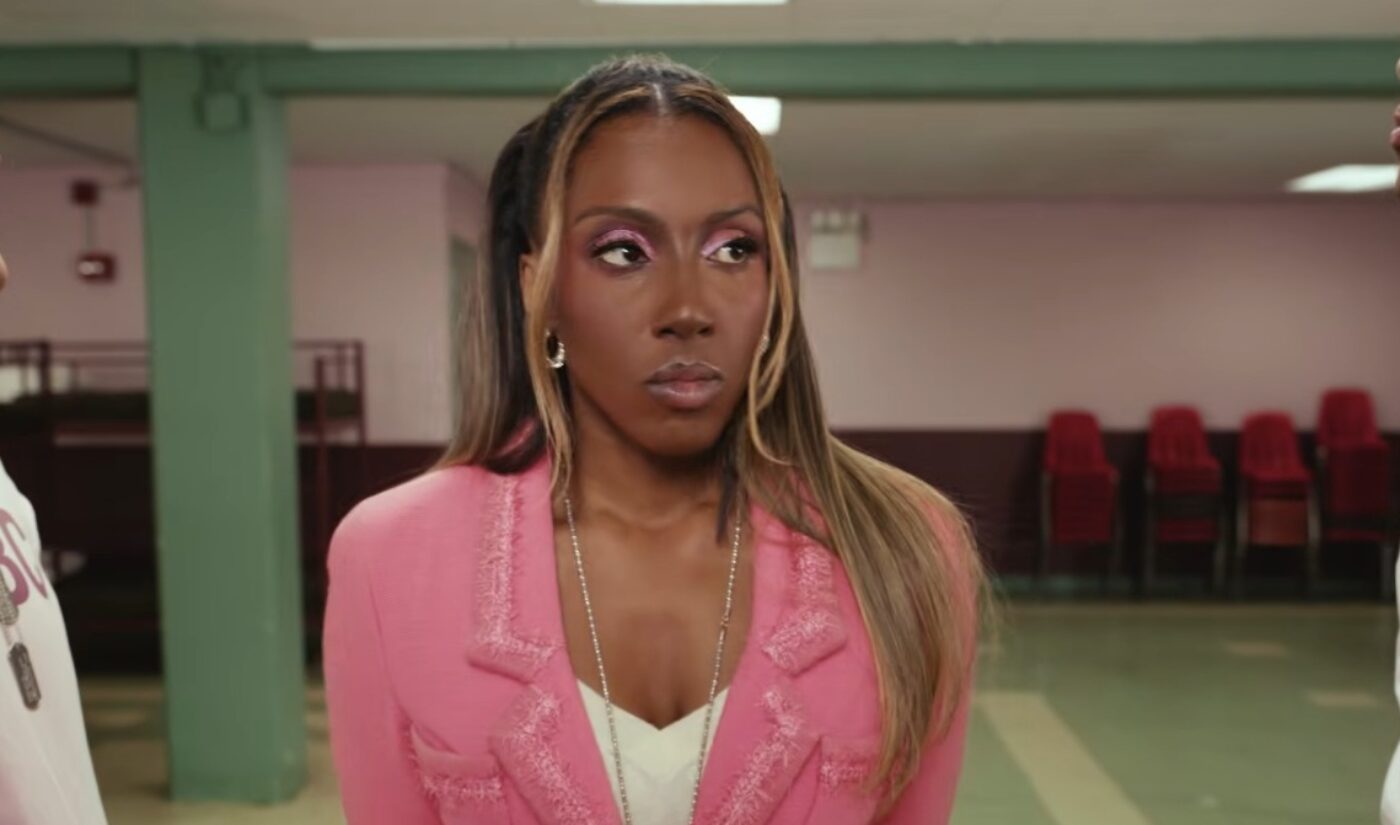
She also brought in comedian Ziwe to host a Valentine’s Day “Bad Boyfriend Bootcamp.” That ad has racked up fewer than 3,000 views on YouTube, but did catch the attention of outlets like Marketing Brew.
Parvez told The Wall Street Journal that’s cool–views, sales, and other KPIs are a “push and pull,” and sell-through metrics aren’t really what DoorDash is focusing on right now.
“There’s moments where we want to prioritize share-of-voice and social and cultural relevancy and understand that going viral now might not necessarily mean that we’re going to immediately get sales right away,” she said. “The marketing leadership here is saying, ‘We’re not looking for you to move the needle yet. Maybe eventually, but right now, we’re just looking for breakthrough and cultural relevance.'”
Her “big goal” from that leadership was to go viral at least once every 30 days, and to tell higher-ups “the levers that you need to make that happen.”
One of those levers is sheer manpower. Parvez has a team of eight right now, and is hiring two more. “It’s a dream to have that much resource for social media,” she said.
She added that her own goal with joining DoorDash was to “flip” the brand’s usual model.
“Before, social was used a little bit more as a distribution channel, where we’re doing this really awesome creative work that’s probably a little bit more traditional advertising and let’s use social as a place to distribute what we’re already doing,” she explained. “I wanted to push the team on […] what if social wasn’t the distribution channel, and it was the insight base, the heart of the idea, and we use the other things that we were traditionally using as distribution channels.”
Basically, what if DoorDash draws its campaigns from and on social, with social stars, instead of using social to amplify the sort of actor-fronted ads it’d make for TV?
We get it. Parvez’s viral moments so far have been content first and marketing second, getting people hooked on an actually engaging video before they even realize it’s a DoorDash ad. That’s the strategy a lot of brands want to master these days as they try to entice finicky Gen Z consumers.
As for whether Parvez’s “flip” will eventually pay off in sales, that remains to be seen.