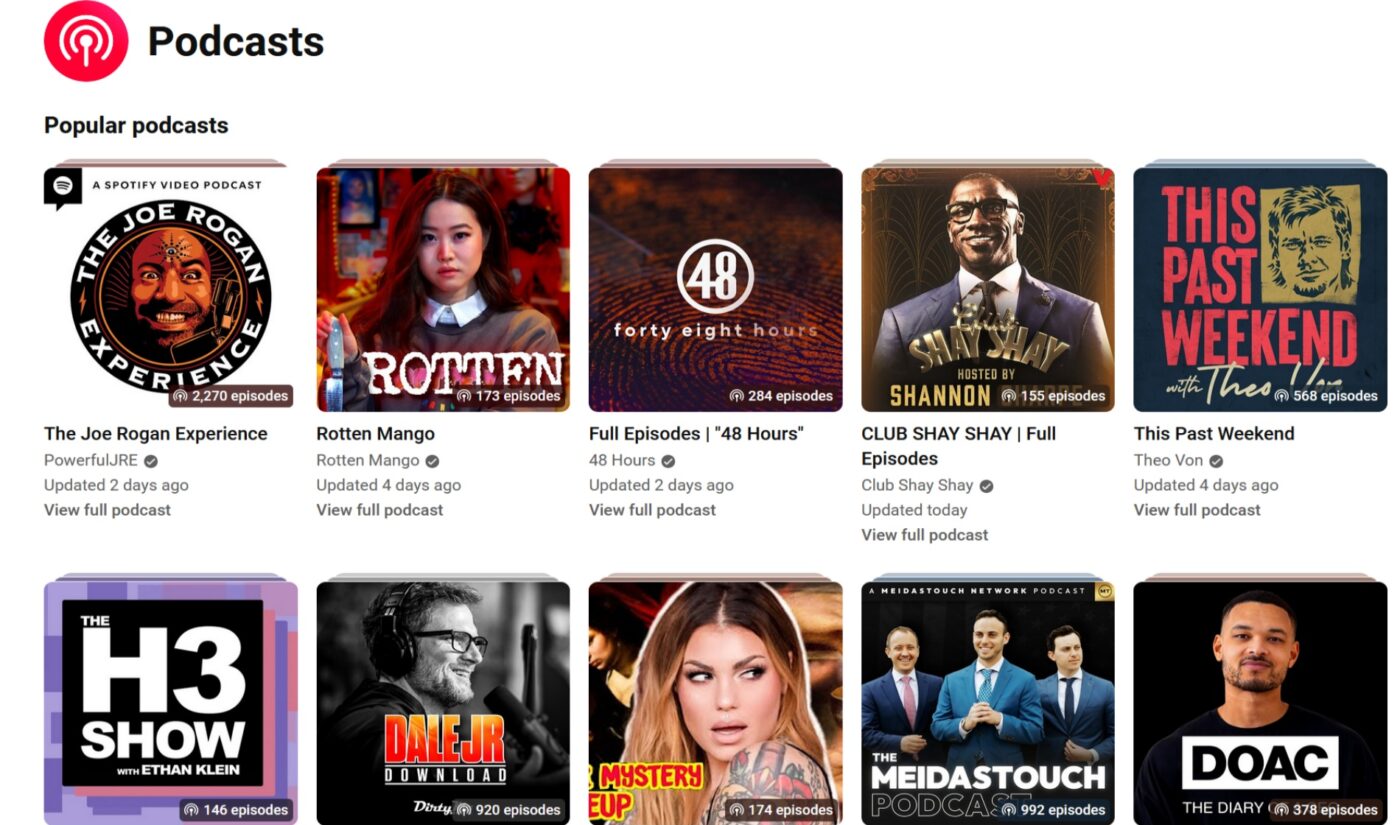
YouTube is making some updates that will affect its podcasting community, and one of those changes comes near the top of the company’s executive ladder. Kai Chuk, who joined YouTube in 2021 as its first Head of Podcasts, has moved on, according to a report from Semafor.
A YouTube spokesperson confirmed to Tubefilter that Chuk is no longer with the company. “YouTube is now the most frequently used service for listening to podcasts in the US, following years of investments to improve the podcast experience on YouTube,” reads a statement provided to Tubefilter. “To better serve podcasters on YouTube, we’re bringing the Podcast Partnerships team together with the News and Civics Partnerships teams. We’re grateful to Kai Chuk for all his contributions over the years.”
Tim Katz will continue to lead the News and Civics Partnerships team. Katz recently authored a blog post that celebrated a big milestone for YouTube’s podcasts: One billion monthly listeners.

Subscribe for daily Tubefilter Top Stories
That flurry of activity has made YouTube a major player in the podcast world, fulfilling a mission that Chuk spearheaded during his time at the company. If YouTube is going to continue competing with the likes of Spotify, some infrastructure upgrades are needed, and one of them is reportedly about to arrive. Semafor‘s report claims that YouTube is developing dynamic insertion and swapping features for its audio ads.
Ads on Spotify and Apple Music can already be dynamically inserted, allowing creators to swap out ad reads on an existing upload. That process lets podcasters ensure their ads are as timely as possible. Dynamic insertion also affects inventory sold outside of YouTube with specific impression targets in mind. When those ad reads reach their goals, they can be swapped out for more typical fare from YouTube’s marketplace, potentially allowing for higher CPMs.
YouTube did not explicitly confirm the report. Instead, a spokesperson pointed to CEO Neal Mohan’s post outlining his company’s goals for 2025. Podcast monetization was one of the priorities Mohan noted, and the addition of dynamic insertion would support that goal.
Podcasts are only becoming more ubiquitous in American culture, so YouTube is wise to make sure its audio products are up to par. Spotify has drawn inspiration from some of YouTube’s monetization products, and Semafor‘s report suggests that relationship works in both directions.