Spotify is adding its own “seems like AI slop” button.
Like YouTube, Instagram, LinkedIn, and basically every other big tech-owned UGC platform on the internet, Spotify is sitting on the double-edged sword of ‘make big money with AI’ vs ‘prioritize the human creators who spent years making our platform a success.’
In the past few months, it’s introduced a chatbot that turns Wrapped (once an eagerly anticipated end-of-year send-off) into a 24/7 non-event and unveiled “Personal Podcasts,” which it says will let users “generate short, private, personalized audio directly inside Spotify.”

Subscribe for daily Tubefilter Top Stories
But unlike some of its fellow platforms, Spotify has not introduced a tool that lets users generate publicly accessible content.
That being said, it does allow people to upload and monetize tracks that were made with third-party generative tools. It just keeps an eye out for accounts that cross a line into being too generated.
As Spotify’s Global Head of Artists, Marketing, and Policy put it last month, “Slop, spam, low-effort content, no one wants that polluting their experience on Spotify or any streaming service.”
“We tag all those tracks,” he said. “We remove them completely from recommendations. If it’s egregious spam, we remove them from the service overall.”
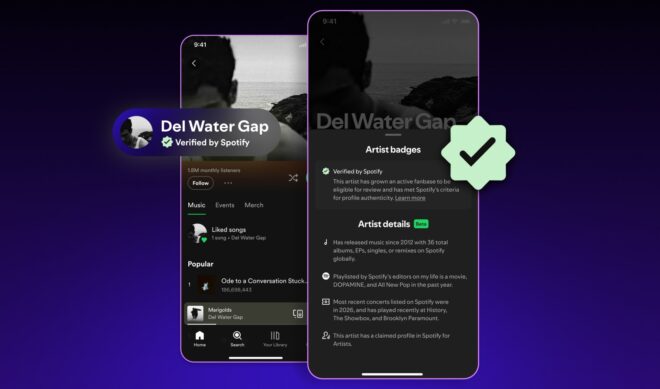
Spotify removed 75 million of these spammy tracks in a 12-month period, he added. And, in April, it implemented a Verified badge specifically for human artists, to help them differentiate themselves from the growing number of AI uploaders.
It still faces complaints from people who say generated content isn’t disclosed properly and/or shows up regularly on their weekly recommended playlists. There are also orgs like SlopTracker, which claims 49 AI music uploaders have sapped roughly ~$2.5 million in earnings from real musicians because people are listening to their tracks instead.
Now, it’s taking a stab at fixing some of these issues.
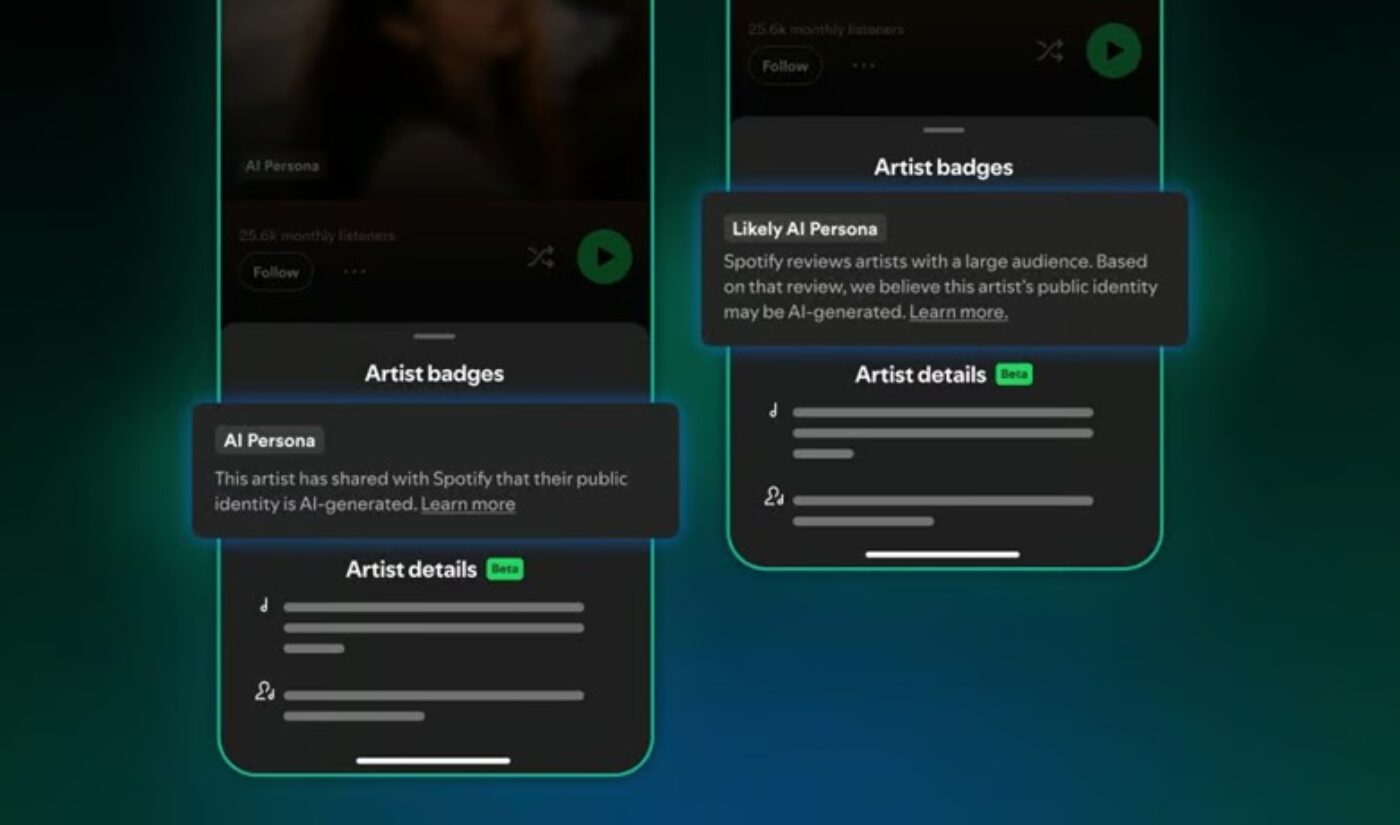
Spotify says it will begin labeling people who upload generated music with an “AI Persona” profile tag. Accounts with this tag will be automatically excluded from editorial and algorithmic recommendations, Spotify said in a company blog post.
“Listeners have been clear in telling us that they don’t like seeing an artist profile that seems human, only to find out that the persona is AI-generated,” it said. “The [AI Persona] badge signals to listeners that an artist’s identity may be AI-generated and does not represent a real person.”
Generated content uploaders have the chance to self-disclose before AI Persona labels roll out in mid-September, and Spotify says it’ll crack down on them if they don’t.
“Spotify will also review artist profiles and identify those whose public identity—the identity an artist presents on their profile, including name and imagery—appears to represent photorealistic AI-generated identities,” it said.
Listeners are the last line of defense. If an account hasn’t self-disclosed and has been missed by Spotify itself, listeners will be able to report it with a LinkedIn-like button. (The button isn’t launching with AI Personas; Spotify says it’ll arrive “in the coming months.”)
Despite all of this, Spotify says it welcomes people who use generative AI to make music. The line we mentioned above, between what’s too generated and what isn’t, seems to come down to the person uploading the tracks, rather than the tracks’ content.
“Although there’s a broad spectrum in how artists use AI as a creative tool, the question of whether a profile represents an actual human is one where Spotify can help make a clear determination,” the company said. “This badge is about the artist’s public identity, not about how the music was made.”
Maybe Spotify’s hoping it can play home to the music industry version of Tilly Norwood. Or maybe it just wants to sell tickets to virtual concerts. Whatever the case, gen AI content is apparently welcome on the platform–people just have to make sure they nail down a personal brand before they hit “upload.”