Netflix has reshaped the entertainment industry in countless ways, and one of those paradigm shifts has lessened the impact of the company’s own data. In a long-form dissection of the streamer’s business philosophy, N+1 writer Will Tavlin argues that Netflix has “created a pyramid scheme of attention” by funneling subscribers toward content that can easily exist as a second screen.
Tavlin’s piece has received widespread attention because of its references to Hollywood screenwriters, who claimed that Netflix told them to “have this character announce what they’re doing so that viewers who have this program on in the background can follow along.” To show how that note is being put into effect, Tavlin notes a particular passage from the Netflix original film Irish Wish, starring Lindsay Lohan.
“We spent a day together,” Lohan’s character says to her love interest. “I admit it was a beautiful day filled with dramatic vistas and romantic rain, but that doesn’t give you the right to question my life choices. Tomorrow I’m marrying Paul Kennedy.”

Subscribe for daily Tubefilter Top Stories
As compelling as it would be to criticize the declining quality of Netflix’s content queue, that’s not the main argument Tavlin makes. His N+1 piece uses snippets of simplistic dialogue to illustrate a greater point: That the passive nature of many Netflix originals is baked into the company’s business model in a way that makes its viewership data difficult to take at face value.
That overarching philosophy goes back to Netflix’s days as a DVD distribution service, when it eschewed late fees so that it could turn its subscribers into unwitting disc storage units. As a result of that shift from punishing consumers for forgetfulness to rewarding them for mindlessness, as Tavlin puts it, Netflix benefitted from content that could keep viewers occupied rather than entertaining them with resource-intensive thrills.
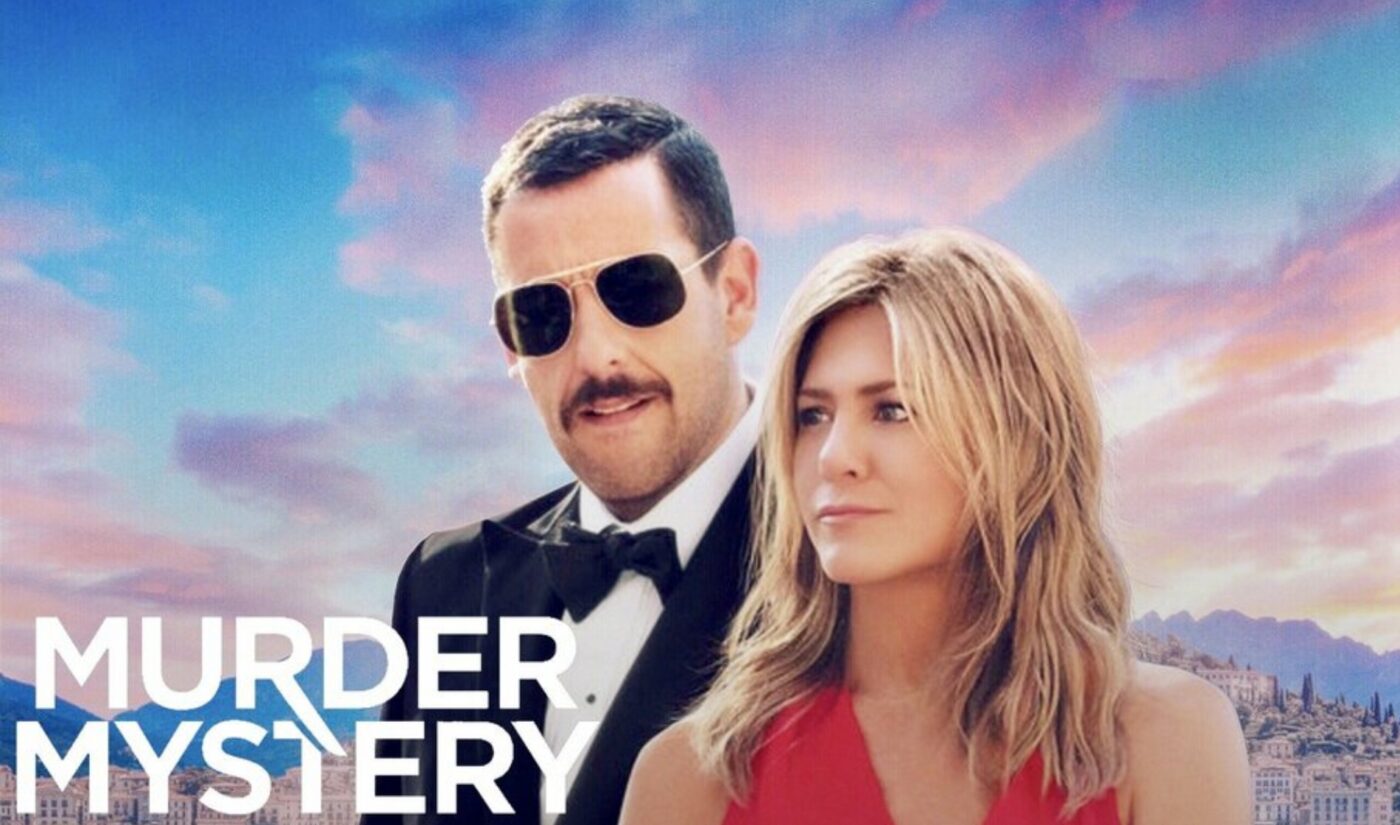
The trend toward mindlessness can also be seen on the streamer’s home page, where simplistic titles like Murder Mystery direct subscribers toward easily categorized fare that can be understood at a basic level even if it’s on in the background. For the majority of Americans who employ a second screen while watching TV, those predictable releases become popular choices.
On one hand, it’s easy to respond to Tavlin’s 8,500-word critique with a big “so what?” If viewers want to watch Murder Mystery (and Murder Mystery 2, and all the other interchangeable Adam Sandler joints currently available on Netflix), why shouldn’t streaming platforms give the people what they want?
The “so what” has to do with the What We Watched reports and other public statements Netflix uses to discuss the viewership its shows and movies receive. After spending years offering cryptic, milestone-heavy statements about the success or failure of its original content, Netflix recently started to release half-year rundowns of its global viewership data. Some programs rake in more than 100 million views over those six-month periods, according to Netflix.
Tavlin contends that those numbers paint an incomplete picture, since they don’t represent the passivity of many Netflix subscribers. After two minutes of viewership, Netflix officially registers a view, even though that watch time may have played second fiddle to a load of laundry, or a group chat, or even the closing credits of a previously-watched program.
As a result, Netflix originals like The Night Agent roll up gaudy viewership numbers even though they don’t move the needle nearly as much in terms of cultural import. Tavlin’s piece quotes a dig from Quentin Tarantino (“Those movies don’t exist in the zeitgeist”) and a thought experiment from Cannes Film Festival head Thierry Frémaux. At a press conference, Frémaux asked attendees to name a filmmaker who had gotten their start on Netflix; no one could.
Netflix certainly isn’t the only Big Tech company to fudge its numbers to make its content look better, but Tavlin’s insights provide important context for anyone who wants to evaluate the data in the What We Watched report. Even if Netflix is finally sharing its results with the public, it has also “destroyed the meaning of success,” Tavlin writes. When content is designed to be watched as an afterthought, it becomes much harder to evaluate — at least in terms of traditional metrics.