Cable TV networks have made a fortune off of clip shows. Programs like VH1’s 100 Greatest (insert whatever you want here) cost next to nothing to produce. All that’s needed is a host that isn’t ugly to deliver lines that aren’t terrible on a set that isn’t extravagant between stock footage that the network either already owns or can easily license. These shows aren’t great, but they work. People watch.
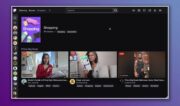
The newly launched Digg Reel is a clip show for the web. An almost exact mimicry of its traditional TV counterparts.
Produced by Digg-backed new media production house Revision3, the set and writing is the same as similar fare on television. The differences are that instead of counting down the 100 Hottest Hotties, the weekly program highlights the top rated videos from “the most popular social news site on the web,” Digg.com. Instead of Mark McGrath or Tara Reid running the show, it’s TechTV alum and Tekzilla co-host, Jessica Corbin. And instead of working, it doesn’t.
I feel like I’m repeating myself: ###old media is so resistant to the emerging paradigm of open television distribution that they’ll do almost anything to attempt to preserve the old model of control, including alienating and confusing potential subscribers and limiting potential market growth. All this is done to develop bundled premium content in a manner that threatens the principle of Net Neutrality and, therefore, future innovation. This on top of rumblings about usage-based pricing for bandwidth raises questions about how much control ISPs should have.
HBO Broadband is a new media property with convoluted practices that fight the grain of everything we’ve come to expect from new media, principally openness. Why should the onus for subscription to HBO be on the ISP and not the individual consumer?
Do we want a society in which the provider of the connective technology determines what we can and cannot watch on TV? Should ISP’s maintain the right to leverage their technology investments this way?
The Ill Doctrine(Tilzy.TV page) is like King Midas. His commentary on every topic he touches shines with a golden insight. This MLK Day is no exception:
“At this time of year we always hear the same 2 or 3 clips over and over from Martin Luther King Jr., but there was much more to the man. So here are ten of my favorite quotes from that aren’t heard as often”
And if you’re interested in seeing those same 2 or 3 clips of the amazing orator in action, you can find them here.
I think it means more eyeballs, more money, clearer economics and, ultimately, a lean-back experience that mimics TV…in addition to an expansion of the new interactive entertainment experience enabled by sit-up online video. But this ecosystem is just beginning to take form. In the meantime, its great to see that old media converts have embraced some of the most important elements of the new medium. Read On…
The first five episodes of the internet comedy Cockpit were all shot in one day in a cramped bit of fuselage that Ryan Wise of production company Big Fantastic tells me has some filmic history. Peter Graves, Kareem Abdul-Jabbar, Robert Hayes, and a few inflatable dolls shared the same space over 25 years ago to film the slapsticky, disaster movie spoof, Airplane.
As I said when it launched, the pilot episode relies less on the characteristic puns of its comically highflying predecessor and more on the awkward, often sexually ambiguous charged interactions and power dynamics of the crew. Check it out:
It’s funny and shows that Ryan and the rest of the Big Fantastic team – Chris McCaleb, Douglas Cheney, and Chris Hampel – can do comedy, but it runs an alternative course to their normal fare and the genre that brought them to the this newfangled internet medium in the first place.
###The foursome had been independently earning their chops in Hollywood’s movie-making biz for five or so years before coming together in early 2006 to answer the question, “What would storytelling look like if it was native to the web?” Two years ago – with the exception of the precocious persons behind The Spot, Port City PD, Something to be Desired, and Lonelygirl15 – that wasn’t a question a lot of people asked. Their answer was telling the dramatic, teenybopper life and death tales of SamHas7Friends and Prom Queen through impressive, professional productions and daily doses of plot and intrigue that keep the audience hooked.
It seems to have worked. Michael Eisner was so impressed with Sam that his new media studio, Vuguru acquired the series’ rights (but the acquisition was somewhat bittersweet, at least for fans – after obtaining the series Vuguru decided to take all the episodes off the web) and commissioned Big Fantastic to make Prom Queen, which itself wrought over 15 million viewers, a mini season spinoff, and a slated overseas expansion.
I recently caught up with Doug, Chris, Chris, and Ryan in their welcoming Santa Monica office to find out more on how they came together and learn about their creative process:
Of course there are exceptions, but McCaleb is definitely on target when he says that drama on the web is a video genre that has been drastically underserved. He tells me that his company has some exciting shows planned to fill the void.
On the internet, comedy has been king, closely followed by lifestyle shows and instructional videos. Horror has also made some inroads. But as more money and talent flows into the space and invests in the production of quality series – looking for the digitally distributed equivalent of old TV hits like The Sopranos or even Law and Order – we’ll see much more content focused on the art of dramatic storytelling. And I’ll bet we’ll see Big Fantastic’s name among the credits of some of the best
If you’re in the USA but outside of Iowa, New Hampshire, Michigan, Nevada or South Carolina, chances are it’s not too late to register to vote in the presidential primaries. Thanks to this playful contest from Man and Wife TV(Tilzy.TV Page) – which was picked up by MTV last June but has yet to see cable airtime – spreading the word about spreading the vote could land you in bed with these two…
I’m not sure I want to lay in my briefs next to Fatman Scoop, but I digress. Voting is important. Check it out and spread the word – Register-vote.com
Most of us travel, and (ironically) curse tourists as we seek the ever-elusive “off the beaten path.” Sometimes we find it, and the rewards are fruitful. But Vice Magazine‘s VBS TV(Tilzy.TV page) takes it further. The Vice Guide to Travel is an example of how much fun can be had, and what can be learned, with a little research, perseverance and patience (…not necessarily all at the same time).
The minds behind Guide take a different approach to travel than your Fodor’s or Lonely Planet. Instead of showing you where to go, they show by example — how to go. It’s a sampling of distant corners where one can experience worlds far (both in distance and culture) from his own.
They don’t tell you about the white beaches and blue waters of the Greek Isles. They show you the experience of getting to arms dealers in Bulgaria. They don’t direct you towards Mayan ruins in the Yucatan. They film a subculture of Colombians who lose their virginities to donkeys. They check these things out to inspire others to venture similarly and because few have before. They’re showing you how to maximize those vacation days with eye opening edification…as long as you’re not the beach type. And Vice knows its audience – the curious. ###
The hipster niche is stereotypically image conscious, but the appeal of these videos doesn’t lie in the normally all-important presentation. Yes, they do look grungy, not-trying-to-be-but-I-am cool, but it’s impossible to fail on these topics. It would take Wolf Blitzer to make these spots uninteresting, and its apparent that the skill isn’t in how the videos look. It’s in the ideas. And Vice has those down pat.
In the episode below, Vice co-founder Gavin McInnis and comedian David Cross meet with factory owners in Shanghai. They begin with the premise of wanting to make apple pies on the cheap, “because it’s too expensive in the states,” and end up making, instead, a mockery of cheap labor and product.
In another Vice co-founder Shane Smith, albeit mockingly, “surveys” the $10,000 “Tokyo Lazy Doll.” The thing can’t say “no,” especially if it’s in a doll brothel. Which exists. And they go. Holding the trend (interestingly, much of the series is based on either sex, drugs or both and NSFW), yet another takes a trip to Porntown, USA (aka Woodland Hills, Ca), where 95% of America’s smut is produced. The clips make me wonder why more DVDs don’t include behind the scenes extras and bloopers. The point here is, what’s more interesting: MGM Studios, or a backyard in the Woodland Hills?
That’s the point of all the vids. Vice magazine has generally been geared toward a hipster subculture that was also once “off the beaten path.” When it’s founders came to the realization that their rag was all about indie bands, sneakers, and blow, they created VBS TV to show the world something else. With the Guide we’re taken to places much further off the radar than East Williamsburg, Brooklyn. And Its fascinating.
While the biz-tech community is alla buzz this week about biz-tech videoblogger Robert Scoble making true on rumors by leaving the troubled PodTech Network to start up and run a new media biz-TV network for Fast Company Magazine, the DIY internet world experienced similar changes.
Bre Pettis – the engaging, silver-haired Seatlleite-turned-New Yorker that’s nearly adroit as MacGuyver when creating his own electronic, fashion, and arts & crafts miscellanea – has left his producer position at the do-it-yourself online and print publication, Make Magazine to head up the new new media department at the do-it-yourself, homemade marketplace, Etsy.
In her faux interview showAll My Exes, Chelsea Peretti generally reacts to her ex-lovers-turned-guests with an awkward inquisitiveness and a touch of heartfelt nostalgia. She also emanates a small euphoric I’m-so-glad-we’re-not-together-anymore glow. Such is not the case when Ze Frank steps on set.
Like the rest of the internet, Chelsea’s smitten with Ze, and pleads with small gifts and wanton eyes for him to come back. Funny? Eh, only kinda, but I’ll watch anything with Ze.
Mr. T, Bill Shatner, Van Damme, and Verne Troyer are doing a good job of soliciting you to create ass kickin’ avatars. WeGame is providing you with the tools and forum to showcase your character’s in-game escapades. Internet TV shows are helping you out with tips on how beat the bad guys. But who’s turning the lens on the lives of actual gamers?
Since July of 2007, a sitdotcom known as The Guild has sought to find what happens when hardcore online gamers stop gazing into their laptops and cross into the messy territory of real life.
The series lead actress/writer Felicia Day, formerly of Joss Whedon’s Buffy The Vampire Slayer, is an online gamer herself and something of a sun-deprived, alabaster-skinned nerd fantasy. Her show is presumably based on the massively popularWorld of Warcraft, but features no gameplay footage, no machinma, and no direct references to the game. Just real world contact.
It began life as a potential TV project, but was dismissed as “too niche” by network executives. However, the first webisode racked up more than a million views on YouTube and since episode two, The Guild‘s fans have become its de facto producers, contributing money via PayPal to keep the production alive. Felicia and LKG Productions attribute this success to the largely ignored community of online role-playing gamers, 20 million strong around the world, eager to see themselves represented OOC and on-screen.
Last July, Hollywood’s United Talent Agency, internet-based television advertising company Spot Runner, and $3.5 million from investors came together to announce the creation of 60Frames – a type of independent, new media ministudio in the vein of Super Deluxe, My Damn Channel, For Your Imagination, and Next New Networks whose original programming will be distributed to all the YouTubes, MySpaces, Veohs, and Blips of the web, and other digital platforms that play video.
According to Brett Weinstein, the former head of UTA’s online division who holds the reins to the agency’s joint-venture, the idea behind 60Frames is to give talent the financial, production, marketing, and distribution resources necessary to “bring exciting new projects to life in an environment that provides artists meaningful profit participation, ownership, and control of their intellectual property…By partnering with the leading online sites, we are giving artists’ content the widest possible exposure while maximizing revenue opportunities.”
Like other web studios, 60Frames is taking the spaghetti approach to content creation. They’re greenlighting more ideas than they would for bigger budget projects, and producing up to five installments of comedy and up to 20 episodes of a drama before they see if the program is sticky enough to pay for more.
They’ve cooked up a whole lot of comedy so far. Some series will have fans pleading for seconds, and others will flat to the floor.
Bloomberg is hardcore. The award-winning financial data, news, and computer systems service and provider started by the potential soon-to-be presidential hopeful is geared towards the rabid capitalist who needs an intravenous tap into the markets.
Through its 10 networks in seven languages, the company has created a ton of video content that, starting with the just-launched CEO Spotlight series, it’s now beginning to dissect and distribute on the open Internet. But unless you’re a “Master of the Universe,” you won’t be watching. Seeing in-depth discussions with executives about market opportunities isn’t riveting unless analyzing in-depth discussions with executives about market opportunities is your job.
For your average Joe and Jane Investor who need more attainable financial analysis, there’s the newly revamped CNN Money.
###
According to the Atlanta Journal Constitution, CNNMoney.com editor Chris Peacock sees some value in this newfangled internet. The site’s makeover puts an emphasis on video, noting that the “The future of business television is online,” and lunchtime is the new primetime.
“The audience for business and finance information migrated online very quickly. They’re at their desks. They’re an at-work audience. We have a footprint to reach more people through our distribution than I think the classic cable networks can.”
To back up his bet, Peacock is upping production on the site from two to 15 or more original videos each day. Up-to-date business and financial news is a valuable commodity, and delivering it in a searchable, on-demand format on the web beats having to watch a linear TV program that recycles the same content every half hour.
Whether it’s Bloomberg’s CEOs talking in-depth or CNN Money’s more accessible market overviews and eye candy, pushing business video in front of people who spend their time in front of computers makes a whole lot of sense.

 HBO launched a broadband offering
 The first five episodes of the internet comedy

 Last July, Hollywood’s