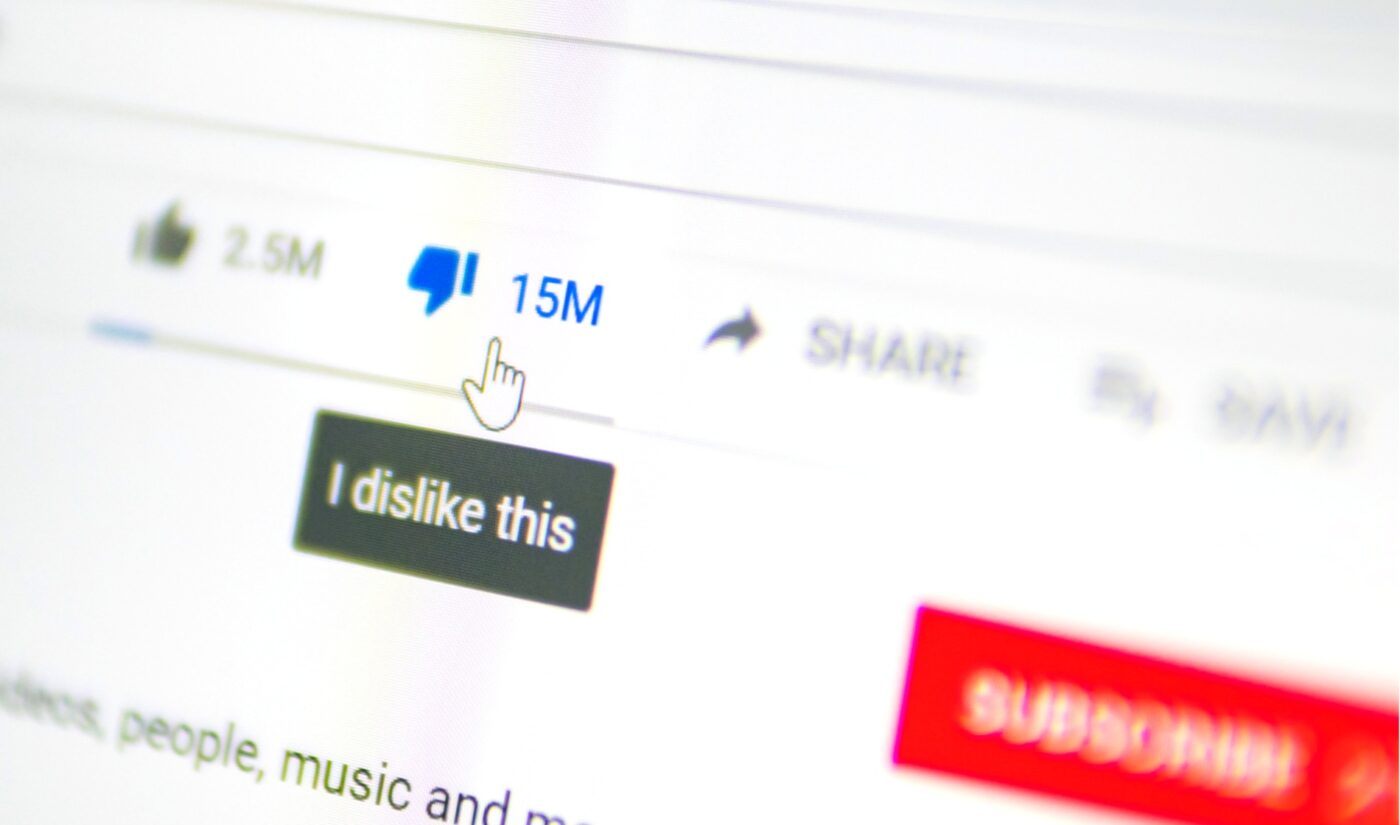
YouTube‘s 2021 decision to hide dislike counts on all videos drew widespread criticism across the internet. Three years after that change went live, its positive impact is becoming clear: A new study found that female creators who were previously victimized by “dislike attacks” are now more productive, and their videos are getting more positive feedback than they did when dislikes were public.
The study in question was conducted at the University of Zurich in Switzerland, where lead researcher Marita Freimane and her team cataloged the changes in perception that have occurred since the devaluation of the dislike. The platform-wide numbers tell a clear story: Once dislikes went private, female creators received 21% fewer thumbs down and saw their overall negative feedback decline by 57%.
According to Freimane, those upticks ameliorated a “gender feedback gap” that previously saw female creators receive 43% more dislikes than their male counterparts. Women with significant followings on platforms like YouTube and Twitch had been sounding the alarm about that disparity for years. Back in 2013, Emily Graslie of The Brain Scoop spoke out about the harsh feedback she received as a female creator in STEM.

Subscribe to get the latest creator news
“We have a fear of the feedback from our subscribers and commenters because we’re afraid that our audience is more focused on our appearance than the quality of our content,” Graslie said at the time. “Even more than that, we’re not convinced that the content has to be good or factual because we’re not convinced that people are watching for the content in the first place.”
Graslie’s takes were supported by a 2018 report that sounded the alarm about the gender feedback gap in STEM content. The same year, Twitch star Pokimane spoke out about similar issues after receiving hate for a makeup-free stream.
Six years later, women on YouTube are feeling more comfortable sharing their viewpoints with their subscribers. Freimane’s study found that the amount of content uploaded by female YouTubers went up by 8.4% after dislikes became private, while demand for that content rose by 15.5%.
Gender disparities among internet comments help explain why YouTube’s dislikes policy shift reduced negative feedback toward women, but they don’t tell the whole story. After all, the drop in negative feedback was nearly three times greater than the drop in dislike counts.
So-called “dislike attacks” provide the easiest explanation for the magnitude of the shift. When coordinated viewer mobs brigaded videos from women with scores of dislikes, psychological phenomena made it more common for other, unassociated viewers to leave negative feedback as well. Hiding dislikes blunted the impact of those attacks. “Because dislike attacks are characterized by extreme numbers of dislikes, this change is likely to disproportionately affect the right tail of the dislike distribution,” reads the report.
Ultimately, YouTube’s decision to hide dislikes had a clear ripple effect that improved the experience of female creators across the platform. That was something that former YouTube CEO Susan Wojcicki saw coming when she implemented hidden dislikes. Wojcicki, who passed away earlier this year, knew that the unpopular change would be a huge boon for those whose voices are not loud enough to express their needs. “We have to do what is the right thing for the ecosystem as a whole,” Wojcicki told Ludwig Ahgren in 2022.
Freimane suggested that YouTube’s rivals could produce their own sweeping results by embracing small-yet-meaningful tweaks. “The findings show that it is possible to eliminate gender-biased feedback through design changes, and that this leads to positive supply and demand effects,” reads the report. “This indicates that other user-generated content platforms could benefit from adopting similar policies.”
Will the TikToks and Twitches of the world heed Freimane’s call? If they need more data before making their decisions, they can access the full report to learn more about the research team’s findings.