Surprising no one, Neal Mohan‘s 2026 letter to creators asserts that “the lines between creativity and technology are blurring,” and talks up Google‘s plans to push even harder on generative AI over the next 12 months.
But in a lot of other areas–specifically creator culture and accomplishments–Mohan’s 2026 letter isn’t much different from 2025’s. Just like last year, he hypes YouTube’s (admittedly dominating) presence on TV watch time charts, noting that it’s now been three full years with YouTube as the #1 most-watched streaming service in the U.S.
And just like last year, he praises creators like Alan Chikin Chow and Dhar Mann, who’ve invested big cash in opening their own studios and production lots to churn out mass amounts of top-viewed content–content that Mohan notably refers to as “beautifully produced, must-see TV.”

Subscribe to get the latest creator news
“Creators are the new stars & studios,” he says, echoing what he said in 2025: that creators “are becoming the startups of Hollywood.”
“The era of dismissing this content as simply ‘UGC’ is long over,” he adds. “These are shows, built by creators who green-light themselves. Look at Julian Shapiro-Barnum: his upcoming series Outside Tonight is a first-of-its-kind late-night experience built for the digital age. When creators hold the keys to their own production and distribution, the only limit is their imagination.”
It’s clear Mohan is positioning YouTube as the sort of premium viewing destination that can compete with Netflix.
However, unlike Netflix execs, he doesn’t feel the need to directly put down his challengers.
Mohan taking this angle isn’t surprising, given Netflix’s recent deals with YouTubers like Ms. Rachel, Mark Rober, and Chikin Chow, plus its in-the-works acquisition of Warner Bros. Discovery, which will make the streamer a major force in Hollywood. It’s also not surprising given YouTube’s now-long history of pitching itself alongside TV networks. It’s spent years talking the talk at the Upfronts, and now creators are doing exactly what it hoped they would: investing their own money to make content that’s taking over living room televisions.
That’s not to say creators as a whole aren’t getting a sizable return on their investment. Mohan said that over the past four years, YouTube has paid out over $100 billion in earnings to creators, artists, and media companies. In the U.S. alone in 2024, YouTube contributed $55 billion to the GDP and supported more than 490,000 full-time jobs “as creators built businesses and hired employees within their communities,” Mohan says.
He notes that YouTube plans to “continue to invest in different ways [for creators] to earn, from shopping and brand deals to fan funding features like Jewels and gifts.”
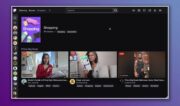
Netflix isn’t the only competitor YouTube is building to challenge. Mohan says YouTube is “focused on” making its platform a “premier shopping destination” where viewers can buy products recommended by creators, without ever leaving the YouTube app. Hmmm…that sounds familiar.
But as we mentioned above, the real meat of this letter is about AI. And in this current climate, where lawsuits against suicide-encouraging chatbots abound and there are global calls for regulatory action against deepfake pornography generators, Mohan is careful to say that YouTube is both “supercharging” and “safeguarding” gen AI.
“Just as the synthesizer, Photoshop and CGI revolutionized sound and visuals, AI will be a boon to the creatives who are ready to lean in,” Mohan claims.
He says YouTube data shows more than one million channels used the platform’s AI “creation tools” every day in December. That same month, more than 20 million people used its ChatGPT-style “Ask” tool for questions like “What’s the story behind this song’s lyrics?” and “What ingredients do I need to make this recipe?”
Mohan does acknowledge the rise of gen AI has resulted in an ever-increasing amount of meaningless slop that’s crowding out genuine content from human creators. But in a weird twist, he compares that slop to trends like ASMR and Let’s Plays. The message is that slop pushers are just ahead of the game and one day we’ll all be into it, I guess?
“Over the past 20 years, we’ve learned not to impose any preconceived notions on the creator ecosystem. Today, once-odd trends like ASMR and watching other people play video games are mainstream hits,” Mohan says. “But with this openness comes a responsibility to maintain the high quality viewing experience that people want. To reduce the spread of low quality AI content, we’re actively building on our established systems that have been very successful in combatting spam and clickbait, and reducing the spread of low quality, repetitive content.”
On a similar “safeguarding” note, Mohan reiterates that any content made with YouTube’s generative tools is auto-labeled, and that creators are required to disclose generated content.
“We’re also building on the foundation of Content ID–a system our partners have trusted for well over a decade–to equip creators with new tools to manage the use of their likeness in AI-generated content,” he says. YouTube already announced over a year ago that it would remove deepfakes of celebrities and creators (if they asked it to) in a special partnership with CAA, so we’re thinking maybe this will be a broader-access tool with a similar purpose.
In 2026, YouTube plans to introduce more user-facing gen AI tools, including:
- letting people create Shorts using their own likeness
- letting people generate simple games with a text prompt
- and “experiment with music”
“Throughout this evolution, AI will remain a tool for expression, not a replacement,” Mohan reassures.
And with all that being said, his closing note is about humans–you know, those people who have offered up their passion projects to power YouTube (and fill its bank account) for over 20 years.
“I’m often asked to predict who the most important creator on YouTube will be in five or ten years,” he says. “My answer is always the same: it’s someone you’ve never heard of and that person is starting their channel today. And that’s what makes me so energized to continue building the stage for this generation and the ones to come.”