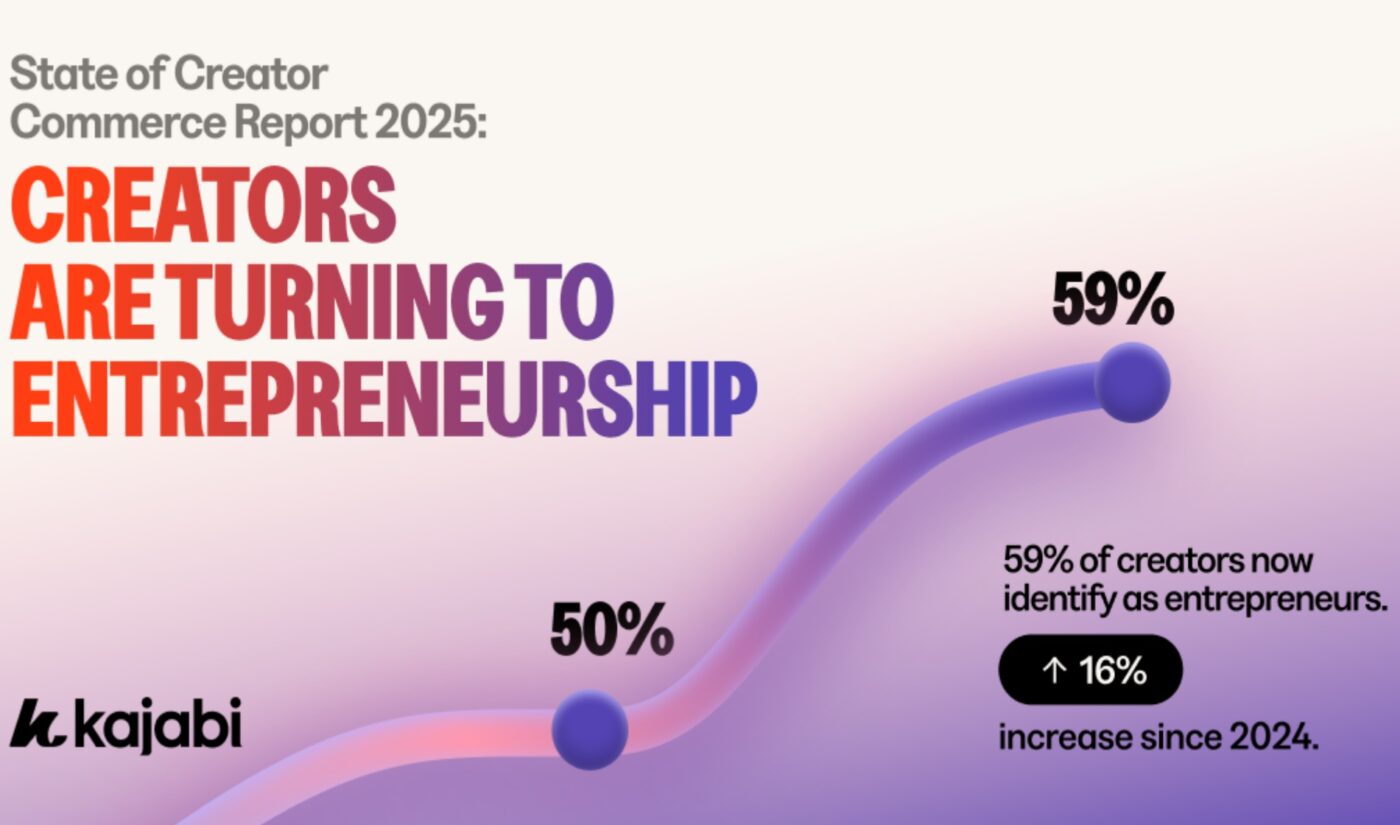
Recent statistical analyses of the creator economy have found that the social media industry is more fractured than ever, but within that chaotic landscape, creators are finding ways to take control. The latest update on ecommerce trends comes from Kajabi, which sketched out the rise in creator entrepreneurship in its State of Creator Commerce report.
Kajabi, which describes itself as the “leading creator commerce platform,” teamed up with Qualtrics to gather responses from 1,717 respondents, including full-time creators, part-timers, and digital entrepreneurs. Questions in the survey covered many different topics, ranging from philosophical questions to pricing inquiries, but a clear theme emerged across categories: Creators are sick of getting exploited by on-platform algorithms, and they’re doing something about it.
Case in point: 59% of the surveyed creators now identify as entrepreneurs. That’s good for a 16% year-over-year increase. Kajabi dubbed that cohort “entrepreneurial creators,” distinguishing them from the “social-first creators” who are “still playing by someone else’s rules.”

Subscribe to get the latest creator news
“The creator economy was built on creators, not for them. While social platforms have cashed in on the talent, time, and influence of creators, the real value has always come from the people behind the content,” reads the preamble to the report. “Now, the power dynamic is shifting. Creators are stepping into their full potential—not just as influencers, but as entrepreneurs. They’re owning their audience, their products, and most importantly, their revenue.”
The shift to an entrepreneurial creator economy has been driven by dwindling returns from other sources. Kajabi’s research found that earnings from brand deals are down 52% year-over-year, with affiliate marketing (-36%) and on-platform payouts (-33%) also declining. The revenue streams that are rising year-over-year include podcast revenue (+47%), digital download sales (+20%), and membership groups (+10%). Together, those forms of monetization paint a picture of a community driven by bootstrapping creators rather than calculating platforms.
Naturally, these findings help Kajabi promote its own business. The creator company has spent the past year convincing creators to look past the algorithms and support themselves as entrepreneurs. The latest State of Creator Commerce report provides the evidence behind those talking points. Kajabi found that its entrepreneurial creators have more creative freedom, tighter control over their workflow, and better work-life balance compared to social-first creators.
This isn’t the first time that the commercial tug-of-war between creators and platforms has come into focus. A decade ago, the question of who gets to profit from creator content led to clashes between influencers and MCNs. Incidents like the downfall of Defy Media showed creators that they risk losing out if they don’t take control of their work.
Years later, those issues are far from settled. Recent developments like the “graduation” of VTuber Gawr Gura have served as a reminder that some internet stars can lose control of their digital likenesses if they ever choose to retire. Kajabi’s report offers another path forward. Becoming an entrepreneur is no easy feat — but the potential payoffs are massive.