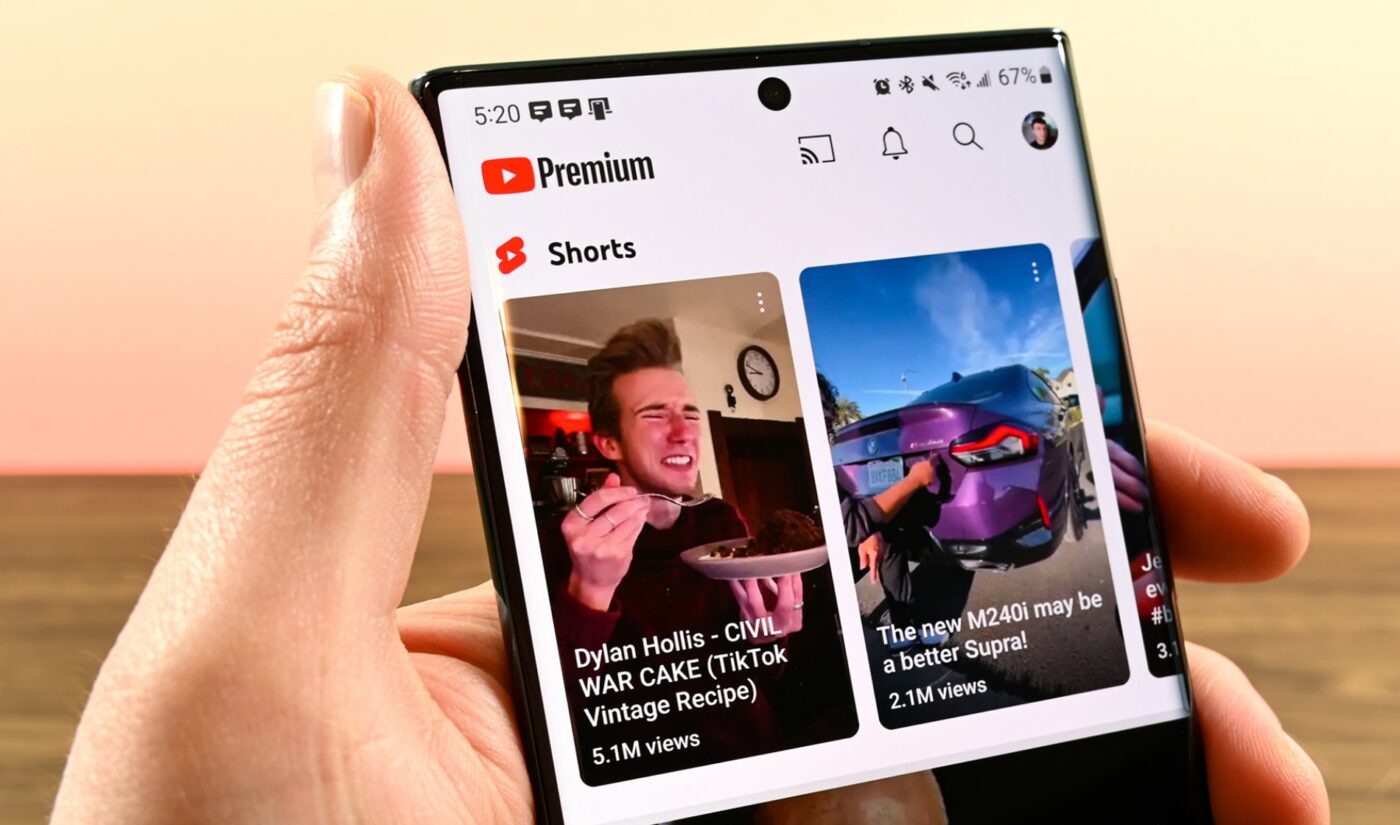
YouTube is changing the way it counts views on Shorts, and the new policy could have significant ramifications for both brands and creators. After previously requiring users to watch for a few seconds before registering an official Shorts view, YouTube will now add to the tally when a Short plays for any amount of time.
In an email to Tubefilter, a YouTube rep explained that the statistical update will go into effect on March 31. From that point on, there will be no “minimum watch time requirement.” Any time a video loads in your Shorts feed — even if it only plays for a moment before you swipe past — YouTube will add a view.
A more liberal approach to accounting will bring YouTube in line with Instagram Reels and TikTok. Reels view counts show “the number of times your reel starts to play or replay,” according to Instagram. TikTok hasn’t been as forthcoming about its tabulation methods, but view counts on that app typically outpace numbers for similar videos on Shorts and Reels.

Subscribe to get the latest creator news
That data point gives a good explanation for YouTube’s change. Even though the platform previously sought to account for user intent when adding up views, it needs to be able to show advertisers that its Shorts are just as impactful as other vertical video uploads.
YouTube isn’t getting rid of its previously viewership metric, which it’s now calling “engaged views.” Creators will be able to see that count via their analytics dashboard, and engaged views will still be used when determining which channels are eligible for the YouTube Partner Program. So while Instagram attempts to standardize its metrics around its views, YouTube is offering a multifaceted approach to traffic measurement.
If the idea of cheapening what counts as a view sounds like a bad idea to you, then you may be old enough to remember when Facebook landed in hot water by overemphasizing how much traffic its videos were receiving. That loose accounting — and the ill-fated “pivots to video” that followed in its wake — led to a massive class action lawsuit from creators and media companies who felt that Facebook had “miscalculated” the popularity of its native videos.
Now, history is repeating itself. If a millisecond of viewership in a busy Shorts feed now counts as a view, creators and brands will have to be more vigilant to make sure they’re not misinterpreting the data at hand. It’s a trepidatious moment for the industry, but again, YouTube’s hands are pretty much tied. There’s no way around it: People like big numbers, and they like to see numbers go up at a rapid pace. YouTube is giving them what they want.