Vine is back, and it’s anti-AI.
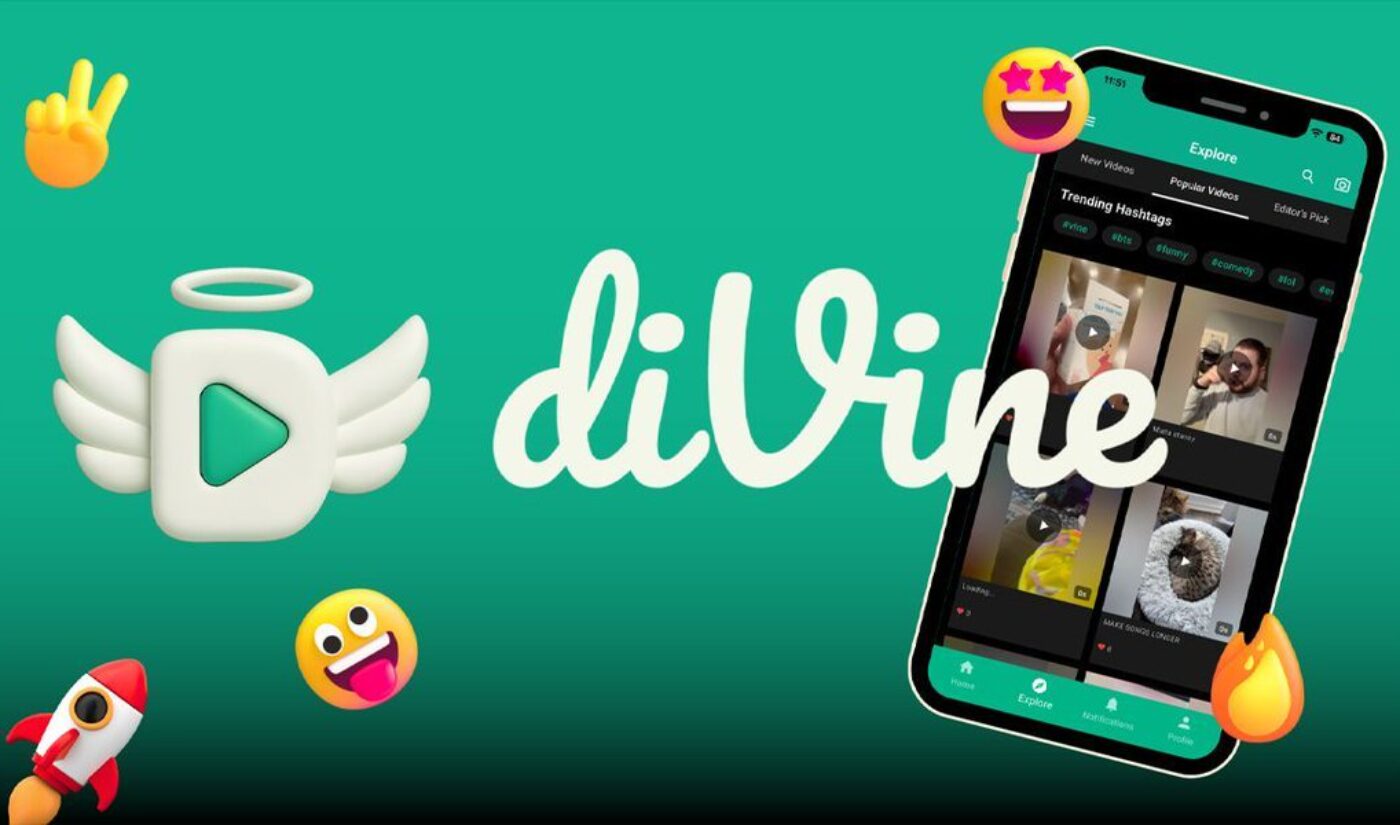
Jack Dorsey, co-founder and former multi-time CEO of Twitter, has launched “diVine,” a new app that serves as both an archive of around ~500,000 videos from the original Vine, plus lets users post new content–as long as that content is six seconds or shorter, and (crucially) made by a human.
Vine, as you probably know, was the OG short-form video app. It limited clips to just six seconds, forcing an extreme level of creativity and, as a result, gestating an entire generation of timeless memes. Creators like Liza Koshy, Logan Paul, Lele Pons, David Dobrik, Drew Gooden, Thomas Sanders, Danny Gonzalez, Sam & Colby, and Hannah Stocking all grew their first audiences on Vine.

Subscribe to get the latest creator news
But, as you probably also know, Twitter shut Vine down in 2017, after struggling to find revenue in the ad biz and losing a sizable portion of its user base. Vine has seen a few shots at revival since, but none have worked out long-term.
Will this one survive? Maybe. We are now in the era of short-form, with TikTok and YouTube Shorts bringing record engagement, and microdramas becoming Hollywood’s burgeoning darling.
It helps that this iteration isn’t really looking to become the next billion-dollar platform. diVine’s creation was funded by and Other Stuff, a nonprofit Dorsey launched in May 2025. As TechCrunch reports, and Other Stuff’s goal is to back experimental open source projects “that have the potential to transform the social media landscape.”
With diVine, Dorsey isn’t intending to recoup and Other Stuff’s investment; the app is structured as a public benefit corporation with no revenue model.
So where does that leave creators?
OG Vine posters who don’t want their content included in the ~500,000-strong archive can send diVine a DMCA takedown request, and diVine will remove it. They also have the option to reclaim their original Vine account and the videos they posted. (To do that, they’ll have to be in possession of their original signup email account and/or the other social media accounts listed in their Vine bio.)
Evan Henshaw-Plath, a software developer who worked on Twitter’s earliest days alongside Dorsey at podcasting startup Odeo back in 2004-2006, and now is a member of and Other Stuff, said he hopes creators will be able to monetize their diVine content–both old and new–through brand deals or collabs.
He also told TechCrunch that he likes the direct subscription support model à la Patreon, and also the idea of a “pro” account where creators could have additional features.
Henshaw-Plath, who goes by “Rabble” online, said diVine has already seen interest from several OG creators, including JimmyHere, MightyDuck, Jack and Jack, and the aforementioned Lele Pons. They ended up having a voice in diVine’s development, and encouraged the diVine team to make the app more than a static Vine archive.
“It was actually the Viners who were like ‘no, no–this is way more important than just nostalgia,'” Rabble told TechCrunch. “The users said they wanted something like Vine that would reset social media and filter out AI slop. They’re the ones who told us to wait and get it right. And so that’s what we did.”
Being anti-AI became a core defining component of diVine–one that sets it apart from basically every other social media platform. YouTube, TikTok, Instagram, and X are all heavily intertwined with generative AI, since their tech giant parents want to cash in on the bandwagon. Those tech giants are currently finding out how difficult it is to balance ‘make as much money as possible by getting everyone to use our LLMs’ with ‘but wait, now our platforms are full of meaningless garbage.’
BeReal is perhaps the only other example of a major social media platform banning AI.
“I decided that I was going to filter out AI content because I personally don’t like seeing AI content,” Rabble said. “I don’t like feeling tricked. I don’t like the idea that tons of content can be made very quickly and with little humanity or thought.”
diVine’s strategy for staying AI-free requires uploaders to either (a) record their videos directly in the app, or (b) use C2PA to verify the videos were created without generated content.
Thanks to the anti-AI measure, it’s possible that diVine will actually fulfill and Other Stuff’s mission statement and change the landscape of social media. It could become the gathering place for creators and users who are tired of slopification. It could draw traffic from Shorts and TikTok. It could implement a text half of the site and become the new Twitter.
Or it could just be an archive, reminding us of simpler times.
We’ll keep an eye on diVine’s development now that it’s launched into Apple’s App Store, Google Play, and decentralized/open source app marketplace Zapstore.
For now, we have a ringing endorsement from Pons: “Many of us came from Vine, and it was the beginning of everything. An iconic app. It was such a key moment in my own personal journey, and in internet culture, it makes me so happy to see these early classics brought back to life, and to have the chance to make new ones.”