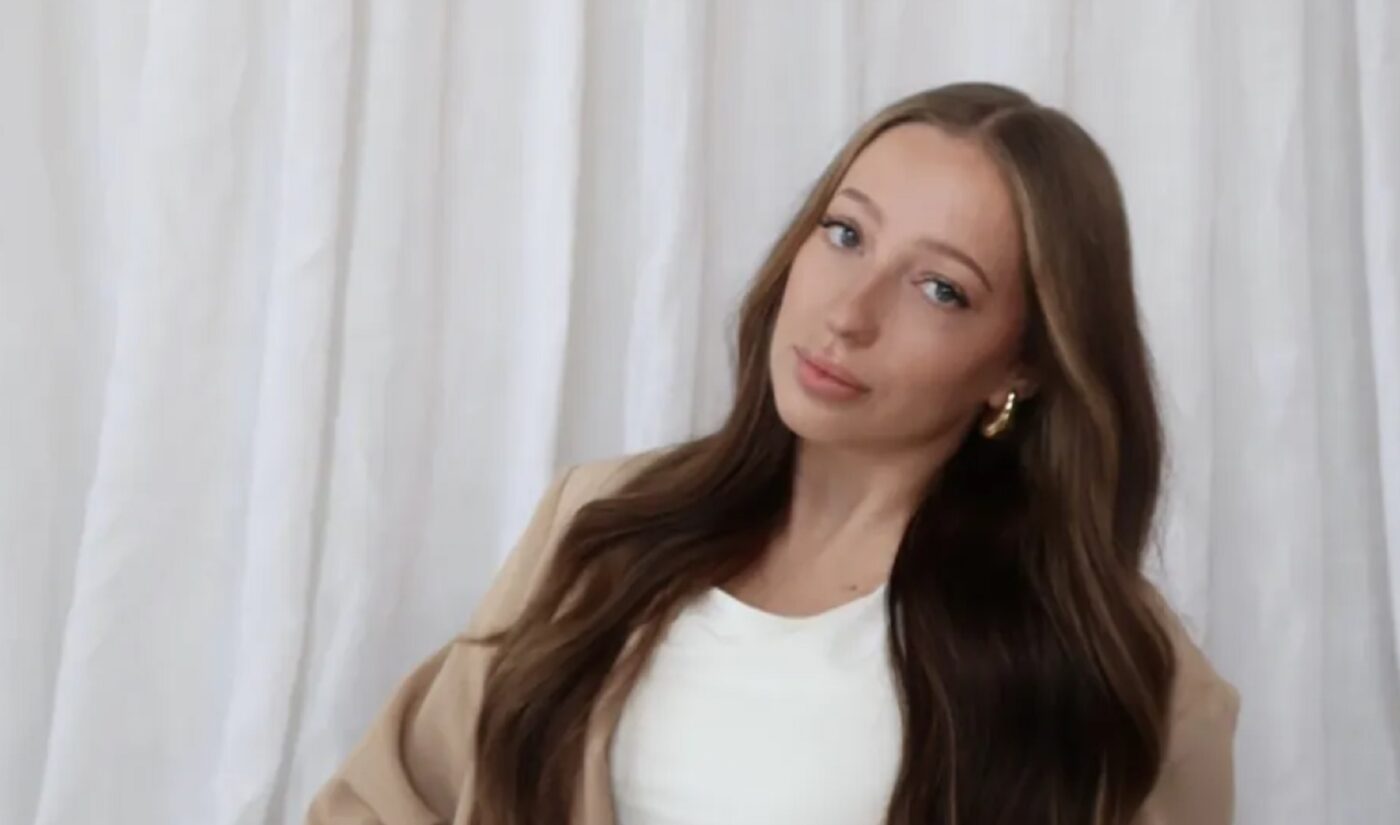
Can a content creator face legal ramifications if they copy another creator’s vibe?
That’s what a U.S. district court must decide after TikToker, Instagrammer, and YouTuber Sydney Nicole Gifford filed a first-of-its-kind lawsuit against fellow content creator Alyssa Sheil, accusing her of copying Gifford’s “neutral, beige, and cream aesthetic,” and posting content with “identical styling, tone, camera angle and/or text.”
According to the suit, Gifford (who has around 860,000 followers across TikTok, Instagram, and YouTube) and Sheil (384K across the same platforms) met in December 2022 “with the intent of supporting one another’s business.” But after a joint photoshoot in January 2023, Sheil blocked Gifford and began posting content that “directly replicate[s] the products, poses, and/or styling” of Gifford’s own content.

Subscribe for daily Tubefilter Top Stories
Gifford sent cease-and-desist letters to Sheil, and in at least one instance got TikTok to remove one of Sheil videos for copyright infringement, per the suit. That video had gotten 350,000 views before TikTok took it down.
All in all, Sheil put up at least 20 Instagram posts, 19 TikTok posts, and 12 Amazon storefront posts that Gifford says infringed upon her brand.
That’s the core of this lawsuit: Gifford says Sheil’s content is damaging her personal brand and causing her to lose followers, engagement, and sales commissions from affiliate partners like Amazon, since she frequently collates lists of recommended products to buy from digital storefronts.
@sydneynicolegiff color coordination is my love language #closetorganizer #dreamcloset #walkincloset #closettransformation #organization #satisfyingvideo ♬ original sound –
Gifford alleges Sheil committed both copyright infringement and trade dress infringement, with the latter of those claims being particularly interesting, since “trade dress” refers to the bespoke look and feel of a consumer product (like, for example, the shape of a soda bottle) differentiating it from competitors. If the court determines that Gifford’s content is indeed covered by trade dress laws, that could have a serious impact on our industry, opening the door for more lawsuits from creators who feel their content is being copied.
“The burgeoning influencer industry allows content creators such as Sydney to foster their own unique brand identity and curate, promote, or recommend goods and services to others,” the suit says. “Promoting and curating thoughtful lists of goods and services is the center of many influencers’ business. The success of an influencer’s business largely dependson their ability to differentiate themselves from other influencers.”
The original lawsuit was filed in April; Gifford asked to be awarded damages “in an amount to be determined at trial.”
Last month, Sheil filed a motion to dismiss most of Gifford’s claims, but notably did not ask to dismiss either the copyright infringement or trade dress infringement claims, saying those “at least pass pleading muster.”
@alyssasheil all of my favorite home deals #amazonhomefinds #amazonhome #amazonhomedecor #amazonhomefavorites #amazonhomefind #amazonkitchen #amazonkitchenfinds #amazonkitchenfavorites #amazonkitchenmusthaves ♬ som original –
We’ve seen similar lawsuits in other industries pay off for plaintiffs. Marvin Gaye‘s family famously sued Robin Thicke and Pharrell Williams for the similarity of their 2013 track “Blurred Lines” to Gaye’s 1977 song “Got to Give It Up“; they received a $7.4 million payout when the judge ruled against Thicke and Williams. The core of that suit was the similar, with expert musicologist Robert Fink saying the judgment set a precedent for “fencing off our shared heritage of sounds, grooves, vibes, tunes, and feels.”
There’s a lot that’s shared in content creation, too. Not just career creators, but everyone who uses platforms like TikTok, Instagram, and YouTube have access to the platforms’ general-use creation tools. And things like trends and memes rule the ‘net, so it’s not uncommon to see hundreds or thousands or even tens of thousands of posts using the same song, sound clip, font, filter, joke, and sometimes product.
Three legal experts who spoke to Bloomberg Law said they think it’s unlikely the court will rule in Gifford’s favor, though, with one saying, “Are we really gonna have copyright infringement for like, hands on a table?”
“[T]he defendant has completely ripped off the plaintiff here,” Michael Palmisciano, a partner at Sullivan & Worcester, told the outlet. But, he added, “[S]ome of these photos are literally photos of the products, and so to say that another photo of the same product is infringing on the original photographer’s rights in that original photograph seems like a stretch because what’s being copied is the idea of that photograph.”