Creator biz dev conference VidSummit is gearing up for its biggest year yet, with plans to welcome over 4,000 creators, their teams, and other industry professionals to Dallas for three days of panels, workshops, networking, and more.
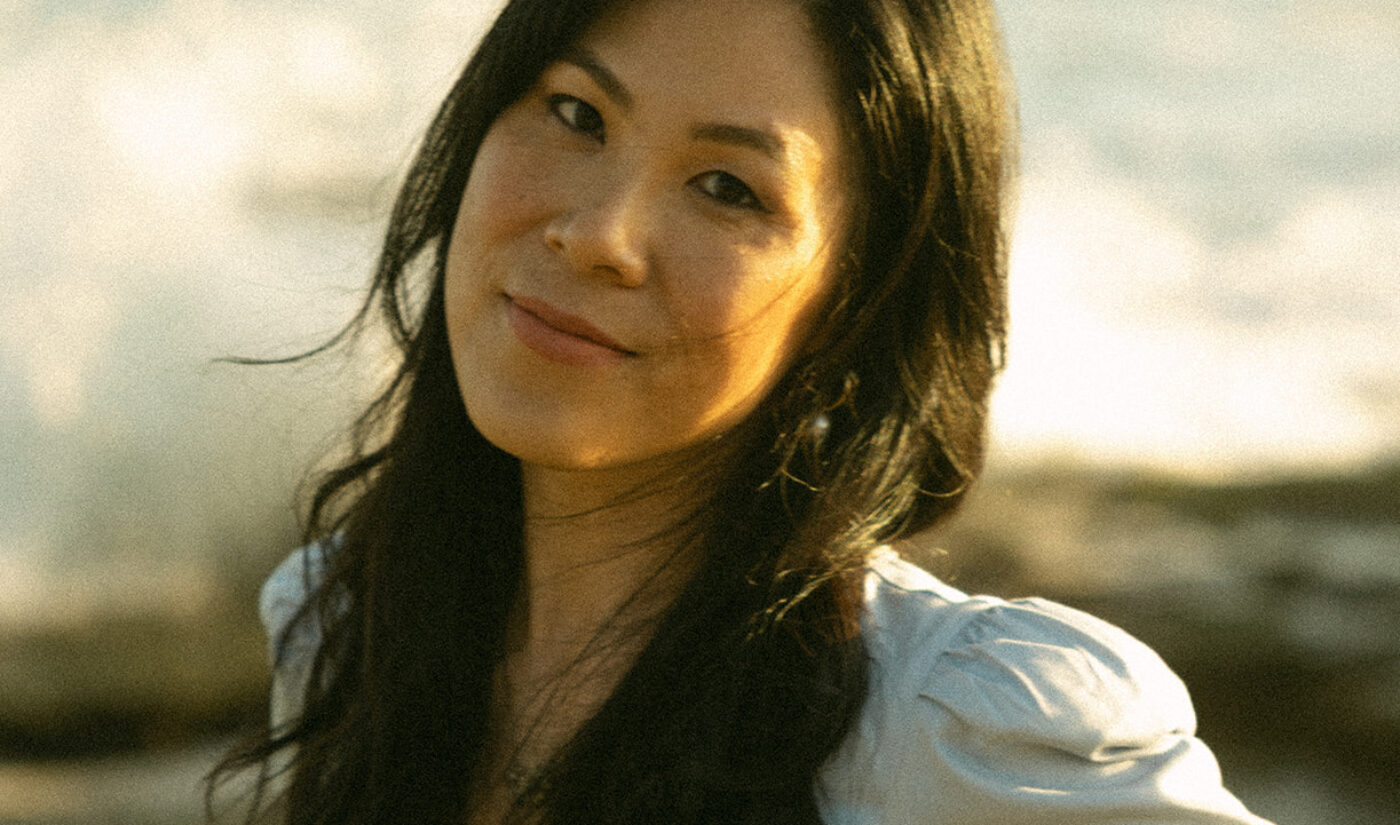
Among the dozens of speakers who’ll take VidSummit’s stage is Dzung Lewis, who’s been a full-time YouTuber since 2017. After a few years of building a Millennial audience with cooking videos, she knew she wanted to pivot, but she found herself struggling to make new types of content that both appealed to herdb longtime viewers and attracted new ones. Navigating this shift was the most difficult thing she’s done in her video-making career, but she made it through–and now her channel Hey It’s Honeysuckle successfully blends an entertainment-forward “MrBeastification” format with the love of food that inspired her to join YouTube in the first place.
Ahead of her presentation, we sat down with her to talk about her experiences, what she learned, and what she plans to teach others.

Subscribe to get the latest creator news
Here we go…
Tubefilter: Pretend that I don’t know anything about you, and tell me a little bit about what you did before YouTube and how you got into YouTube, and let’s go from there.
Dzung Lewis: Sure. I had a very unique path towards YouTube. I actually was working in tech and finance. I was an analyst when I was hating my job. I’ve always grew up watching cooking shows. That was a dream to be on the Food Network, or at least do something fun like cooking for a career. I was hating my job so much, just boring, crunchy numbers. I went to this food festival with my husband. We saw Guy Fieri doing a cooking demo. It was so inspiring.
At the time, that was when– it was 2009, so it was a long time ago. That was when YouTube has just started becoming this thing where people upload their hot videos. My husband now, or boyfriend then, he was like, “Well, let’s go home.” He was also working in architecture, which he didn’t enjoy either, but we always had the creative outlet to do something fun. We went home, filmed a cooking show, essentially. I didn’t take it seriously at all. We did a few, and that was that.
Then in 2012, I actually got laid off from my job, and not really knowing what to do, I wanted to do something fun. I knew I didn’t want to go back into tech or finance. While I was searching for a job, we started uploading cooking videos. Now, at this time, people were having a whole career out of it, like Michelle Phan. All these people were making very good careers out of YouTube.
We thought, “Hey, let’s just see where this goes.” I didn’t really take it seriously. It was like, “Let’s do this in the meantime while I look for a job.” Then I ended up finding a job at Sunset Magazine. I ran their wine competition, all the while still uploading videos to YouTube, just because I felt like this is different. This was what got me hired at this job, the magazine job. We just kept it going, going, going. Then, fast forward to 2017, I had my daughter.
After three months, we moved to LA. That was when I had signed on with an influencer agency. I started working a lot with Tastemade. I was doing series with them for their– I forget what it’s called. I was doing those videos for them where you just see the hands, or you just see very fast cuts, how they used to do it on BuzzFeed and stuff, too. We did that. Then, within a few months, I quit my job. Then we went full into YouTube.
At the time, I didn’t know any better. It was just like I just wanted to put out cooking videos, and everyone wanted recipes. It was a very small subset of people that wanted recipes. I thought like, “Oh, yes, 10,000 views overnight, that’s a good video.” Then COVID happened, and the videos really took off. I did the boba series. I did the dalgona, which was something that was really trending on TikTok at the time. Then I saw my videos hit a million views within a very short amount of time.
That was an anomaly because, with COVID, everybody was staying home. After the world went back to work and had real life again, the views started slipping back down. At that point, I was just burnt out of doing recipe videos. I didn’t want to do that type of video anymore. That was during the time of the “MrBeastification” of YouTube, I would say. It was a very different YouTube than what I had been uploading to. We really wanted to pivot.
That was when I started—I think it was 2021 or 2022—our first call with Derral [Eves]. He made sure to say, “YouTube is an entertainment platform.” That’s what I will always remember he told me, is people are not coming here for education like the stuff that you’ve been doing. That pivot took a very long time to actually succeed. We kept experimenting with different types of videos. My audience, they were used to seeing me teach them how to cook. When I wasn’t really teaching them how to cook anymore…
The first breakout video was the Erewhon one, spending $100 at the most expensive grocery store. That was the first breakout one. It reached a new audience, but it really pissed off my existing audience. They were like, “Why are you cooking with such expensive ingredients? Where are the recipes?” and da, da, da. I’m like, “I just can’t do that.” I was trying to find a very good balance between appeasing the old people while also trying to transition and finding my new voice.
All the while, we started a second channel called Honeysuckle. It was an escape, where I didn’t want to do recipes, I didn’t want to do anything that had to do with food. I started playing around with gadgets, and it went super viral. I found a whole new subset of audience, much younger. We were basically filming a gadget or trying new things every single day, and really having that repetition of filming every day, listening to the audience. These videos were getting a million views overnight. Granted, they’re short, but they became multiple millions. At one point, that channel was getting 100 million views per month. It was just a really fast way for us to understand this new audience I wanted to tap into, that I really wanted to speak to, and make content for.
It just became a fun thing. I stopped uploading on the main channel for a little bit, just focusing on this second channel. Then it did well. It was last year when I finally was like, “We spent 15 years working on this channel. I can’t just let it die.” We’re like, “How do we come back? How do we make food entertaining, and how do we make it work?” I think the first video that we did was “What I eat in a day.” We did all of those. Nothing got views.
I don’t know how it came along, but we did…Oh! Ryan Trahan had the one-star reviews. You know those, like the restaurants? That one-star series that he was doing. I thought, how can we apply that to our vertical food and recipes? I thought, the only thing that’s one-star that I can think of are cookbooks, because people have given me one-star in my cookbook. We just filmed it, tested it. That video, I remember being so excited because, in 9 days, it hit 300,000 views, and I had never gotten views like that before. It was so exciting when I’m like, “Wait, we’re trying to apply YouTube culture to food, and it works. It’s taking something that’s familiar, that’s trending, and then applying it to here.”
Then I really leaned into pop culture and YouTube culture. I’m like, “Okay, let’s try this again. Celebrity chef one-star.” That did well. YouTuber products, that did great. Then TikTok, the whole talk about TikTok being banned. Let’s think about how we can apply that to our videos. Then I did, everyone was doing viral TikTok videos. I’m like, I don’t want to call it viral because everything goes viral, essentially.
I knew we had to apply some extreme to the videos. For example, the Erewhon one, I coined it “The World’s Most Expensive.” I remember my editor was so against that because she’s like, “It’s not the world’s most expensive.” I’m like, “I don’t care. Let’s just call it that.” Then everybody started calling it that, and it’s so funny. Then we decided to call it The Most Viewed TikTok Recipes. That one, I remember talking to Derral because we were just trying to figure out, “Where do we go from here? I’m getting all of these views. I don’t really know what to do with it. Who am I targeting?” Really hone in on the audience that I’m trying to speak to.
He’s like, “That is going to hit a million.” Sure enough, that was my fastest million video on the channel. Then we hit it again. Then you start seeing everybody try to do the most viewed TikTok, whatever, whatever, whatever. I’ve retired that one a little bit. I’m just trying to find a new series to work on that will have the same success. We did experiment quite a bit over the summer, and we saw some success. We’re trying to lean into that a little bit more.
Definitely finding my voice that’s not just teaching people something and really taking an entertainment approach to the channel and speaking the language of, honestly, I think it’s Gen Alpha, at this point, that’s watching my videos. I went to my daughter’s school, and one of her friends was like, “I just love watching your cooking videos.” They’re 9, 10 years old. It’s been really exciting. It’s an exciting journey. It went from millennial moms to little kids now.
Tubefilter: One thing that I really caught on to here was you mentioned that you were always doing it for fun, which I think is, as you mentioned, there’s a MrBeastification. In some cases, I feel like creators have lost that. It can still be fun, but at the same time, many creators have a career approach to it. At what point, for you, did this stop being something that you were just going to do until you found another job in tech? Was there a moment where it became your career?
Dzung Lewis: Yes. Honestly, it was when my daughter was born, because I couldn’t keep going into the office while also balancing that something had to go, and I wasn’t willing to let what we worked for on YouTube go. We were getting so many brand deals. We were getting so much exposure through Tastemade. I’m like, “If I let this go for a corporate career, that would be the dumbest thing I could ever do.” My husband is always very pro-entrepreneurship, making your own path. We went all in. It was scary.
Tubefilter: Does he work on the channel with you?
Dzung Lewis: Yes, he does.
Tubefilter: You’re both full-time on this?
Dzung Lewis: Yes.
Tubefilter: Interesting. Yes, that’s a huge leap. How big is the total team these days? I know you have the full blog, and then you have your channel, and then you run Instagram, TikTok.
Dzung Lewis: Yes. It’s all my husband. The core team is us two. We have an editor that helps us just put effects on the shorts channel. Then we have, we call her a “preditor,” our producer-editor that helps us brainstorm ideas. Then we’re looking for a new editor, so hoping to have five.
It’s all on the edit side because that’s just the hardest. I still source content, cooking materials. One day, I would love to have an assistant, but you’re just going to have to download my brain. It’s so hard.
Tubefilter: Yes. I’ve spoken to a lot of creators, and most of them also had this moment of, “How do I hire somebody and not feel like I’m completely letting go of control? I feel like I am not going to be the voice behind the channel anymore.” That’s an inflection point a lot of creators have dealt with.
Dzung Lewis: Yes. I feel like certain things I can never let go, because the curation of the content itself is where I feel like I really shine. Just trying to find what’s interesting because I’m the one that’s spending the most time listening and chatting and talking to the audience. Really being mindful of what they’re into. I don’t feel like I could ever outsource that. Even down to the shopping, the ingredients, I’m just so picky about it.
Tubefilter: Which is a good thing. I feel like it’s a good thing.
Dzung Lewis: Yes. I’m still going to have to let go a little bit, but that day hasn’t come yet.
Tubefilter: What does your current schedule look like, during the average week?
Dzung Lewis: My average week as just a content creator or the whole week?
Tubefilter: I would say as a human.
Dzung Lewis: I wake up Monday through Friday. I make lunch for my kids and I try to make it fun for them, and then take them to school. As soon as I get back, we’ll then go shopping for ingredients. I try to do it, probably not the most efficient, but I do it same day or day before just because things change very often with our filming. If I am filming, for example—what was it?—this upcoming video for the fast food, I change things around based on whether I think it fits the lineup. If it doesn’t make sense, I’ll cut something and I’ll saw something else in.
I try to be as flexible. That’s why we live close to five different grocery stores that I can have access to. Then we’ll film from a window of 11:00 to 2:00 every day. Then I go pick up my kids and then they have after-school stuff. Cook dinner, do homework, rinse, repeat the next day. My husband, on the other hand, he spends all day Fridays just editing, tweaking things, getting it ready for the Saturday release. It’s boring.
Tubefilter: It doesn’t sound boring. Tell me a bit about what’s going on at VidSummit.
Dzung Lewis: I’m speaking for the first time ever. Very excited, but also very nervous. I’m just going to be talking about my journey. What Derral was really interested in was that I share the pivot story, especially with food. There hasn’t been a lot of very successful people in this food niche other than Joshua Weissman and Nick DiGiovanni. The way that they pioneered and changed how food can be consumed for a younger audience was really inspiring. There wasn’t really a female that was doing that.
I’m excited and proud to be successful, at least, in that niche for what I’m doing and speaking to the girls that love to cook for fun, not just to take care of your family, but to do it as a hobby and to really explore your creativity. It’s really exciting. I’m happy to see a lot of young kids, especially whenever I’m out and about, come up to me and say, “Oh, my gosh, I love watching your cooking videos. I learned how to cook that.”
I remember there was a mom that came up to me with her daughter because her daughter was so shy. She said, “We made your dragon fruit boba recipe.” It was like a dupe of a Starbucks thing. That was so fun. That just brings me so much joy because I have a daughter, and we love experimenting. She tries to recreate everything that I make, too. Making it fun, accessible for families to do together is really rewarding for me.
Tubefilter: Huge. Can you give me an elevator pitch of your VidSummit topic?
Dzung Lewis: Oh, yes. Hold on. I actually wrote this down. Can I…
Tubefilter: Yes! Go for it.
Dzung Lewis: Okay, hold on. Oh, it’s long. “After a decade of creating content and struggling to break through the noise, Dzung Lewis is pulling back the curtain on what it really took to build momentum and what finally worked. In this candid session, she walks through the 10-year journey of trial, error, pivots, and plateaus, and how launching a Shorts-focused channel flipped everything.”
Tubefilter: Perfect. Sounds good. That’s great. That, I think, covers it for me. Is there anything else that you would want people to know about you, that you want people to know about your approach to content? Anything else?
Dzung Lewis: I think that pretty much sums it up. I’ll be sharing more once I get the speech developed, but for the most part, it’s really just talking about the trials and error of this journey.
Tubefilter: Perfect. Just as a last question, do you think it’s true that YouTube is not an educational platform?
Dzung Lewis: I think it can be an educational platform, but it has to be fun and entertaining. I don’t think that people are going on here specifically to search for how to make a pasta recipe. Maybe they are, or a scrambled egg recipe, but I think people want to consume it because, with TikTok, there’s so much ADD. Your attention span is so small. I can’t make a video explaining how to make scrambled eggs perfectly the way that it used to be, like Martha Stewart did or Ina Garten did. They would just die of boredom.
It can be, but it has to be fun, and it has to be engaging and talking to the audience that’s watching it these days. For the most part, the people that are watching YouTube are young. They’re young.
Tubefilter: Interesting. I was just curious because we actually do see a really large contingent of people using YouTube as a search engine for, like, “How do I fix my car? How do I change this bulb?” DIY house projects, things like that.
Dzung Lewis: You know what? That’s who I used to be for a really long time on the cooking channel, but then you don’t develop loyal audience that way. They’ll come, they’ll get what they need, and they never come back. That’s not the audience that you want to cultivate, according to Derral.
I think also with ChatGPT and AI, videos like that are going to become a little bit more obsolete, where people are going to go just to AI straight because it’s an easy answer and you get whatever you need on the spot. You’re not searching. Unless you need a visual for it for videos on step-by-step “How to fix my toilet,” or whatever. Again, those are not going to develop into a career.
But honestly, I still go on TikTok for everything, because I like the visual.
Tubefilter: I get that. I’m a very visual person.
Dzung Lewis: Yes, I like seeing, “Oh, where should I go eat? Where’s good?” I want to see all the food. I want to see what the restaurants have to offer. Video, TikTok, those travel vloggers are very appreciated.
Tubefilter: Yes. I don’t think video–original video, from creators–is going anywhere for a very, very long time.
Dzung Lewis: I agree.
VidSummit is a Tubefilter partner. You can check out tickets here.