eMarketer is predicting that brands and agencies in the U.S. will spend more than $10 billion on sponsored content in 2025. That milestone underscores the rapid growth of the creator economy, but influencer marketing still has some maturing to do.
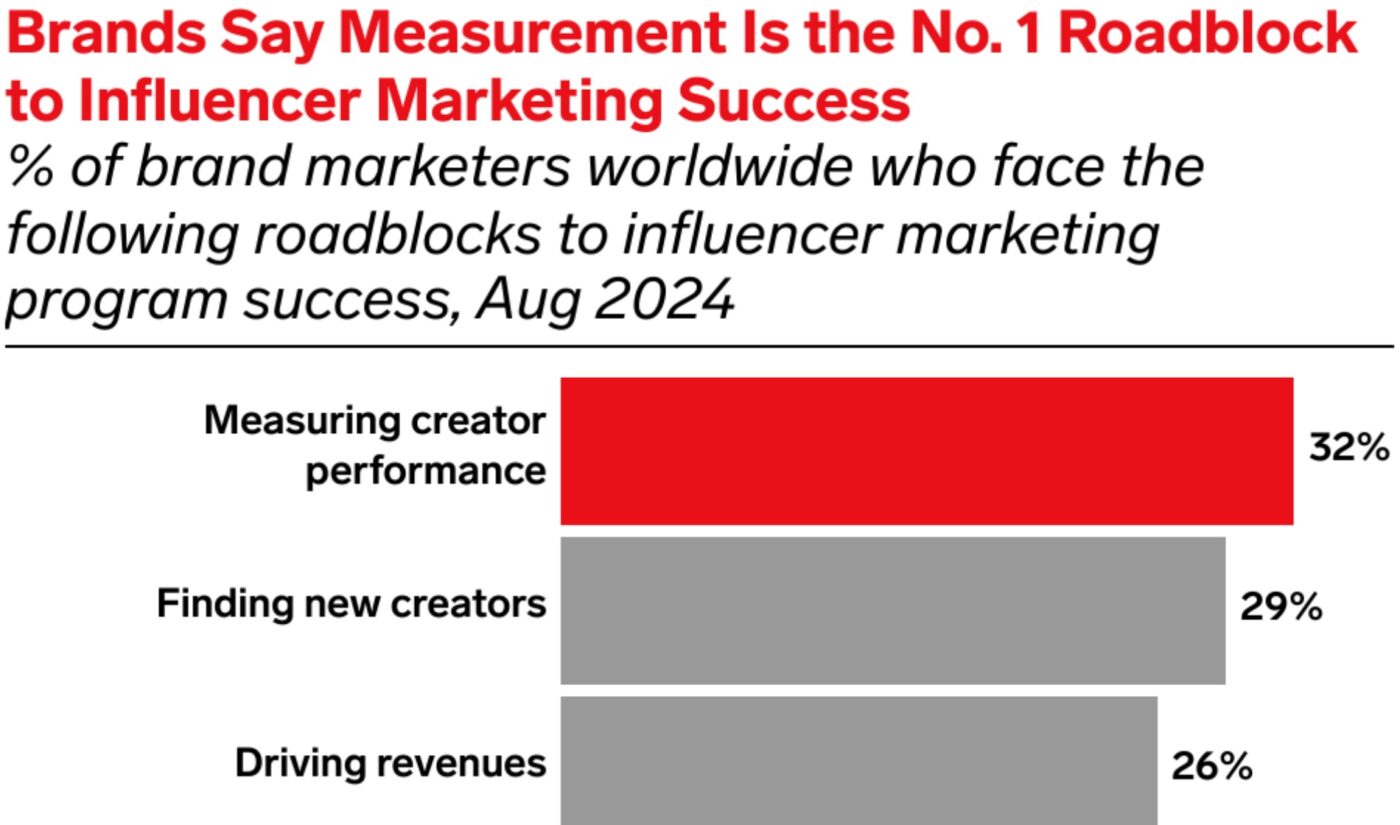
Case in point: eMarketer’s findings in the 2025 edition of its Influencer Marketing Measurement Report. The firm used August 2024 data provided by CreatorIQ to take the temperature of contemporary influencer marketing operatives. One of the key takeaways from the report has been a recurrent refrain in these types of studies over the past year. Marketers are trying to make their creator-related spend more efficient, but accurately measuring the impact of their campaigns is proving to be a challenge.
eMarketer kicked off its report by remarking that “the days of unchecked spending are over.” Agencies no longer see influencer marketing as a curiosity; instead of testing the waters, they are turning their attention to the topic of optimization.

Subscribe for daily Tubefilter Top Stories
“For many years, securing adequate budget was the top challenge brands faced with influencer marketing,” reads the report. “Marketers no longer have to fight for executive buy-in, but they are under increasing pressure to prove the impact of their growing investments.”
Therein lies the rub: Influencer campaign goals are so varied that it’s impossible to find a single metric to meet each marketer’s measurement needs. If such a “silver bullet” existed, it would have to account for different outcomes, goals, platforms, and formats.
The Influencer Marketing Measurement Report characterizes that variety. In terms of desired campaign outcomes, four different goals were cited by at least half of the surveyed marketers: Brand awareness (66%), audience engagement (59%), building credibility and trust (55%), and revenue growth (55%). Instagram (84.5%), TikTok (61%), Facebook (60%), and YouTube (50%) all crossed the 50% mark on the list of the most commonly used platforms for influencer campaigns.
We’ve seen how fractured ad landscapes can create hassles for both brands and viewers. In the current influencer marketing landscape, analysis requires several different metrics, ranging from reach (used by half of marketers) to engagement rate (48%) to conversion rate (46%) to sales (44%).
Is there a way to organize campaign measurement to provide clearer outcomes for sponsors? Enlisting creators on the analytical side of the equation could help. It’s becoming more common for influencers to handle creative duties in the campaigns they star in, but many of them are still kept in the dark when it comes to performance.
eMarketer cited a May 2024 survey from Creator Vision and The Harris Poll, who found that 85% of U.S. creators don’t get feedback from brands regarding the evaluation methods they employ. At the same time, 89% of creators said they possess audience insights that brands do not access.
The influencer marketing industry’s measurement question isn’t something that can be answered by a single marketer, brand, agency, or creator. It requires a collaborative approach — which happens to be something creators know a thing or two about.