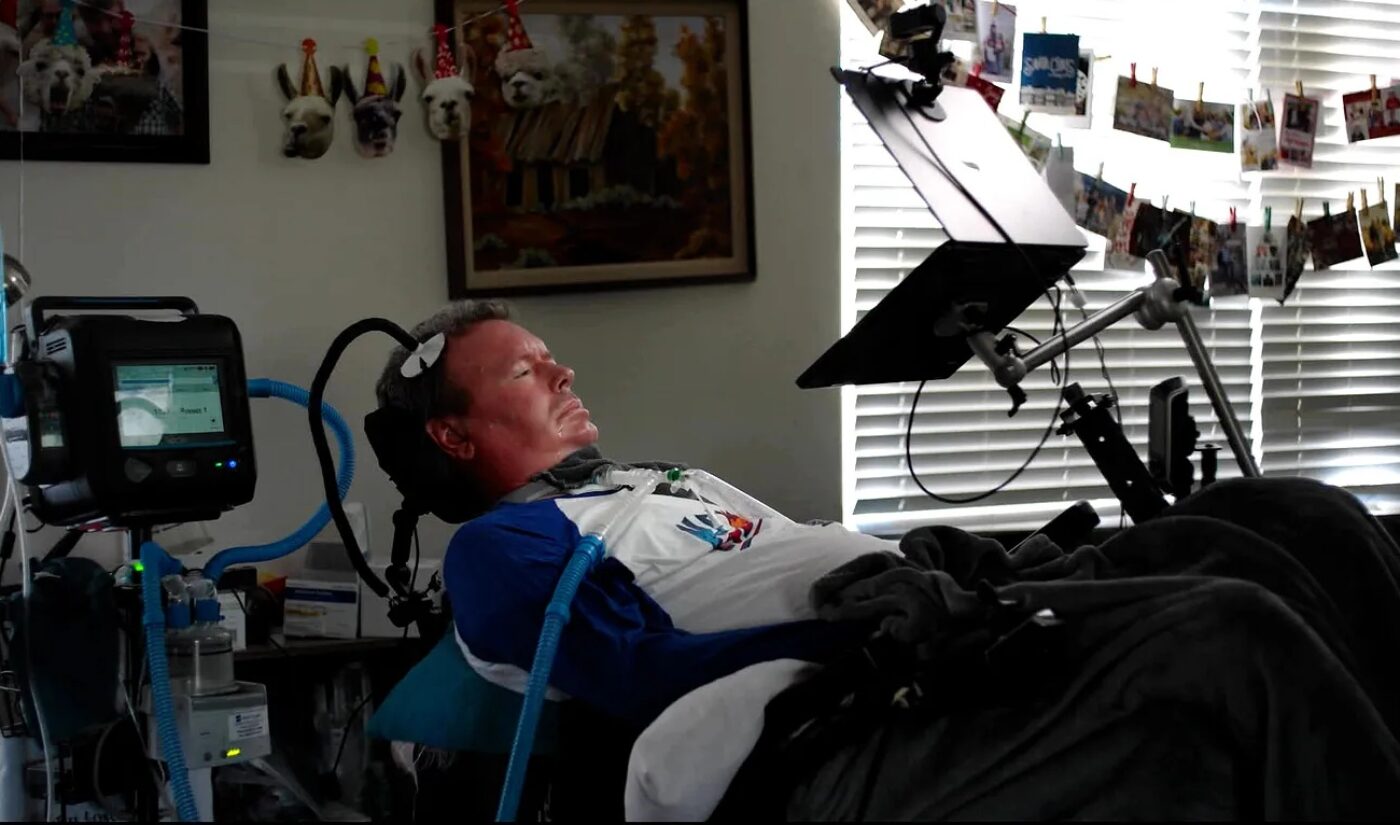
Neuralink‘s first wave of human trials has led the company to a notable milestone. Bradford Smith, the third person to receive Neuralink’s namesake implant, used the device to upload the first YouTube video edited with a brain-computer interface.
Since its launch in 2016, Neuralink has worked on a device that interprets the brain’s motor signals and translates that data into cursor movements and other computer commands. The company founded by Elon Musk began human trials in 2024, with quadriplegic Noland Arbaugh becoming the first person to receive the implant. Smith, an Arizona resident with ALS, became the first nonverbal Neuralink patient earlier this year.
Thanks to his newfound faculties, Smith was able to script and edit a nearly ten-minute YouTube video. To narrate the clip, he used xAI’s Grok model to capture his old speaking voice and replicate it. Generative AI also helped Neuralink decipher Smith’s brain activity.

Subscribe for daily Tubefilter Top Stories
“I’ve spent the last few years with ideas and thoughts I cannot share because it takes too much time to type it out,” said Smith, who previously communicated using an eye-tracking device. “I can already communicate faster and in more ways than I could before, and we are still working on ways to get even faster.”
Some neuroscientists have argued that Neuralink is not as revolutionary as it seems on the surface, but the results Smith has achieved using the implant are nevertheless stunning. His video shows that brain-computer interfaces have far-reaching potential, not just for basic communication, but for artistic expression as well. As Neuralink’s trials expand, people with disabilities will get a chance to share thoughts and feelings in a manner that was previously the stuff of science fiction.
And then there is the Elon Musk piece of all this. The world’s wealthiest person doesn’t run Neuralink’s day-to-day operations, though his right-hand man Jared Birchall is listed as the company’s CEO. One wonders if Musk is planning any integrations that would bring Neuralink-generated content to X. The neuroscience firm already employs Musk-owned generative AI technology — will it incorporate his social media platform next?