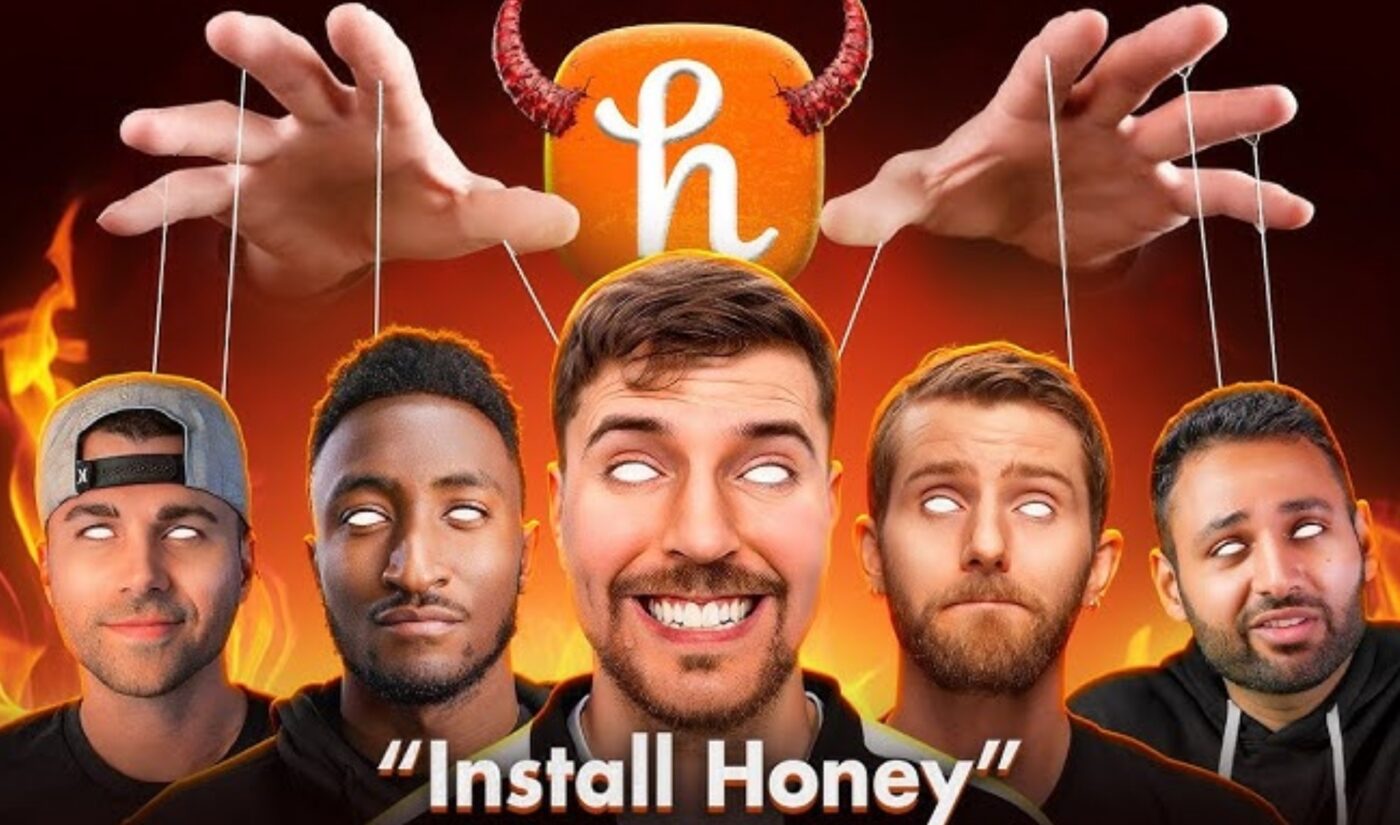
Ten days before the end of 2024, a YouTuber’s exposé uncovered a shocking scandal in the influencer marketing world. Honey, a PayPal-owned browser extension that has spent millions on creator partnerships, seems to have used those deals to rip off partners, deceive consumers, and engage in fraudulent business practices.
“I can’t even begin to fathom how much money has been lost at the hands of this browser extension.”
That quote comes from a video by Kiwi creator MegaLag, who published a 23-minute takedown of Honey’s shady influencer deals. Some of the biggest creators in the world, ranging from MrBeast to Emma Chamberlain to Marques Brownlee, have shilled for the browser extension. As it turns out, those sponsorships may have done more harm than good for creators.
MegaLag’s video is well worth a watch, but if you’re short on time, here’s the abridged version: Honey claims to save money for consumers by finding coupon codes and applying them at checkout. Though that seems like a good deal for all involved, MegaLag uncovered multiple tactics Honey used to enrich itself at the expense of its partners and users.

Subscribe for daily Tubefilter Top Stories
One part of Honey’s scam concerned affiliate marketing links. After users installed the extension, it manipulated the last-click attribution model to reroute affiliate commissions through its own links. Even when a creator’s endorsement led someone to a purchase, Honey’s technology poached the commission at the last second.
That chicanery also occurred in cases where Honey applied no discount codes. The extension used pop-ups to redirect affiliate marketing attribution.
Another part of Honey’s scam often prevented users from getting the best deal. MegaLag claimed that the extension colluded with sellers to ignore bigger mark-offs while pushing coupons of lesser value. “Honey wasn’t finding you the best deals possible,” MegaLag says in his video. “They were intentionally withholding them from you for their own financial gain.”
As of the publication of this article, neither Honey nor PayPal has issued a public response to MegaLag’s claims.
Honey bilked dozens of creators, but a few of them wised up to the brand’s scheme.
As MegaLag’s video reverberated across the internet, some of its former partners lamented their inability to catch onto their sponsor’s underhanded tactics. “It really just seems like everything about PayPal Honey is fraudulent,” said Charlie White in his response to MegaLag. The man known as Moist Cr1TiKaL claimed that Honey is “a full-blown scam.”
Moist may have been caught by surprise, but a few creators recognized the fishy smell emanating from Honey. In a clip from 2020 — which has been widely circulated in response to the MegaLag exposé — Markiplier explained why he refused a Honey sponsorship.
The gaming star explained that he had a “natural distrust of Honey” because the brand’s financials didn’t make sense. If Honey’s whole business model revolves around savings, where did it get millions to spend on influencer marketing partnerships? Markiplier said that discrepancy was evidence of some “shady shit,” and he turned out to be absolutely right. There’s only one thing he got wrong: He thought the “great Honey conspiracy” would unravel in 2022, but that reckoning didn’t arrive until 2024.
Markiplier refused Honey sponsorships because of extension’s questionable financials, but even some creators who accepted Honey money caught on. In 2022, a post on the Linus Tech Tips forum revealed that the YouTube star had ended his relationship with Honey. Colton Potter, Linus Media Group’s Head of Business Development, wrote that “we ended the partnership with Honey due to the way their service interacted with affiliate links.”
In the wake of the Honey scandal, do creators need to do more research about their brand deals?
Some commenters questioned why the Linus Media Group declined to warn colleagues after uncovering Honey’s shady practices. Others slammed the tech hub for accepting the promotion in the first place.
Though it’s fair to question Linus, the issues with influencer marketing go deeper than one creator’s promotion of an unscrupulous sponsor. Hank Green raised a larger problem in his response to the MegaLag video: “How responsible should creators be for understanding the business models of the companies that they do brand deals for?”
Due to factors like the purported authenticity creators possess, their fans broadly accept influencer marketing deals as a necessary revenue stream. That ecosystem has spawned an unregulated landscape in which partnerships with shady sponsors run rampant, and many creators accept deals with those brands without worrying about the ethics of the companies they promote.
The Honey scandal should serve as a wake-up call. As we saw with the rise and fall of the Russia-backed influence operation Tenet Media, creator naivete about their partners’ true intentions can have widespread ramifications.
MegaLag’s first video about Honey should be alarming enough, but his follow-up figures to be even more incendiary. As part of his investigation, he uncovered “an even darker side to PayPal’s scam,” and he plans to reveal those details to his viewers “soon.”