Change is coming at Pinterest.
Back in 2021, the platform (like basically every other platform) boarded the short-form video train with what it called “Idea Pins“–a type of post separate from its flagship photo pins that allowed users to upload video content.
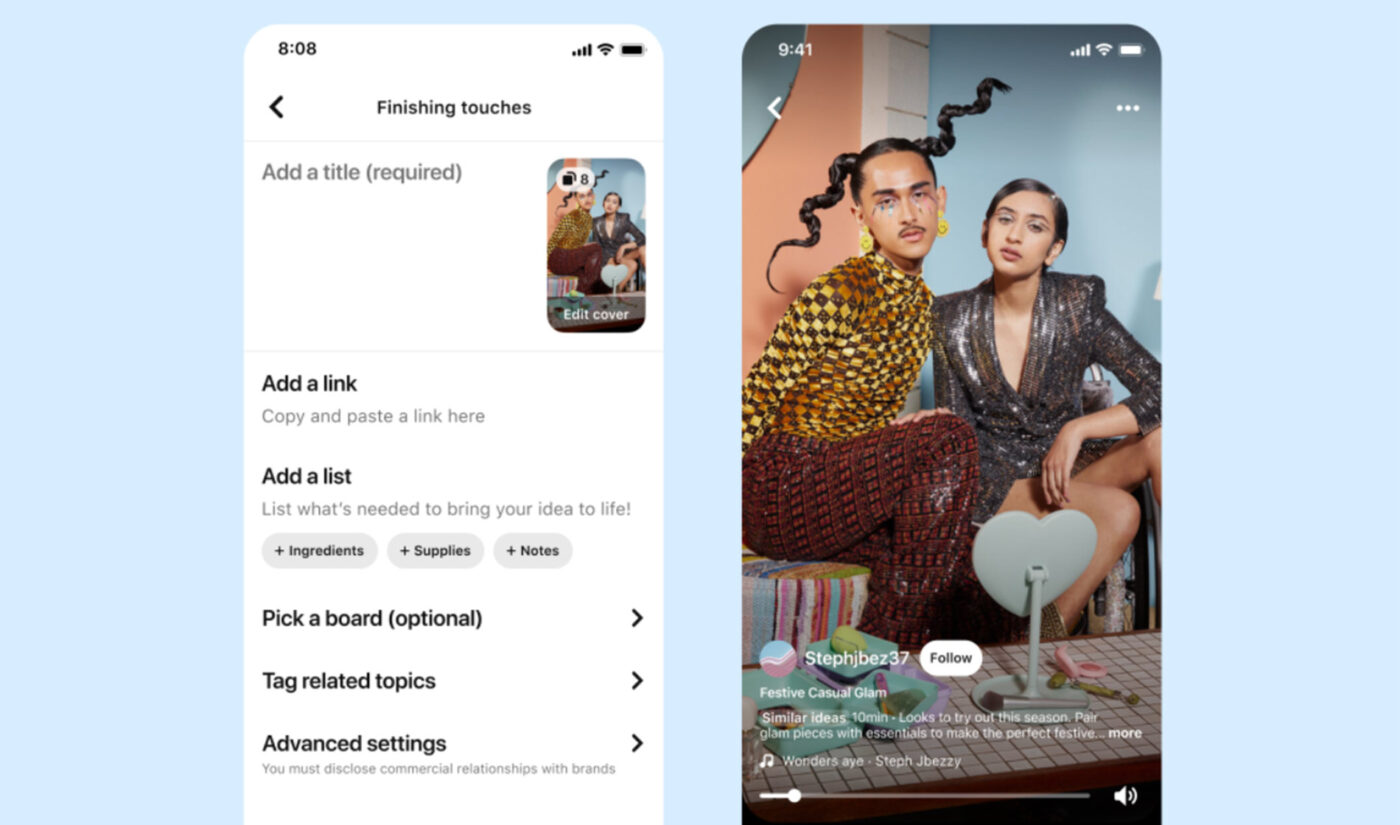
Now, Pinterest is unifying all types of content as simply “Pins.” And, in the process of merging user interfaces for video and photo posts, it’s opening up some previously limited features to more users.

Subscribe for daily Tubefilter Top Stories
The most notable of those features? The ability to include external links in Pins. Before this update, only business accounts could link out, but now individual users will be able to direct Pinterest users to a website. Or, as we’re guessing will most often be the case, to a product–either their own or a sponsoring company’s.
Pinterest specifically says it expects to see creators tagging products in their Pins with affiliate links (though those are limited to users in the U.S. and U.K., for now).
“We’re excited to unlock another monetization channel through links in all Pins,” Pinterest says. It adds that it thinks links will “[help creators] drive traffic and make connections with brands.”
The platform has also rolled out “enhanced” performance metrics including views and watch time across all Pins, has introduced Pin scheduling (where creators can pre-upload a Pin and have Pinterest post it at a set time), and will allow users to create Pins in different aspect ratios, as well as edit Pin components like title, details, and links post-publication.
“By creating a simpler, faster way for content creators to harness the power of Pinterest, we are making it easier than ever for our creators to reach an engaged audience, make money, build a brand and express what makes them uniquely special both on and off the platform,” Malik Ducard, Pinterest’s chief content officer, said in a statement.
These changes are just the latest Pinterest has made in an effort to turn itself into a creator-friendly, original content-forward platform. It recently expanded its creator fund–which launched in 2021 and to date has doled out hundreds of thousands of dollars to dozens of fashion, beauty, wellness, lifestyle, and food creators–to five more countries, and has been filling out its new homegrown content division with former YouTube execs.