Reaction content is a genre as old as video itself. TV shows in the 80s and 90s developed formats where judges and/or audience members watched clips and reacted to them–and, if you think about it, the omnipresent sitcom laugh track is reaction content-adjacent. Even if you can’t see the audience members, you can hear them, and their laughter is the cue that you should be enjoying yourself, too.
But, like many genres, reaction content entered a whole new level of proliferation thanks to digital platforms. Almost as soon as Vine debuted, Vine compilations began popping up on YouTube. Meanwhile, independent video creators were seeing their stuff scraped from their sites and uploaded to Google’s growing monolith.
This was the problem the McFadden siblings faced. Brothers James, Tyler, and Will were making video content on their own website, but people kept stealing it and reuploading it to YouTube. They knew they were missing out on both views and ad revenue, so they established their own presence on YouTube, attempting to curb the thieves by redirecting audience attention to channels they actually operated.

Subscribe to get the latest creator news
They also knew their solution was only a small dent in the overall problem facing all creators, not just them. So, in 2012, they founded Collab, which is both a digital content studio and video creator development company, and a digital rights management (DRM) firm.
These days, Collab has hundreds of creator partners and a team of around 20 DRM staffers who work to protect their content. The staffers–in tandem with Collab’s automated system CollabScan–constantly trawl the internet, looking for any incidents of piracy. They file around 40,000 copyright claims per month on creators’ behalf, recouping revenue from unauthorized reuploads.
Here’s the thing, though: the McFaddens launched Collab because creators needed help protecting content from bad actors. But as they grew Collab and got further into the DRM space, they found that lots of people who wanted to make content using other creators’ clips weren’t bad actors–they simply didn’t have easy, quick, or affordable paths to acquire clips legally.
Collab Clips is meant to be that path–a sort of “Getty Images of viral video,” as Collab puts it. It’s the company’s trove of over 235,000 clips, all of which are available to be licensed for use in content. Clips are sorted by what they contain (cats, people running, funny sports mishaps, etc), listed with a short description, and can be star-rated for quality by users.
“Reactors obviously want to be able to react to viral content, but it’s often very difficult for them to license everything they want to use,” Tyler tells Tubefilter. “We wanted to open up a library of viral videos that are available to be used as licensed content, so creators don’t have to worry about copyright strikes.”
And, when a video is licensed through the Collab Clips platform, its original creator gets properly credited and paid.
“This was about creating a system that compensates both parties,” he says.
Collab adds thousands of fresh clips to the platform every month, mostly via partnerships with community pages on Instagram that collect and post crowdsourced content.
“We partner with a lot of the largest community pages on Instagram–pages that have millions of followers,” James says. “We developed a licensing system where people can submit their clips to be featured on on those pages, and clips come into our library to be licensed.”
There are other companies who do clip licensing, but the McFaddens say a key part of Collab’s offering is affordability. Collab Clips does offer the standard subscription model, where creators and other media clients pay a monthly fee that ranges anywhere from $500 to $20,000+ to license clips in bulk–but it recently introduced a new model where creators don’t have to pay a set fee, or pay anything upfront at all.
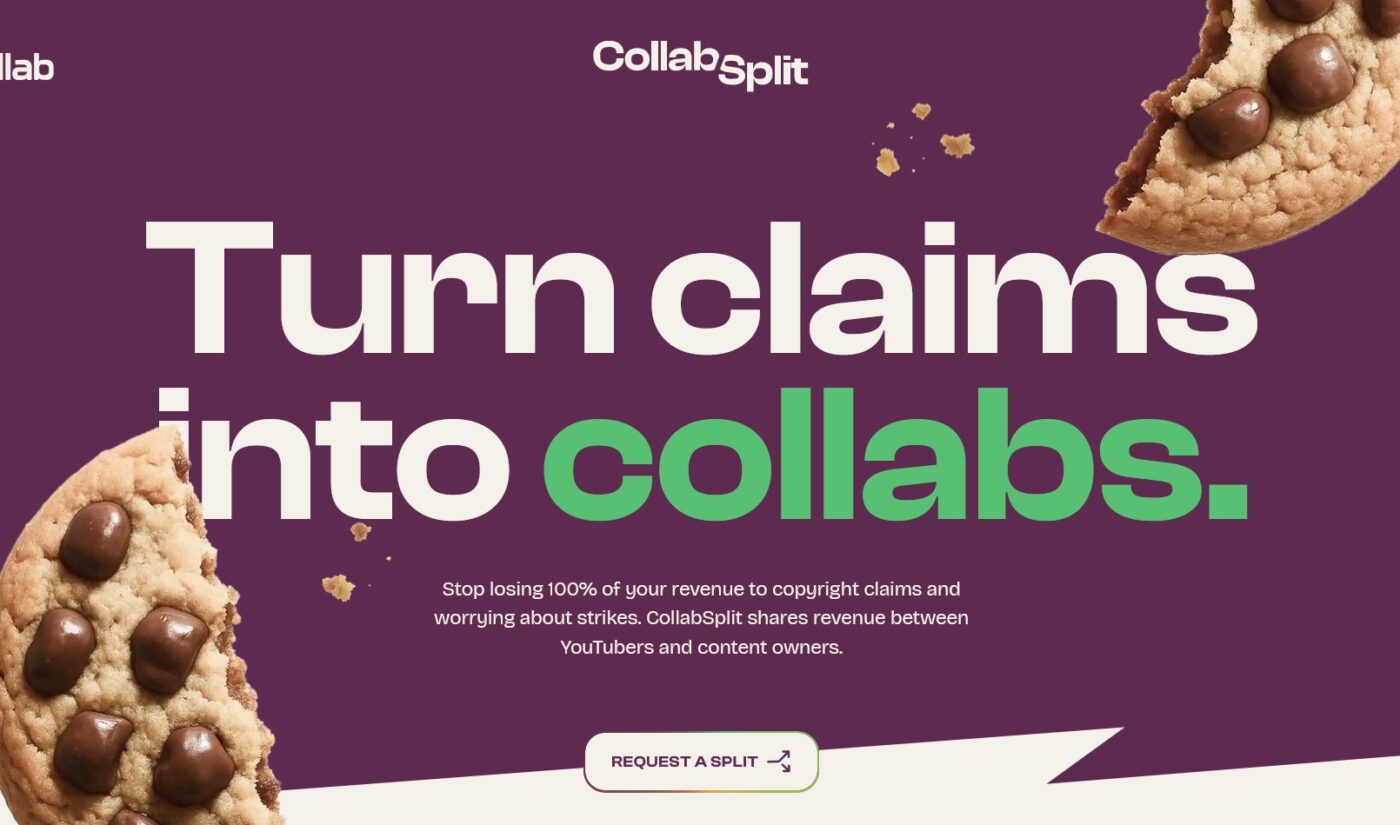
“For the original subscription, it’s a flat tier kind of pricing where the average subscription is often thousands of dollars per month,” James explains. “That’s tailored toward larger YouTubers or B2B/enterprise customers. Now we’re rolling out Collab Split, which gives smaller creators the opportunity to use clips under a revenue-sharing model.”
“We wanted to give creators flexibility,” Tyler adds. “Revenue share allows them to not take on any extra risk of overpaying for a library subscription.”
With this new model, creators can use a clip in their content without paying anything. They only have to pay once their video starts bringing in revenue–and even then, they aren’t splitting 100% of the video’s revenue, just a portion of the revenue for the section where the licensed clip is used.
“Our position is, that if someone uses a sample to make a song, they have to pay to the original rightsholder,” James says. “We think any video that’s used, the creator should get credit and compensation for the use of that content. But it doesn’t need to be 100% of the revenue associated with that video. That’s where Content ID has its flaws: it takes 100% of the revenue to give to a [rightsholder] that may only be in a small portion of that video.”
The Collab Split system, he adds, “is much more fair for every party involved.”
You can check out Collab Split here.