YouTube is playing in dangerous territory with the news this week that the company is going to spend millions for celebrity created content. New York Magazine is reporting the news—though Google and YouTube are unable to comment on it—that YouTube is offering up to $5 million per celeb-branded channel.
One insider is quoted as saying: “by offering a wider range of better-quality content, viewers are happier, Google’s advertisers are happier, and the talent is happier.” Oy. Breaking this apart, there’s first the shaky assumption that these traditional celebrities can actually offer ‘better-quality’ content on their own, as opposed to say the tens of thousands of YouTube natives that have mastered the art of luring viewers away from overpriced TV fare.
YouTube’s new CEO Salar Kamangar, who replaced co-founder Chad Hurley in the top spot earlier this year, is moving the world’s most popular online video site into a cozier position with Hollywood. There’s also the addition of Robert Kyncl from Netflix, the man who is credited with crafting that company’s booming on-demand streaming service as their head of digital content acquisition.
YouTube Already Has the Next Generation of Celebrity
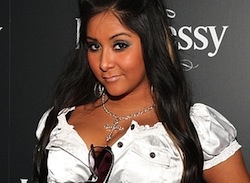
The problem is in the undervaluing of the celebrities it already has a lock on—a new generation of household names (just ask your 11 year old) like Shane Dawson, Ryan Higa, iJustine and MysteryGuitarMan. These top YouTube stars represent a leaner, post-TV-centric version of celebrity. They actively engage their audience (as themselves) across several social platforms, and operate with a unique creative freedom dictated primarily by those very fans themselves. On top of that, they know how to shoot cheaply while still generating several million views per episode. You think Snooki can shoot and edit her own videos?
Add to that, they have lock-in on the network that they spent the last 5 years growing right alongside. YouTube has an incredibly valuable hold on these stars and their millions of avid fans simply because of the sizable ad revenue sharing Partner Program which pays many of them well into six figures a year. Traditional celebrities don’t come with any lock-in, operating instead in a more transient model moving to whichever platform is paying the highest.
And that’s the real danger here for YouTube. Even if the network does let the courted celebs own their own channels, as most all YouTubers do, it won’t be the ad revenue share that keeps them, it will be the size of those seven-figure checks that are being handed over to their agents. And you know what that means. Traditional highest-bidder shopping of big name celebs amongst the leading online networks—Hulu, AOL, MSN and YouTube.
It could also mean a flight to greener pastures for the current crop of YouTube faithful, who may find themselves less supported by the network that once vaunted them as heroes of the new media generation. The all-but-done acquisition of Next New Networks might help assuage the fears of relegation of indie creators, at least for now, but it won’t stop a revolt if the sacred subscriber counts start becoming pay-to-play.
Stop Commoditizing Content
There’s also the problem of the YouTube Ad Sales team not understanding the value of what it has to sell. It’s communicating to brands the value of its network, but not the individual shows, selling views as a flat CPM regardless of the channel.
If I were a brand and wanted to reach the highly-engaged young demo that devours every new episode of the Annoying Orange, I should be forced to pay a much higher CPM than the say, $1.50 or so that is the same across virtually every channel. One major YouTube partner, who I’ll leave anonymous for now, used the analogy with me that if you wanted to buy a late night ad on ABC you could probably score that for under a $5 CPM, but “if you want first pod on Modern Family, it’s going to cost you $50 and up.”
YouTube is of course now well absorbed into the Google mothership, and that means a culture of auction ad bidding and commoditized views. But if it’s going to really play in the Hollywood game and fully embrace its Major Network status, then it’s going to have to sell its existing partners as stars, not cattle.
Twitter famously courted celebrities a few years back, most notably through its man-crush on Asthon Kutcher (@aplusk), who would even convince Oprah to get on board. And criticism of the effectiveness of Twitter since then, especially by its early adopters, has been growing lately.
For more on the new guard at YouTube, I highly recommend Fast Company’s February magazine feature piece on “How YouTube’s Global Platform Is Redefining the Entertainment Business.”

Related News:


Forgot to mention in the article how YouTube had tried something like this before with the defunct “YouTube Gold” partnership with William Morris: http://news.tubefilter.tv/2009.....rris-play/
I think Youtube is really throwing good money after bad by just going after celebs. (Since when is Snooki a legit celeb anyway?) If they wanted to change the game they’d target production companies that produce content on various platforms beit tv/film/web. Celebrity vloggers don’t hold much water in the current environment of Youtube and this isn’t going to change anytime soon.
Love this: “But if (YouTube is) going to really play in the Hollywood game and fully embrace its Major Network status, then it’s going to have to sell its existing partners as stars, not cattle.”
So right. But let’s say that if they bring in “real stars” that won’t except anything less than this form of business then what’s to prevent YouTube from asking for those far higher CPM’s for I dunno, an awesomely awesome show like The Annoying Orange? (I particularly like Liam the Leprechaun and Grapefruit) ;)
But remember the rules of the game are all still run by the network. Imagine if YouTube adopted a twitter-style “suggested subscribe” list that was populated with these new pricey channels. Or if you could just buy subscribers directly.
At this point I think Dane could be earning closer to $25-40 CPM if they sold it that way. Just his insight data alone would close that deal.
I totally agree. I’m sure Dane would too. :)
We see this as a culmination of lots of issues in the web video world.
We have been saying for years that celebrities should be on YouTube and there are quite a few that are already there to various levels of success. But, as we discuss often, the web video community is guilty of this devaluation of the YouTube creators as well. Many who read this blog would claim their in their opinion, “higher quality” serialized content would deserve funding and higher CPMs despite no views vs. the successful YouTube creator who they feel is “amateur”. This attitude is similar to many advertisers, and why they struggle to see the value of what all of us are doing on YouTube, despite the fact of several of us have cable TV sized numbers and have production values as good as anything on the web today (just watch Freddie Wong. Reckless Tortuga, or the Shane Dawson short film posted in this article that we directed).
It feels like a broken record, but the lack of transparency across web video is part of this issue. The buying of views on studio and sponsor backed content getting huge fake numbers that sponsors believe to be true, makes the real (and more importantly sustainable) viewership that is on YouTube less valuable in the eyes of most.
Whether they are being funded or not, traditional celebrities should have been on YouTube in the first place. This is the future of entertainment, and celebrities do not need “Funny or Die” to make viral content, they should be doing it themselves and building their brand online, where that audience power will become pivotal to their traditional media success in the future. Our hope with this situation is that it leads to bringing more attention to what we do, how well we do it, how large our audiences are and even potentially bring innovative opportunities to work with celebrities in new ways to help exposure on both sides.
Transparency from this community will lead to opportunities for the deserving and it won’t matter if there’s celebrities on YouTube or not, and similar to television, the larger the audience the better the ad dollars regardless of who you are or what content you are creating.
Here here! Well said guys!
If YouTube does go through with this proposed plan it is going to be a rip-roaring success…
For about six months.
The first ‘celebrity-branded’ channels will gain a massive amount of media attention, have the full World-crushing power of Google behind them, and draw huge views. People love celebrities, and more importantly they love the idea that they will get to interact with celebrities. Run a Twitter search for messages to your favorite celeb, even a minor one, even a web celebrity. The number of fawning @ messages they receive in a day is astounding, which probably explains why they don’t respond to my fawning tweets.
Nevertheless, there will be problems.
First, the celebs will simply get bored. Once the novelty wears off and other commitments take president, the content flow will dwindle to a tinkle.
Second, most celebrities lack all of the necessary skills, which YouTube creators by necessity have acquired. Online video is a small operation consisting of a few people and in many cases a single individual who wears many hats from on-camera talent, to camera operator, editor, sound-mixer, etc. Celebrities, in contrast, have people who dress them. Unless, YouTube has a plan to furnish the celebrity content creators with facilities, equipment, and personnel (and they just might have such a plan) expecting them to do the production ‘hat dance’ is a recipe in disaster. Does anyone think Snooki knows how to use Final Cut Pro?
Lastly, stripped of the glamor and packaging of Hollywood, most celebrities are simply not that interesting. On Twitter where they only need to fill 140 characters they can get by, but sustaining a web series or a vlog will tax them to the point of insanity. Even if they go with the simplest route, turning on the camera and talking for 5 minutes, which would be dull, it won’t have the same impact or appeal of similar videos. Lifecasters like iJustine are popular because they engage their audience, they are very likable, and relateable. In short, she’s your buddy, for 5 minutes a week. I don’t think people will develop the same connection with the celebs.
So YouTube will throw a ton of money at celebs, get a huge bump, and then the whole thing will fizzle out once the celebs either get bored and quit or the audience gets tired of them. Meanwhile the YouTube audience, which has embraced the new media concept and ‘home-grown’ YouTube star will probably feel alienated and post a lot of “you suck” comments on celebrity channels.
First off I don’t think this will ever become a real industry so long as we are chasing CPMs. If this does anything to help create a marketplace where creators are paid upfront then maybe there is a potential opportunity here. Smart people don’t make investments knowing they will lose money. I think there are plenty of smart, highly creative people who have been waiting on the sidelines who are now working their fingers to the bone trying to contact celebrities.
It’s one thing that these celebs will be getting all this money up front but I’d be just as upset at the promotion they are sure to get. They are not going to lay out that kind of money and not put it front and center. I wonder if they will put it in the Web Originals section? It would be pretty sweet if they did and then broke it out into it’s own category. Maybe the IAWTV can whisper in someone’s ear at YouTube.
I think this is in part a reaction to the fact that so many celebs have gone to Funny or Die. When Paula Deen teams up with EQAL and Philadelphia Cream Cheese and sales go up, it is a proven effect of celebrity that makes YouTube believe it can get those higher CPMs. We make the assumption that YouTube hasn’t gone out there and try to get those CPMs for YouTubers. The difference is how do we know how many iPhones iJustine can sell? High view numbers by themselves are not enough obviously, so I had an idea. When a TV show gets cancelled often their fans will send something to the network to not only show their loyalty but to prove their buying power. I believe for Firefly they actually attached a charity aspect by choosing pencils to send to the network who then was able to turn around and donate them to schools. Maybe if some YouTuber were able to pull that off you could prove that viewers are more than just eyeballs. Just a thought.
[...] rest is here: The Problem with YouTube’s Celebrity Buying – Tubefilter News Categories: Social Media – YouTube News Tags: celebrity – channels – francisco – media – news – [...]
As long as they do not bring the TV-centric geoblocking with them it could end up helping the Youtubers. By making brands more comfortable with Youtube it may increase sponsorship for Youtubers. I sincerely doubt that Youtube will neglect the people who built their channel. This seems more like an attempt to build out their brand and draw in new sponsors, which in the long run could benefit everyone. As you point out, there is a new game in town and the old world celebs are going to have to compete on a level playing field with the Youtubers……or let’s hope for Youtubes sake it remains a level playing field.
I don’t think a war will happen anyway really. The Old Spice Guy played nice with the name Youtubers and his viral vids elevated everyone he gave shout outs to. Now you can’t expect that everyone else who gets in on this will do the same but I don’t think they will destroy anyone.
Is it fair that they are getting money just to show up? No. I just don’t worry all that much about it because I know at the end of the day that Brad Pitt or George Clooney aren’t going to take views away from my stuff. There’s plenty of ways to promote your brand and your shows as the meetup panel showed. The “king maker” factor will definitely be diminished but doesn’t the constant avalanche of new content of all types entering Youtube do that anyway?
I look at Funny or Die as an example of what is likely to come to Youtube but it is an element so late coming to the party that I don’t see them taking over or crushing the rest of us. The sky isn’t falling here.
Targeted as it may be, inventory adjacent to Annoying Orange will never offer advertisers the scale they need to make true brand investments in online video — I don’t think agencies would ever be equipped to efficiently execute such micro buys in a way that will meaningfully impact the $70B TV market. YouTube’s courting of celebrities is likely a response to generally constrained inventory within online video — that is, eyeballs watching across all online shows. This strategy does not commoditize content per se; it will smartly build television-like scale for efficient sales of audience segments, creating greater value for content creators and advertisers by matching inventory more efficiently.
How does YouTube treat its existing stars like cattle? Price is driven by demand (or lack thereof) in a marketplace. Increased scale that leverages established celebrity should only serve to spur demand, driving prices for existing YouTubers as well as newcomers.
We live in a bubble and know way too much about web video and not enough about business or history. The fact is that YouTube is a household name but none of the YouTubers are.
Television went through the same thing in the early days. Radio was king and TV was considered a fade until there were breakout hits that turned B Actors like Milton Berle and Lucille Ball into stars and brought big radio shows like Jack Benny and Amos and Andy to the small screen. It didn’t happen overnight. It took years.
We all see the potential of web video and we all want it to grow up and work the way TV worked. It will happen but it takes time and money along with trial and error.
I love what you are writing here but the bottom line is that we have a proof of concept with YouTube channel views but we don’t have any case studies of how a YouTube Channel posted a video on a Thursday and sold millions of movie tickets on Friday, Saturday and Sunday. Having millions of viewers is one thing, getting them to spend money is another.
A YouTube Channel is only worth what someone is willing to pay for it and if the YouTube Ad Sales team is unable to sell Shane Dawson, Ryan Higa, and MysteryGuitarMan to brands then they need to look elsewhere until they can.
Good insights Marc. While clearly past the stage of birthing pains, the platform is obviously still struggling to find its identity like any 12 year old. Will be interesting to see how this plays out as the kool kids climb out of puberty and find themselves competing with the “adults” …I hold onto my optimism that we can all coexist.
12…7…lack of sleep has me doing fuzzy math. But my point remains the same, I believe a balance of celebrity culture between youth and the old guard can be achieved…as long as one respects the other. Will take some work.
Anything that gets the big networks attention that the old broadcasting days are over is a win in my book. Good bye cable TV. At the same time, big cable will just charge more for their Internet connections. That’s why allvid and net neutrality is so important.
I agree Tim. Have a million views? Great! They are engaged? Awesome! Can you mobilize them? Can you get them to buy stuff? Anyone remember revver? Back in the day, lonelygirl15 briefly switched over to revver. People clicked on ads left and right. Why? Because they knew that’s how to get more videos. Did it lead to anyone actually buying anything? Of course not. Clicking on an ad on a video was the equivalent of hitting the like link on a Facebook status. Side note-ask any lonelygirl15 fan what the first product placement was? Or what their first brand integration was and I bet after all these years they could still tell you. There should be some value in that.
That’s why I suggested in my post that someone start a campaign to prove their audience’s buying power that in the same way wasn’t a waste of money but contributed to a charitable cause. I believe it can be done and would be something you couldn’t deny.
I see a lot of good deals being made. The problem is you can count on your hand the number of people able to pull these deals off. We need more deal brokers in the worst way.
“It feels like a broken record, but the lack of transparency across web video is part of this issue. The buying of views on studio and sponsor backed content getting huge fake numbers that sponsors believe to be true, makes the real (and more importantly sustainable) viewership that is on YouTube less valuable in the eyes of most. ”
This is an issue that has come up several times since 2009.
http://gigaom.com/video/paid-d.....eb-series/
Yet the trend seems to be for more and more “”higher quality” serialized content” to hide their views behind portal sites. Further ad agencies and even some IAWTV members seem to continue to promote and defend the practice as being “standard.” That in a free market is there prerogative but as pointed out by the Fine Bros the net effect is to damage rather then benefit.
The supposition appears to be that there is real value in brand paid pre-rolls on videos with autoplay. The pre-roll ad play might be there but is the value? Perhaps there was a time when this approach would have been effective but todays video audience is very effective at filtering out such pre-rolls. Thus it is quite possible all we end up with is an ineffective pre-roll and video content that is almost never viewed and rarely engaged with.
The real value proposition from those who have learned to used YouTube authentically is that they have proven their ability to engage and motivate their audience. One would hope that any new celebs on YouTube would learn from this. If they do, then this could be a transformative moment for an ad industry that has found itself rapidly becoming a dinosaur; trapped in its own assumptions of fraud and deceit.
“The fact is that YouTube is a household name but none of the YouTubers are.”
This would depend in how you define “household name”. In the broad sense of the phrase it may be true that YouTubers are not well known across all generations. However this was probably also true of the Beatles at one time. If you look at the younger generation some Youtubers have very broad market penetration. Not only that but they “own” their market demographic.
Expecting the world to remain “mass market” is just looking backward. Markets today are pluralistic and segmented. This is exactly the type of market serviced well by the Youtubers. Expecting a return to the good old days of TV is neither realistic or desirable. The future lies with the YouTubers and the “facebook kids” that just over threw the government of Egypt.
Did someone just say “knife”??????
RUUUUUUUUUUUuuuuuuuuuuuuuuuuuuunnnnnnnnnnnnnnnnnnnnnnn!!!!!!!!!!!!!!!!!!!!
WHOA!
HERSHEY’S ICE BREAKERS Sours Mints
Now if Miles would only fix the LGPedia link on LG15.com
http://www.lg15.com/lgpedia
like we have asked Eqal to do a zillion times since the end of 2010, we could have a complete list of all their product placements (paid and non paid) catalogued by the community run pedia……….
NOW, that is engagement!!!!!
YouTube already has a ton of celebrity content. These celebrities are called “musicians.” If and when their agents get wind of this, some of them are going to be asking for some cash.
PS: I really have nothing else to add; just wanted my nick to appear in these comments.
It is a backward move. It is a matter of giving celebrities with personal fortunes but not enough passion to risk it, free capital to flood YouTube with produced product in hope of what…more numbers? The numbers are already astronomical. What about you know…helping poor indie people with passion, ideas and a lack of resources who can broaden the available talent pool and productions?
How about the $100 million to talented indies and put the money where its needed not into the three or four corporations whose companies all the celebrities are under and who are financed already?
we all see how easy it is to break into the top of Hollywoods elite, how they welcome you with open arms and yeah if they get control of all web shows and distribution it will be just as easy to be in that club as say…the last 100 years has been.
Well said!!!! :) :) :)
One would hope that that is not Youtubes goal. Google is a pretty progressive company. That said they need to make money out of Youtube. As I said above, it is possible they see this as an investment in bringing more brands into their “ecosystem”. Once brands are more familiar with the open architecture and brutal honesty of Youtube perhaps Google thinks it will be easier for other Youtubers to monetize their channels thus securing Youtubes future in history.
Remember we the community get a lot of free bandwidth out of Youtube…….bandwidth that has made the revolution possible (in more ways than one). If this investment secures the future supply of this bandwidth then it maybe well worth while.
I agree with the British guy, good points all of them, you should get your own blog or something. ^_^
The only real thing I have to add is the idea that you need to be careful not to start making it an us or a you versus them type thing. Unless I am mistaken famous celebrities have a great deal of power and influence in the entertainment industry. Fighting with them would be suicide. Plus isn’t the goal of doing web video that you will get sceen by a network or studio who will then put you in a major project? If web people start telling celebrities that they cannot play in their sandbox then there is the risk that the celebrities will say the same thing to web creators.
Yep. The goal here should be to create a win-win……and that may well be Googles sole objective. The great thing here is that the “celebs” are being invited (or is it paid) to play in the Youtube sand box. The rules are different and they will have to learn to play by those rules or be consumed by Youtube. Some will do it well……and be welcomed…..Bring it….others may not thrive and leave, that is “life” on the interwebz.
Well I can see the new job listing already:
celebrity pretend interactor – duties include pretending to be the assigned celebrity to appear to interact with the public, keeping millionaires in isolated “yes bubble” away from general public or other “youtubers”, removal of negative comments, spreadsheet to inform celebrity what “content” they have personally made and put up on YouTube for any press junkets or interviews include indications of what to mention as successful and most fun to do, maintain all creative duties with various digital departments of celebrities in house and off premises vendors and assistants in digital, and maintain illusion of connection with YouTube “audience” with minimal impact on celebrity’s busy schedule and life.
my short opinion: this plan is not going to work out for youtube, but it will workout for everyone who gets a few million to try it. so, find yourself a celebrity and pitch a show with them, take your earnings and bank it for your next creative vision. find some 5th place Next Top Model, 4th place Survivor, 80s sitcom star, etc.
It is hard to manage “authentic” but only time will tell. It is not even clear yet how they will use their channels.
Maybe “Lucy” should have her own channel. Clearly the Order needs better representation. Where is George Ruiz when you need him. Maybe he could even sign up “Anon” as a client for YouTube.
One thing I’m wondering about this new strategy Youtube is trying is why they don’t court A-List directors or producers if they want to really start going high end with their content. Those are the kind of people who can make high end product and possibly attract A-List names to said content depending on how much Youtube was willing to spend.
3-4 viral videos a year from a Spielberg or Scorsese or even James Cameron, (he was hanging with a number of Youtubers recently,) would really create interest and raise the bar on a lot of levels.
The content out of all the James Cameron + Youtubers meetings was quite interesting. It was like a meeting of two Worlds but in a very candid way that Youtubers do very well and Cameron seemed to really enjoy the experience.
[...] Celebrities? (NYMag; VideoNuze): The move would pit homegrown stars with big media buzz types. Marc Hustvedt’s opinion is basically what I think. Meanwhile, once again, Google/YouTube might be closing in on Next New [...]
[...] That’s a lot of new media and homegrown internet talent making at least some extra cash and at most a very comfortable living thanks to the world’s largest video sharing site. But while Youtube has created and fostered a new breed of entertainment professionals, the company can’t help but court established Hollywood and pop culture personalities with multi-millio…. [...]
It would be HUGE wakeup call to the “celebrities” that exist on youtube today. Level the playing field? Youtube is not level whatsoever. The “top dogs” are able to get away with anything, while those who are not as popular are left on the wayside, even if their content is following youtube’s so called “rules” and is genuinly entertaining. Many youtube stars’ egos are beyond the moon.