When Jim Jarmusch published his poster-sized manifesto on the art of filmmaking, he borrowed his thesis from Jean-Luc Godard. It reinforced his point that nothing is original. But you don’t have to be a fan of Ghost Dog or the French New Wave to know everything’s derivative of something else. All you have to do is watch Everything is a Remix.
Created by Kirby Ferguson (who you should remember from his engaging output of video art and observations under the banner of Goodiebag, and you may remember from his earlier, sexier productions), the four-part series is an examination of how our world is the way it is because of an innate cut and paste culture. Stealing, borrowing, remixing, or whatever verb you prefer isn’t just how a handful of things come to fruition. It’s how everything gets made.
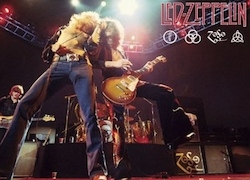
In the first installment, Ferguson chooses to look at remixing through music and lyrics of Led Zeppelin. “I want people to watch it,” Ferguson said over the phone. “I could’ve started with Shakespeare or Michelangelo or Homer, but I thought Zeppelin had an opportunity to pique the interest of more people. They’re also a particularly bad case of remixing without attribution.”
With the archival footage and informative voice over of a Ken Burns documentary and the fast-paced editing of an MTV News segment, Ferguson takes you on a historical tour of sampling in late ’60s rock ‘n roll. Further installments will touch on movies, low culture, and high art. They’ll be released whenever Ferguson receives enough donations to cover production costs.
Ferguson knows he isn’t covering entirely new territory. He’s borrowing from predecessors like Copyright Criminals and Walking on Eggshells to give the topic a new spin. “Other people have done the legal side,” said Ferguson. ” I wanted to do something that’s more about the creative side. It’s just something everybody does. Remixing is how the creative process works. It doesn’t matter what level you’re at. You’re either doing it in a crude way or an ultra-sophisticated way, but it’s all the same thing.”

Related News:


[...] observation in the next three episodes. Personally I would love to hear the man’s thoughts on the interpolation of Shakespeare into modern movies and music. And since we’ve got Shakespeare and Zeppelin on the brain, [...]
So I watched that guy’s video and I have beef.
First of all, I feel like there was a fairly lax attitude towards knocking off old blues tunes that was common among blues bands. I don’t think anybody really thought every note of a song like The Lemon Song was original. Rather, it was fairly clearly an homage to American blues. What’s more, the members of Led Zeppelin are, themselves, major blues fans. When they lift Willie DIxon in the opening of Bring it on Home, that’s not only intentional, I think they assumed that people would recognize it and intended for them to do so. It’s called an homage. Furthermore, playing a brief cover of a favorite artist at the start and end of an otherwise original song hardly constitutes plagiarism.
The blues is a musical form where the song or the riff is largely subservient to the person playing it. Every blues song is the same 12 bar chord progression with the same 6 note scale played over it. Led Zeppelin was an incredible band and they would be popular even if all they played was covers. Their musicianship gives them ownership of much of this material. Granted, I agree that they should have just credited the original writers in some cases (speaking of which, the guy’s research is just lazy. They paid off Willie Dixon for the lyrics to Whole Lotta Love in the 1970s and he doesn’t even mention it), but it doesn’t really represent them copying people or being “rip-offs.” I’m pretty sure it was a small minority of critics who really felt it was relevant to critique Led Zeppelin heavily for being a blues band and playing blues tunes that are drawn from familiar sources. Most people didn’t bring it up because every band did some of it and Led Zeppelin’s failure to credit people on small pieces of songs wasn’t a really big deal.
He’s also nailing them for lifting stuff that isn’t really a lift. Listen to Spirit’s Taurus. While the opening of Stairway is rhythmically and stylistically similar, I don’t see how it wouldn’t classify as a “knock-off” as he defines it. There’s a distinct change in melody to Stairway’s opening and then, incidentally, a whole freaking song to follow that is its own entity. Most people would simply say that Led Zeppelin was “influenced” by Spirit, but no, sure, lets say “copied” just to be controversial. Bravo. The same can be said for Black Mountain Side. It was a traditional arranged by Bert Jansch. Arranged by. Believe me, nobody’s been taken to court because they failed to properly cite the person who arranged a traditional.
Either way, when they really just lifted a song like they did on some occasions (Dazed and Confused), they should have credited someone. Not sure it matters all that much, though.
Here’s where he’s really full of crap…
The piece at the end about how the drum line from When the Levee Breaks has been lifted several times is utterly ridiculous. The drum beat from When the Levee Breaks is a basic 4/4 rock beat. Bass on 1 and 3, snare on 2 and 4. There is an interesting stutter of the bass drum on three, but most of what makes it distinctive is that it’s being played by John Bonham, one of the all time greats. Virtually every rock song in history is a basic variation on that same beat. In fact, it’s repeated through pretty much every Led Zep song as well. To play it alongside a series of other songs that have the same beat at a similar tempo is pretty stupid and doesn’t prove anything. Granted, a couple of those were actual samples (Beasty Boys) but most of them changed enough of Bonham’s playing that they aren’t really identifiable anymore. John Bonham is John Bonham. He’s unmistakable. The notes are irrelevant as he’s risen above that.
All I really got from this was that this guy doesn’t really know all that much about music. His point is clear, but why is he making it? Pointing out that other people since Led Zeppelin used the beat from When the Levee Breaks is like patting yourself on the back for picking out how blues songs have a recurring theme of unrequited love or that rock songs often weave together words for lyrics. It’s not really a profound point and anybody who has taken a college level music theory course already realized that. If you want to make a strong point about the repetition of styles and themes in culture, you really need to go stronger than this. So why I’m supposed to send this moron money to piece together really obvious comparisons and then take pot shots at one of the greatest classic rock bands of all time is beyond me.
[...] is a Remix. It’s part historical documentary, part research project, and a wholly fascinating “examination of how our world is the way it is because of an innate cut-and-past culture.” From inspecting the music and lyrics of Led Zeppelin to looking at cellular biology, Ferguson [...]